

In the modern hospitality landscape, the luxury of a resort or premium hotel is no longer confined within its four walls. Today’s travelers seek an immersive, fluid experience where the boundaries between interior comfort and natural outdoor beauty are completely erased. Whether it is a coastal getaway, a boutique mountain lodge, or an urban rooftop oasis, the design of exterior spaces has become a critical differentiator in attracting discerning guests.
Among the various outdoor spaces a hospitality property offers, two zones stand out as primary epicenters of guest relaxation and socialization: the outdoor dining terrace and the poolside deck. When thoughtfully executed, these spaces do not just provide utility—they craft a sensory experience that defines the memory of a guest’s stay and directly impacts a venue’s profitability.
The outdoor dining area of a resort or hotel is far more than a collection of tables placed under the sky. It is a highly strategic environment that bridges the gap between culinary excellence and scenic immersion. From morning breakfast buffets bathed in soft sunlight to candlelit evening dinners, the al fresco venue must maintain a flawless aesthetic while enduring constant environmental exposure.
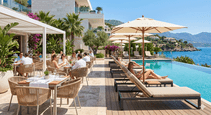
Creating an exceptional outdoor dining venue requires a deep understanding of scale, movement, and structural integrity. The layout must allow staff to navigate seamlessly between tables with heavy trays while ensuring guests enjoy privacy and uncompromised panoramic views. Central to this balancing act is the selection of appropriate commercial outdoor dining furniture. Unlike residential alternatives, contract-grade dining tables and chairs are specifically engineered to maintain their flawless finishes despite relentless UV exposure, high humidity, and the daily wear-and-tear of a fast-paced hospitality environment.
When mapping out a commercial terrace, structural engineers and interior designers must coordinate closely on density. Packing too many tables into an outdoor footprint ruins the luxury illusion, turning a serene escape into a chaotic environment.
A high-end property typically maps out service corridors that allow at least four to five feet of clearance between major seating arrangements. This guarantees that service staff can offer seamless tableside service without disturbing neighboring parties. Additionally, utilizing versatile, modular layout options allows properties to transition their spaces smoothly between daytime café service and large-scale evening wedding banquets or corporate events.
When guests choose to dine outside, they are paying for an atmosphere. The furniture must match the culinary standard of the menu. Sleek, minimalist aluminum frames paired with premium weather-resistant rope weaves or composite wood surfaces provide a clean, modern aesthetic that complements contemporary architectural styles. By choosing pieces that offer both anatomical support and high design value, venues encourage patrons to linger longer, leading to increased beverage sales and higher average check sizes.
In the hospitality industry, every additional fifteen minutes a guest spends at a table directly correlates with an increased spend per head. However, a guest will only remain seated if their physical environment supports extended relaxation.
If a dining chair features rigid lines, poor lumbar support, or surfaces that retain heat from the sun, the user will experience physical fatigue and request their check early. By focusing on ergonomic curves, breathable synthetic weaves, and adaptive foam padding, a venue subtly influences guest psychology, shifting the dining experience from a rushed meal to a multi-hour social event.
If the dining terrace is the social heart of a resort, the pool deck is its sanctuary. For many travelers, the pool area is the primary destination—a place dedicated entirely to leisure, wellness, and disconnection from the stresses of daily life. The ambiance of a pool deck can single-handedly dictate a property’s online reviews and social media presence.
To transform a standard concrete deck into a world-class oasis, designers focus on the concept of resort-style lounging. This layout strategy moves away from densely packed rows of basic seating toward wide, luxurious configurations that offer breathing room and privacy. Sourcing specialized commercial pool lounge chairs is paramount to achieving this high-end aesthetic. These pieces must offer multi-position adjustability, ergonomic contours, and quick-drying capabilities to ensure that guests experience pure, uncompromised comfort from the moment they lay down.
Modern pool deck layouts achieve an elite aesthetic by abandoning uniform rows of identical chaises. Instead, successful hospitality venues create “micro-environments” by blending different categories of lounge furniture:
Pairs of Adjustable Chaises: Set up with matching side tables and premium umbrellas for couples seeking classic relaxation.
Daybeds and Over-Sized Cabanas: POSITIONED along the perimeter of the water to command premium booking fees or to serve as exclusive VIP lounge zones.
In-Water Ledge Loungers: Built to sit directly inside shallow pool shelves, allowing guests to stay cool while remaining partially submerged.
The pool deck represents one of the most punishing environments for any structural material. Furniture placed in this zone faces a combination of harsh challenges:
Chemical Exposure: Constant moisture and chemical exposure from chlorinated or saltwater pools can cause rapid corrosion on standard residential components.
UV Damage: Intense, direct sunlight can cause substandard materials to crack, fade, or become dangerously hot to the touch, posing safety hazards for guests.
High Structural Loads: Sustained weight loads from a rotating demographic of international guests demand exceptional structural integrity and joint strength.
True commercial-grade chaises resolve these issues by utilizing advanced polymers, powder-coated rust-proof metals, and breathable mesh fabrics that reject water retention. This engineering ensures the furniture remains pristine, hygienic, and safe throughout peak seasons.
Aesthetics and durability are driven entirely by material innovation. Modern commercial design favors materials that deliver a high-end visual impact without demanding intensive, costly maintenance schedules from the property’s engineering team.
This advanced material offers the warm, textured look of natural wood but requires zero staining, sealing, or waterproofing. It will not splinter, rot, or absorb moisture, making it ideal for wet commercial environments. It is completely solid throughout, meaning scratches or scuffs from daily operational movement do not reveal a mismatched interior color layer.
Often featured on premium outdoor dining chairs, synthetic rope weaves provide a lightweight, flexible texture that contours to the human body while allowing airflow to keep guests cool in warm climates. These ropes are treated with advanced UV inhibitors during the extrusion process, guaranteeing they maintain their tensile strength and color vibrancy under the hot sun.
Used on chaise lounges, these specialized fabrics resist UV degradation and staining from sunscreen or oils, allowing staff to easily wipe down surfaces between guest rotations. Because these textiles are engineered with an open weave, they facilitate rapid airflow and moisture evaporation, preventing the formation of mold or mildew even in tropical climates.
Behind every beautiful hospitality environment lies an efficient operational team. For an outdoor venue to be truly successful, the furniture selected must support the day-to-day workflow of housekeepers, property managers, and maintenance engineers.
When evaluating contract-grade options, weight and stackability are critical factors. Properties in regions prone to seasonal storms or high winds must be able to clear their outdoor spaces rapidly. Lightweight yet structurally rigid aluminum frames allow a small team of floor staff to stack and store hundreds of chairs within minutes. Furthermore, choosing non-porous surfaces that resist staining ensures that accidental spills of red wine, coffee, or citrus juices can be cleaned instantly with a simple microfiber cloth and mild soap, keeping the venue looking immaculate at all times.
In the hospitality sector, every square foot of an outdoor footprint represents an opportunity to elevate the brand and drive ancillary revenue. An empty or uninviting pool deck or a cramped terrace is missed real estate.
By deliberately curating these high-value zones with premium commercial outdoor dining furniture that reflects the property’s architectural voice, you create a compelling invitation for guests to dine on-site. When complemented by luxurious, durable commercial pool lounge chairs that turn the pool deck into a true sanctuary, you secure a profound competitive advantage. Exceptional design doesn’t just decorate an outdoor space—it optimizes it for commercial longevity and memorable guest experiences.

© 2025 Crivva - Hosted by Airy Hosting Managed Website Hosting.