


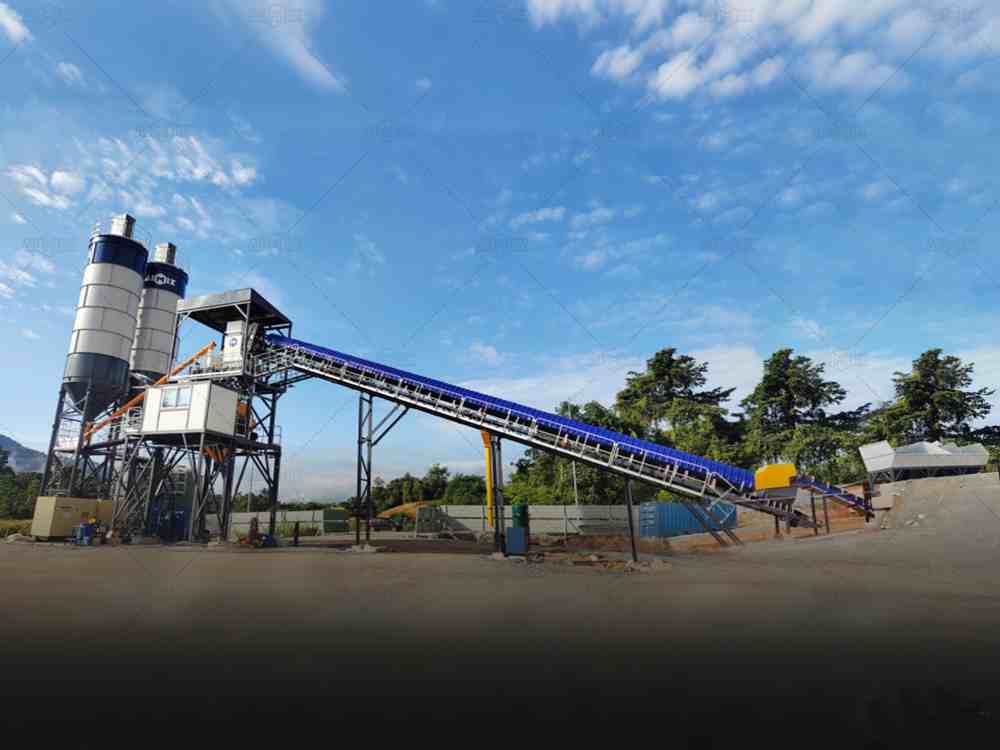
The standard concrete batching plant is designed for temperate conditions. It assumes moderate temperatures, low dust levels, and reliable grid power. Saudi Arabia offers none of these. Temperatures exceed 45°C. Dust storms reduce visibility and clog filters. Grid power can be unstable, particularly at remote sites. A plant intended for desert operation must be customized. These customizations add cost. The argument of this article is that the added cost is justified. A standard plant in desert conditions will fail prematurely. Its cooling system will be inadequate. Its electronics will be compromised by dust. Its productivity will be reduced. The buyer who pays for customizations is not overspending. They are investing in reliability. This article quantifies the cost of common customizations and explains their value. The objective is to help buyers make informed decisions about desert-specific features.
The most critical customization is the cooling system. A standard batching plant in Saudi Arabia has a radiator sized for ambient temperatures of 40°C. In Saudi Arabia, the plant must operate at 50°C. The difference is significant. The cooling capacity required increases exponentially with temperature. An oversized radiator with 30 percent more cooling area is the minimum. The cost premium for an oversized radiator is $5,000 to $10,000. A hydraulic oil cooler is equally important. The hydraulic system generates heat. In high ambient temperatures, the oil may exceed 80°C. Viscosity drops. Wear increases. A thermostatically controlled hydraulic oil cooler adds $3,000 to $8,000. The argument is that these cooling upgrades are not optional. A plant without them will experience overheating. The engine will derate. Production will slow. Components will fail. The cost of downtime and repairs will exceed the upfront premium. The buyer who skips cooling upgrades is making a false economy.
Standard seals and hoses are rated for 80°C continuous operation. In a desert plant, surface temperatures can exceed 80°C. The seals harden. They leak. The hoses degrade. They burst. The solution is high-temperature components. Viton seals are rated for 200°C. They cost three times as much as standard nitrile seals. The additional cost for a plant-wide upgrade is $2,000 to $5,000. High-temperature hydraulic hoses with steel braiding are similarly more expensive. The argument is that the premium for high-temperature components is modest relative to the cost of repairing leaks and replacing burst hoses. A single hydraulic hose failure can cost $1,000 in parts and $5,000 in lost production. The seal and hose upgrade pays for itself after one failure avoided.
Dust is the second enemy. It infiltrates control panels. It accumulates on circuit boards. It causes intermittent faults. The standard solution is a control panel with ventilation fans. This solution fails in dusty environments. The fans draw in dust. The dust accumulates. The argument is that a desert plant requires a sealed control room with positive pressure. The control room is an enclosed space. An air conditioner provides cooling. A filtered fan pressurises the room, forcing air out rather than drawing dust in. The cost of a sealed, air-conditioned control room is $15,000 to $30,000. The value is reliability. A control panel that fails due to dust accumulation may cost $10,000 to repair. The downtime may cost $50,000. The sealed room is an investment in uptime.
Dust also escapes from conveyors and transfer points. The standard plant has open conveyors. Dust blows away. It settles on equipment. It enters the lungs of workers. The desert plant requires enclosed conveyors and dust skirts. The enclosure is a steel cover over the conveyor belt. It costs $10,000 to $30,000 depending on conveyor length. Dust skirts at transfer points are flexible rubber seals that contain the dust. They cost $2,000 to $5,000. The argument is that dust containment is not only an environmental requirement. It is also a maintenance requirement. Dust that accumulates on equipment accelerates wear. Dust that enters bearings shortens their life. The enclosure and skirts reduce maintenance frequency. They also improve safety. The contractor who avoids these costs will pay for them later in increased maintenance and potential regulatory fines.
Grid power in Saudi Arabia is generally reliable. It is not immune to fluctuations. Voltage sags and spikes occur. A standard ready mix concrete batching plant‘s control system is sensitive to these fluctuations. A voltage sag may cause the control system to reset. The batch is lost. The plant must be restarted. The argument is that a desert plant requires voltage stabilization. A voltage stabilizer maintains the supply within a narrow range. It adds $5,000 to $15,000 to the plant price. Surge protection is equally important. Lightning strikes, which are rare but not unknown, can send a surge through the power line. A surge protector diverts the surge to ground. It costs $1,000 to $3,000. The argument is that the cost of a voltage stabilizer and surge protector is modest compared to the cost of replacing a fried control system. A new control system may cost $20,000 to $50,000. The downtime may cost more. The protection devices are cheap insurance.
The final electrical adaptation is remote monitoring. A desert plant may be located far from the contractor’s main office. Travel to the site takes time. A technician may not be available locally. Remote monitoring allows the plant’s performance to be checked from a distance. Sensors track temperatures, pressures, and production rates. Alerts are sent when parameters exceed limits. The cost of a remote monitoring system is $5,000 to $15,000, including a cellular modem and a cloud-based dashboard. The argument is that remote monitoring reduces the need for on-site visits. It enables problems to be diagnosed before they become failures. It allows the contractor to manage the plant efficiently despite the distance. The return on investment is rapid for a plant operating at a remote location. The contractor who operates multiple remote plants will find the system indispensable.
The objective conclusion is that customizing a concrete batching plant for desert operations adds cost. The cooling upgrades add $10,000 to $20,000. The dust protection adds $20,000 to $50,000. The electrical adaptations add $10,000 to $30,000. The total premium for a fully customized desert plant may be $40,000 to $100,000 above a standard plant. This premium is significant. It is also justified. A standard plant in desert conditions will suffer from overheating, dust infiltration, and electrical instability. It will experience more downtime. It will require more repairs. It will have a shorter service life. The contractor who pays for customizations is paying for reliability. The contractor who skips customizations is accepting risk. The argument is that in the Saudi market, where temperatures are high, dust is abundant, and projects are large, reliability is worth the premium. The buyer must decide. The data supports the customized investment.

© 2025 Crivva - Hosted by Airy Hosting Managed Website Hosting.