

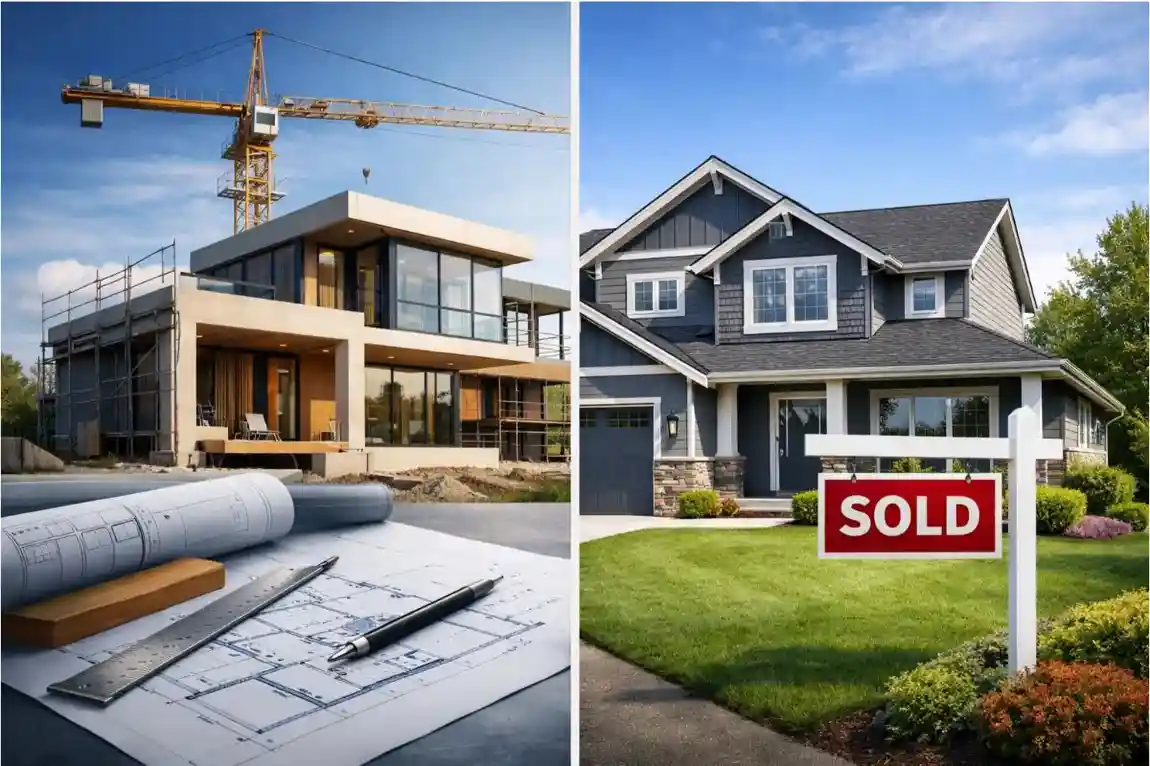
If you’re here, you’re probably not just daydreaming about floor plans. You’re trying to make a serious financial decision. Should you build a custom home from the ground up… or buy a pre-built (spec or production) home and move in within a few months? Most buyers aren’t looking for design inspiration. They’re asking:
I’ve worked on residential cosntruction projects ranging from modest suburban builds to multi-acre custom estates. And what surprises many clients is this: the “better” investment depends less on price — and more on control, timing, and location dynamics. Let’s break it down properly.
Before talking about ROI, define the terms clearly. Custom Home A fully personalized house built on your land (or land you purchase), where you control layout, finishes, structural elements, systems, and often the builder selection. If you’re considering a tailored construction approach in Pakistan, working with a design-build firm such as The M Square can give you full control over planning, materials, and long-term value optimization. Pre-Built Home (Spec or Production Home) A home constructed by a developer before a buyer is secured, or built within a planned community with limited customization options. Simple difference: Custom = control. Pre-built = convenience. But investment performance isn’t that simple.
In real estate terms, investment value usually includes:
According to the National Association of Realtors, long-term home appreciation in the U.S. historically averages around 3–5% annually depending on region. But that average hides a big truth: design quality and neighborhood consistency often impact resale more than build method. So let’s look deeper. One challenge many buyers overlook when evaluating investment value is how well a space functions day-to-day, especially in dense urban markets. Effective use of interior space not only makes a home more livable but can significantly impact perceived value and resale appeal. For practical strategies on optimizing smaller layouts, see this overview of modern interior design solutions for small urban apartments.
Custom builds almost always start lower on paper — and end higher. Here’s why. You begin with:
And that’s before finishes. In most markets I’ve seen, custom builds run 10–25% higher per square foot than comparable production homes. In high-demand metro areas, that gap can widen fast. What many buyers underestimate is soft cost creep. Change orders. Upgraded materail. Delays due to weather. A subcontractor that charges more than quoted. It adds up. One project I managed went 14% over original budget, mostly due to structural steel adjustments after soil reports came in. Nobody plans for that. But it happens.
Production builders operate differently. They buy land in bulk, standardize designs, and negotiate large-volume supply contracts. That efficiency reduces:
The result? Lower cost per square foot. However — and this is key — upgrades inside a pre-built community often carry heavy markup. Flooring packages, kitchen upgrades, elevation changes… margins are strong there. The base model looks affordable. The final invoice often don’t. Still, the pricing risk is far more predictable than custom builds.
Here’s where things get interesting.
A well-designed custom home in a desirable area can outperform surrounding properties in appreciation. But only if:
Overbuilding is common. I’ve seen $1.2M custom homes in neighborhoods where the average resale caps at $900K. Beautiful homes — poor investment math. Buyers don’t always pay for personal taste.
Production homes inside planned communities benefit from consistency. Comparable sales support each other. That stability tends to:
Financially speaking, they’re often easier to liquidate. According to long-term housing data from the U.S. Census Bureau, new construction trends show production homes dominating volume growth, largely because buyers favor predictable pricing and neighborhood amenities. Volume doesn’t equal better returns — but it does signal market preference.
Money tied up in construction behaves differently than money tied up in a mortgage.
Custom homes usually require:
If the project delays, carrying costs increase. And delays are common. Weather, supply shortages, inspection hold-ups. A contrctor missing schedule by 60 days isn’t unusual. From a financial efficiency standpoint, time is money.
Buying pre-built typically involves:
That predictability reduces risk exposure. You’re not funding months of uncertainty. For buyers prioritizing financial control over personalization, that matters.
Investment value doesn’t stop at purchase. Custom homes often include:
They look impressive. They also cost more to maintain. Pre-built homes — especially production models — rely on standardized components. Replacement parts are easier to source. Repairs cost less. It’s not glamorous, but maintenance impacts ROI more than people admit.
Here’s a practical truth from years in residential planning. Buyers like homes they understand. Pre-built homes tend to:
Custom homes sometimes feel too personal. A wine cellar replacing a bedroom. Ultra-modern kitchen in a traditional suburb. That narrows resale pool. Investment value depends on future buyer perception — not original owner satisfaction. That part is emotional but real.
This isn’t static. In a hot seller’s market:
In balanced or cooling markets:
Liquidity matters. If you might relocate in 5–7 years, resale speed should factor into your decision.
Custom builds make financial sense when:
Long-term occupancy offsets higher upfront cost. Over decades, personalization value compounds emotionally and financially. And honestly, if you build smart — not extravagant — custom homes can perform very well.
Pre-built homes tend to outperform when:
From a pure investment lens, lower volatility often beats higher theoretical upside. Boring isn’t bad in investing.
Here’s where I see mistakes.
Many budgets forget those.
Neither option is “simple.” They’re just different types of complexity.
If you’re skimming, here’s a simplified breakdown:
| Factor | Custom Home | Pre-Built Home |
| Cost Certainty | Lower | Higher |
| Appreciation Ceiling | Potentially higher | Moderate but stable |
| Financing Complexity | Higher | Lower |
| Resale Liquidity | Variable | Strong |
| Personalization | Maximum | Limited |
| Risk Exposure | Higher | Lower |
The real takeaway is this: custom homes behave like entrepreneurial investments. Pre-built homes behave like index funds. Both can win. It depends how much volatility you’re comfortable with.
If we’re talking strictly financial efficiency for most buyers? Pre-built homes often edge ahead because they reduce risk, stabilize resale value, and minimize cost surprises. But investment isn’t only spreadsheets. If you:
A custom home can outperform significantly. Just don’t build for ego. Build for market logic.
In projects I’ve overseen, the buyers happiest five years later weren’t always the ones who spent the most. They were the ones who matched their financial horizon with their build strategy. Short timeline? Pre-built makes sense. Long horizon with prime land? Custom could shine. There isn’t a universal winner. But there is a smarter decision — based on your risk tolerance, cash flow strength, and exit timeline.

© 2025 Crivva - Hosted by Airy Hosting Managed Website Hosting.