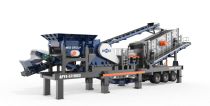
Not all rock is created equal. A material’s Mohs hardness rating – from 1 (talc) to 10 (diamond) – determines how it behaves under compression, impact, and abrasion. Selecting the wrong crusher for your material hardness leads to rapid wear part consumption, low throughput, and constant downtime. This guide explains how to match crusher types to specific Mohs ranges, whether you operate a fixed stone crusher plant or a mobile unit. We will cover material testing methods, crusher selection matrices, and real-world examples from mines and quarries.
The Mohs scale measures scratch resistance. For crushing purposes, materials below Mohs 4 are considered soft, Mohs 4–6 are medium, and Mohs 6–7 are hard. Anything above Mohs 7 requires specialized equipment. Your stone crusher plant(planta de trituración y cribado) configuration changes dramatically across these ranges. A plant processing limestone (Mohs 3) can use high-speed impactors. The same stone crusher plant processing granite (Mohs 6.5) would destroy impact blow bars in hours, requiring a jaw and cone circuit instead.
Compressive strength correlates with Mohs hardness but is not identical. A material with Mohs 7 typically has unconfined compressive strength above 200 MPa. Jaw and gyratory crushers use compression to fracture material, making them suitable for hard rock. Impact crushers use high-speed rotors to break material upon impact, which works well for soft to medium rock but causes excessive wear on hard rock. Any stone crusher plant operator must know both the Mohs rating and the abrasion index of their feed material.
Below is a practical guide for matching equipment to Mohs values. These recommendations apply to both stationary and mobile configurations of any stone crusher plant.
These materials crush easily and produce fines rapidly. An impact crusher (horizontal shaft impactor or HSI) is the most economical choice for a stone crusher plant processing soft rock. Impactors achieve reduction ratios up to 20:1, meaning you can often eliminate secondary crushing stages. For example, a single HSI in a stone crusher plant can reduce 600 mm limestone to 40 mm product in one pass.
However, soft materials can cause problems. They may pack in crushing chambers or generate excessive dust. A stone crusher plant processing clay-rich limestone should include a scalping screen before the crusher to remove sticky fines. For portable operations, a stone crusher plant with an HSI and integrated pre-screen works well. Recommended for Mohs 1–4: HSI crusher, hammer mill, or roll crusher. Avoid cone crushers – they choke on soft, sticky material.
This middle range offers multiple options. A jaw crusher for primary reduction followed by an impactor or cone for secondary is common. The stone crusher plant(planta chancadora de piedra) operator must decide based on abrasion. Low-abrasion medium rock (dolomite) works well with an impactor for cubical product. High-abrasion medium rock (andesite) requires a cone for secondary crushing to avoid rapid blow bar wear.
Many mobile stone crusher plant configurations for medium rock use a jaw crusher as the primary and a cone as the secondary. One quarry operator running a stone crusher plant on andesite (Mohs 5) achieved 4,000 hours on cone liners versus only 800 hours on impact blow bars. Recommended for Mohs 4–6 (low abrasion): Jaw + HSI. For high abrasion: Jaw + cone.
These materials demand compression crushing. A stone crusher plant processing hard rock should use a jaw crusher for primary and a cone crusher for secondary and tertiary stages. Impact crushers are not suitable – blow bars would need replacement every 200–400 hours, making operating costs prohibitive.
For a stone crusher plant on basalt (Mohs 7), specify manganese steel jaw plates (18–22% manganese) and cone liners with a coarse profile. Chamber design matters: a steep chamber in the cone crusher reduces slippage and increases throughput. Recommended for Mohs 6–7: Jaw crusher (primary) + cone crushers (secondary/tertiary). An optional VSI can be added for shaping.
These materials are at the upper limit of conventional crushing. A stone crusher plant designed for Mohs 7+ rock requires gyratory or heavy-duty jaw crushers with hydraulic adjustment to clear jams. Cone crushers must have fine-adjustment capabilities and high-torque motors. Wear part life will be shorter – expect 500–1,000 hours between liner changes.
For extremely hard quartzite (Mohs 7.5), some stone crusher plant operators use high-pressure grinding rolls (HPGR) instead of cone crushers. HPGRs use inter-particle compression and have lower wear rates on hard materials. A stone crusher plant processing trap rock (Mohs 7) switched from cone crushers to HPGRs and increased wear part life from 600 to 2,400 hours. Recommended for Mohs 7–9: Gyratory or heavy-duty jaw + HPGR or specialized cone.
Never rely on visual inspection or vendor claims. Conduct these three tests on representative samples:
Use standard picks of known hardness (2 through 9). Scratch the material surface. The hardest pick that leaves a visible scratch approximates the Mohs value. This test costs under $100 but requires practice. For a major stone crusher plant investment, send samples to a laboratory for point load strength testing.
This measures wear resistance. A sample rotates with steel balls; the percentage of material passing a 1.7 mm sieve is the LA abrasion value. Values below 30 indicate soft rock suitable for an impactor in a stone crusher plant. Values above 50 indicate hard rock that needs compression crushing.
The Bond work index (kWh/t) measures the energy required to grind material. Values under 10 kWh/t indicate soft rock; 10–15 is medium; 15–20 is hard; above 20 is very hard. A stone crusher plant designed for a Bond index of 18 will fail on material with an index of 25. Request this test from your material supplier.
The operator installed a stone crusher plant with a single HSI crusher and a four-deck screen. Production reached 350 tonnes per hour at a wear cost of $0.12 per tonne. A neighboring quarry used a jaw-cone stone crusher plant on the same limestone and paid $0.28 per tonne in wear costs. The impactor-based stone crusher plant was clearly superior for soft rock.
This stone crusher plant originally used a jaw + HSI configuration. Blow bars lasted 250 hours. The operator converted to jaw + cone. Cone liners lasted 1,800 hours, reducing wear cost from $0.65 to $0.19 per tonne. The stone crusher plant also produced less fines, increasing yield by 7%.
Buying a jaw-cone stone crusher plant for limestone wastes capital. A simpler impactor-based stone crusher plant costs 30–40% less and produces more cubical product from soft rock.
Using an impactor on granite is the most common and costly mistake. The stone crusher plant will have unsustainable wear costs. One contractor lost $200,000 on a single project by choosing an impactor-based stone crusher plant for basalt.
Two materials with the same Mohs hardness can have very different abrasion indices. Your stone crusher plant needs different liner materials for each. Always request the abrasion index (ASTM G65) before finalizing crusher type.
Start with a reliable hardness test. Do not trust the material supplier’s casual description – get a lab report. Then match your stone crusher plant configuration to the hardness range using the guidelines above. For materials on the boundary (Mohs 5.5 to 6.5), test both an impactor and a cone on your specific material. Rent or borrow equipment for a week-long trial. The cost of the trial is negligible compared to buying the wrong stone crusher plant.
Also consider future flexibility. If your stone crusher plant will process multiple material types, choose a modular design that allows crusher interchangeability. Some manufacturers offer a stone crusher plant where you can swap an HSI for a cone crusher module in two shifts. Finally, negotiate wear part consumables into your purchase agreement – a supplier who guarantees liner life on your specific material is a supplier who has correctly matched the stone crusher plant to your hardness requirements. By following this hardness-based selection process, you will achieve predictable production costs, longer wear life, and consistent product quality for the life of your operation.

© 2025 Crivva - Hosted by Airy Hosting Managed Website Hosting.