Dubai’s vertical construction ambitions are unlike those of almost any other city on earth. The sheer density of supertall and megatall tower projects advancing simultaneously across Downtown Dubai, Dubai Marina, Jumeirah Lake Towers, and the emerging development corridors along Sheikh Zayed Road creates a structural engineering environment where concrete placement methodology is not a contractor preference — it is a structural integrity imperative. The towers rising across this skyline are not simply tall buildings. They are extraordinarily complex structural systems where the quality, consistency, and continuity of concrete placement at every stage of construction directly determines long-term performance under the thermal cycling, wind loading, and occupancy demands of a half-century service life in one of the world’s most thermally aggressive climates.
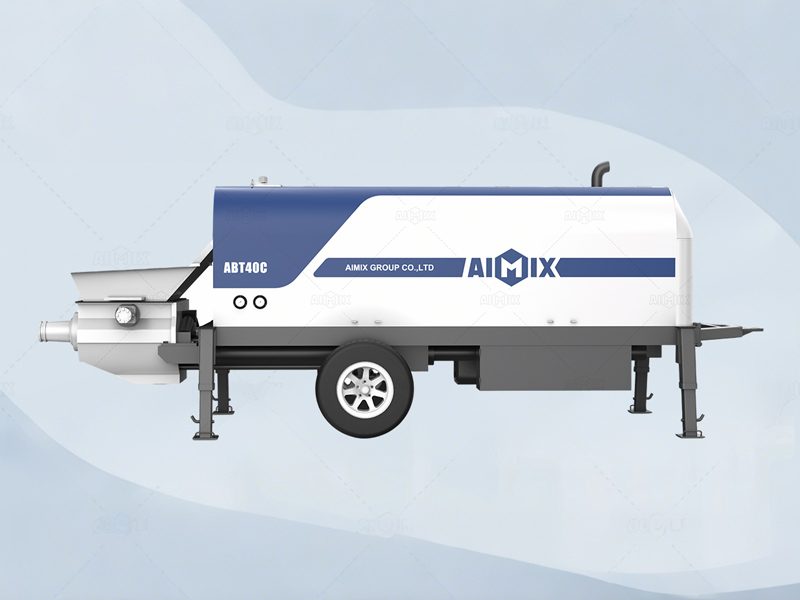
Continuous concrete placement through concrete pump for sale in Dubai — maintaining uninterrupted concrete supply and progressive placement within defined time limits across the full extent of a structural element — is the practice that makes monolithic structural integrity achievable in these conditions. It is also the practice most vulnerable to the logistical, environmental, and operational pressures that Dubai tower construction imposes. Understanding why continuity matters so profoundly in this specific context, what the consequences of interruption look like across different structural elements, and how Dubai’s most experienced tower contractors engineer their concrete supply chains to maintain continuity under demanding conditions, reveals a dimension of high-rise construction practice that is as technically sophisticated as any other aspect of supertall structural engineering.
Cold joints — the planar discontinuities that form when fresh concrete is placed against concrete that has advanced beyond initial set — are the primary structural consequence of placement interruption. Their formation is not a surface defect or a cosmetic concern. In the structural elements of a Dubai supertall tower, a cold joint represents a plane of reduced tensile, shear, and bond strength running through a critical load-carrying section — a weakness whose implications for structural performance under wind-induced lateral loading, seismic events, and long-term durability under Dubai’s aggressive environmental conditions are serious and largely irreversible without major remedial intervention.
The reinforced concrete core walls that provide lateral stability to Dubai’s supertall towers are among the most structurally critical elements in the entire building system. These walls, typically constructed using climbing or jump formwork systems that advance floor by floor as the tower rises, carry the cumulative lateral loads from wind pressure across hundreds of meters of tower height — loads that create shear stress and tensile stress distributions in the wall section that the wall’s homogeneous concrete matrix and reinforcement detailing are jointly designed to resist.
A cold joint in a core wall section introduces a planar discontinuity that interrupts this homogeneous stress distribution. Shear transfer across the cold joint plane depends on aggregate interlock and reinforcement crossing the joint — mechanisms that are inherently less reliable than the monolithic tensile and shear capacity of sound, continuously placed concrete. Under the cyclic lateral loading that Dubai’s wind environment imposes on supertall towers — sustained wind pressures during Shamal events, dynamic oscillations at the tower’s natural frequency — cold joint planes experience repeated stress reversal cycles that can progressively degrade the limited shear transfer capacity available, creating a long-term structural vulnerability that conservative structural engineering practice seeks to eliminate entirely through placement continuity discipline.
Dubai’s ambient temperature regime — with summer peak temperatures regularly exceeding 45°C and direct solar radiation heating formwork and reinforcement surfaces well above air temperature — compresses the workability window within which continuous placement must be completed before cold joint risk emerges. Concrete mixes designed for 90-minute workability in temperate conditions may retain compliant workability for 45 to 60 minutes under Dubai summer conditions, depending on mix design, admixture specification, cement type, and the thermal mass of the structural element being placed. This compressed window tightens the operational parameters within which concrete supply continuity must be maintained — leaving less time to resolve supply interruptions before the placed surface advances beyond initial set and cold joint formation becomes unavoidable.
Dubai’s tower foundations present some of the most demanding continuous placement requirements in the entire construction program. Raft slabs for supertall towers in this city frequently exceed 3 meters in depth and may cover plan areas of several thousand square meters — concrete volumes that can reach 15,000 to 25,000 cubic meters in a single foundation element. Placing this volume as a monolithic pour, maintaining continuity across the full plan extent within the workability window of the mix, requires concrete supply rates and placement organization that challenge even the most capable contractor and supply chain operations.
The structural rationale for raft slab continuity is directly related to the load distribution function these elements perform. A tower raft slab transfers the enormous concentrated loads from core walls and perimeter columns into the pile cap system and ultimately to the deep pile foundations that reach competent bearing strata beneath Dubai’s shallow sedimentary geology. The load transfer mechanism depends on the raft slab behaving as a monolithic structural plate — a behavior that cold joint planes running through the slab thickness can compromise by creating planes of differential stiffness that concentrate stress and potentially initiate cracking under the sustained high loads of tower operation.
Achieving continuous placement in Dubai tower construction requires supply chain engineering that begins months before the first cubic meter of concrete is placed. The logistics of delivering concrete to supertall tower construction sites in one of the world’s most congested urban environments, maintaining supply continuity across pours that may extend over 24 to 48 continuous hours, and managing the thermal challenges that Dubai’s climate imposes on mix workability — these challenges demand systematic planning rather than operational improvisation.
Major Dubai tower contractors typically establish dedicated on-site or near-site batching plant capacity for critical structural pours rather than relying entirely on independent ready-mix supply. The rationale is supply security. A pour of 10,000 cubic meters requiring continuous supply over 30 to 36 hours cannot tolerate the supply variability that shared batching plant capacity introduces — where the concrete program must compete with other customers’ demand and where plant downtime events create supply gaps with no immediate alternative source.
Dedicated batching plants for major tower pours are typically configured with redundancy across critical systems — twin mixer configurations where one mixer can maintain partial supply while the other undergoes servicing, backup generator capacity that prevents grid power interruptions from stopping production, and duplicate batching computer systems that allow recipe management continuity if the primary control system requires attention during a critical pour. This redundancy represents capital investment beyond what a single plant configuration requires, but its cost is trivial relative to the remedial and delay costs that a placement interruption in a critical structural element would impose.
Delivering concrete to placement levels 200, 300, or 400 meters above grade requires high-pressure stationary concrete pump systems whose performance characteristics define the physical limits of what continuous placement can achieve in supertall construction. Pumps selected for Dubai supertall tower pours specify output pressures in the range of 150 to 200 bar — pressure ratings that maintain adequate flow velocity through the full vertical pipeline height while accounting for the pressure losses associated with pipeline length, bends, and the rheological characteristics of high-performance concrete mixes with the low water-cement ratios that Dubai’s structural specifications typically demand.
Pipeline management during a supertall tower pour is a continuous operational activity, not a set-and-forget configuration. Pipe wall wear monitoring at high-pressure sections, pressure gauge observation for blockage indicators, and maintaining pump operator awareness of mix consistency changes that signal developing blockage conditions — these activities run continuously throughout the pour duration, because a pipeline blockage at 300 meters elevation during a critical core wall pour creates an interruption consequence that no amount of operational urgency can resolve quickly enough to prevent cold joint formation.
Controlling fresh concrete temperature at the point of placement is a supply chain engineering requirement that Dubai tower projects address through chilled water and ice incorporation into the batching process. Dubai’s summer ambient conditions can produce concrete mix temperatures approaching 35 to 38°C at discharge from the batching plant if no active cooling is applied — temperatures at which cement hydration rates create workability loss that cannot be adequately compensated by admixture dosage adjustment without compromising other mix performance properties.
Chilled water systems, maintaining mixing water temperature at 5 to 10°C, are standard specification for major Dubai tower batching plants during summer production periods. Ice substitution for a portion of the mixing water — replacing water mass with ice mass to exploit the latent heat absorption of ice melting during mixing — provides additional mix temperature reduction for the most demanding placements where standard chilled water cooling is insufficient to achieve the target fresh concrete temperature. The logistics of ice supply to batching plants during extended pour events — ice production rates, insulated storage capacity, and delivery scheduling — form part of the pour planning process for summer tower foundation pours, reflecting the systematic approach to temperature management that continuous placement integrity in Dubai’s climate demands.

© 2025 Crivva - Hosted by Airy Hosting Managed Website Hosting.