

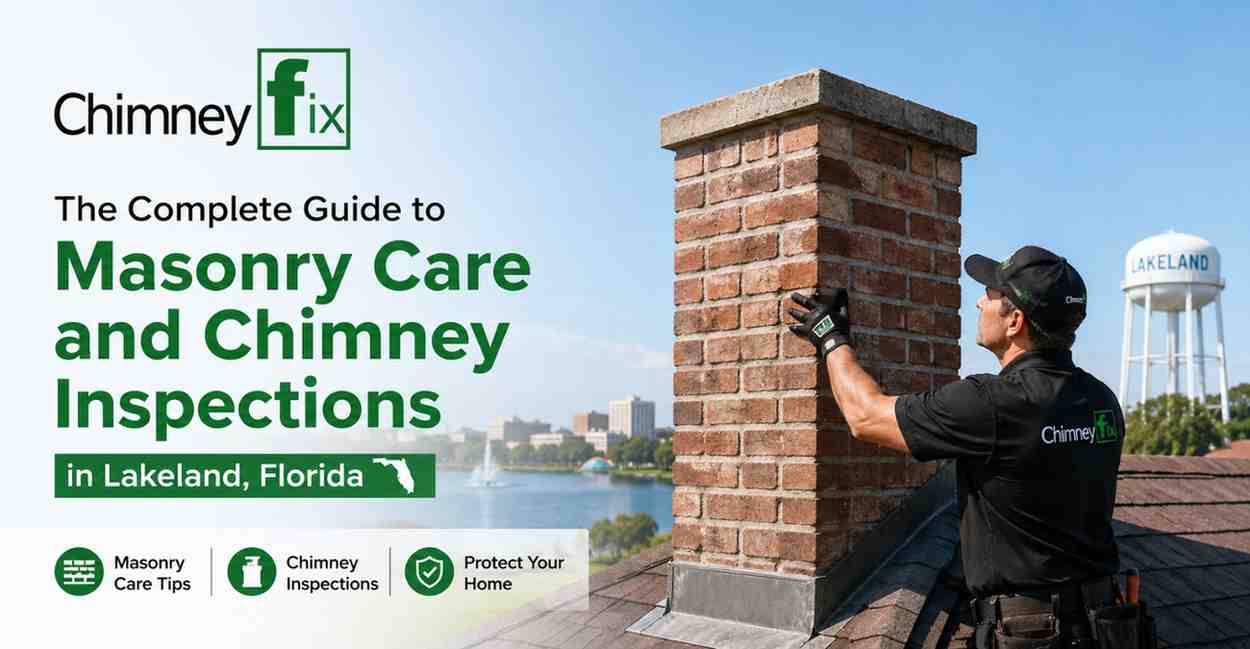
When you think of Central Florida, fireplaces and chimneys are rarely the first architectural features that come to mind. Yet, countless homes across Lakeland—from the historic 1920s bungalows in the Dixieland district to expansive modern builds in Grasslands—feature beautiful masonry chimneys. Because these structures are used less frequently for heating than their northern counterparts, they often fall into a dangerous cycle of “out of sight, out of mind.”
However, a chimney in Florida faces a unique set of severe environmental threats. The combination of intense ultraviolet radiation, torrential summer downpours, high humidity, and occasional hurricane-force winds creates a perfect storm for accelerated masonry decay. Understanding the science of chimney deterioration and the necessity of proactive maintenance is essential for protecting your home’s structural integrity.
Here is everything Florida homeowners need to know about preserving their fireplaces, understanding the mechanics of moisture intrusion, and knowing when to call in the professionals.
In colder climates, the primary enemies of a chimney are freeze-thaw cycles and heavy creosote buildup from daily winter use. In Lakeland, the primary enemy is water.
Masonry materials—brick, concrete, block, and stone—are inherently porous. They act like rigid sponges. In Central Florida’s subtropical climate, chimneys are subjected to a nearly constant barrage of moisture. When rain saturates brickwork, and the relentless Florida sun subsequently bakes the exterior, the moisture trapped inside turns to vapor. This vapor expands, putting immense internal pressure on the brick and mortar joints.
The interior of your chimney, known as the flue, is just as vulnerable to moisture as the exterior. Many older Lakeland homes feature traditional terracotta clay tile liners. When you do occasionally burn wood during a rare January cold snap, combustion byproducts (creosote and soot) adhere to the flue walls.
Creosote is highly acidic. When high summer humidity or wind-driven rain introduces moisture into the flue, the water mixes with the residual creosote to form a highly corrosive chemical compound. This acidic slurry slowly eats away at the terracotta tiles and the mortar holding them together. Over time, the liner can crack, flake, or collapse. A compromised liner is a severe fire hazard, as it allows intense heat and combustible gases to escape into the wooden framing of your home.
Furthermore, a chimney without a proper cap essentially acts as a massive funnel for rainwater. A single heavy afternoon thunderstorm can dump gallons of water directly into your firebox, leading to rusted dampers, decaying firebrick, and pervasive mold growth within your walls.
Homeowners do not need to be certified sweeps to spot the early warning signs of chimney degradation. Conducting a quick visual assessment of your property every few months can save you thousands of dollars in restoration costs. Look for the following red flags:
Efflorescence: This is a white, chalky, or powdery stain that appears on the exterior brickwork. It occurs when water infiltrates the masonry, dissolves the natural salts within the brick and mortar, and brings those salts to the surface as it evaporates. While efflorescence itself is easily cleaned away, it is a glaring distress signal that your chimney is absorbing too much water.
Spalling Bricks: If you find small shards of brick or chunks of masonry lying on your roof or in your yard, you are witnessing spalling. This means the structural integrity of the brick face has been destroyed by trapped moisture, causing the surface to pop off. Once the hard outer layer of a brick spalls off, the softer interior decays rapidly.
Deteriorating Mortar Joints: Healthy mortar should be flush and firm. If the mortar between your bricks looks receded, cracked, or is crumbling away like sand when touched, your chimney has lost its structural binding. This requires an immediate process called tuckpointing, where the decayed mortar is routed out and replaced with fresh, structurally sound material.
Rust on the Firebox or Damper: If you open your fireplace and notice orange rust stains, a damper that is difficult to open or close, or a musty, damp odor in your living room, water is actively penetrating the system.
Many homeowners make the mistake of assuming a basic roof inspection covers the chimney. It does not. Roofers evaluate shingles; they do not possess the specialized training to assess the internal drafting mechanics, clearances to combustibles, or the condition of the smoke chamber.
According to the National Fire Protection Association (NFPA 211 standard), chimneys, fireplaces, and vents should be inspected at least once a year. If you are searching for dedicated chimney inspections Lakeland professionals can provide, it is vital to ensure the company follows these strict NFPA guidelines, which categorize inspections into three distinct levels:
A Level 1 inspection is the minimum requirement for a chimney under continued use under the same conditions. The technician will examine the readily accessible interior and exterior portions of the chimney structure, basic appliance installation, and the connections. They will verify that the chimney is free of obstruction and combustible deposits.
A Level 2 inspection is more comprehensive and is absolutely required when any changes are made to the system (like changing fuel types or relining the flue), upon the sale or transfer of the property, or after an operating malfunction or external event like a severe hurricane or lightning strike.
This level includes everything in a Level 1 inspection, plus the examination of accessible portions of the attics, crawl spaces, and basements. Most importantly, a reputable sweep will utilize closed-circuit video scanning equipment. A specialized camera is lowered down the flue, allowing the technician to examine every inch of the liner for microscopic cracks, misaligned joints, or hidden water damage that is invisible to the naked eye.
A Level 3 inspection is only necessary when a Level 1 or Level 2 inspection suggests a hidden hazard that cannot be evaluated without access to concealed areas. This may involve removing portions of the masonry, drywall, or the chimney crown to assess severe structural failure.
To truly protect a chimney in Florida, you have to secure its three main lines of defense against water: the cap, the crown, and the flashing.
1. The Chimney Cap: An uncapped chimney is an open invitation to disaster. A high-quality, stainless-steel chimney cap acts as an umbrella for your flue. It prevents rain from entering the home and features a mesh screen that acts as a spark arrestor. In Florida, this mesh serves a vital dual purpose: wildlife exclusion. Raccoons, squirrels, and birds—particularly Chimney Swifts, which are federally protected under the Migratory Bird Treaty Act—love to build nests in uncapped flues. A nest block can cause fatal carbon monoxide to back up into your home when a fire is lit.
2. The Chimney Crown: The crown is the concrete slab that covers the top opening of the chimney (surrounding the flue pipes). Its job is to shed water away from the masonry below. Because it is horizontal and takes the brunt of the sun and rain, the crown is highly susceptible to cracking. When a crown cracks, water seeps directly into the internal structure of the chimney.
3. The Flashing: Flashing refers to the metal sheets layered where the chimney intersects with the roofline. Because a chimney settles differently than the house framework, and because wind causes slight shifts in the roof, the flashing seal is constantly stressed. Failed flashing is the number one cause of roof leaks surrounding a chimney. Proper flashing requires custom fabrication, step-flashing woven into the shingles, and a counter-flashing embedded directly into a mortar joint.
The most cost-effective way to manage a chimney is through proactive defense. Once masonry begins to fail, the restoration costs multiply rapidly.
After a professional sweep has verified that your structure is sound and watertight, you should strongly consider professional waterproofing. It is crucial to note that chimneys should never be painted or sealed with hardware-store silicone sealers. Paint and silicone trap internal moisture, preventing the bricks from breathing, which actually accelerates internal rotting.
Additionally, keeping nearby tree branches trimmed back will prevent physical damage during high winds and reduce the amount of moss, algae, and organic debris that can accumulate on the masonry and trap moisture against the brick face.
Your chimney is not just a decorative piece; it is a heavy, complex structural and ventilation system directly tied to the safety of your home. Taking the time to understand the unique environmental pressures it faces in Central Florida empowers you to make informed decisions about its upkeep.
Written by the Master Masons and CSIA-Certified Sweeps at ChimneyFix With over two decades of combined experience in complex masonry restoration, flue relining, and historic brick preservation, ChimneyFix is dedicated to elevating home safety standards. We are the premier provider of tuckpointing, custom cap installations, and thorough chimney inspections Lakeland residents trust. Our team utilizes advanced video diagnostics and breathable siloxane waterproofing technology to protect Florida homes from severe weather decay, adhering strictly to all NFPA 211 codes and safety regulations.

© 2025 Crivva - Hosted by Airy Hosting Managed Website Hosting.