

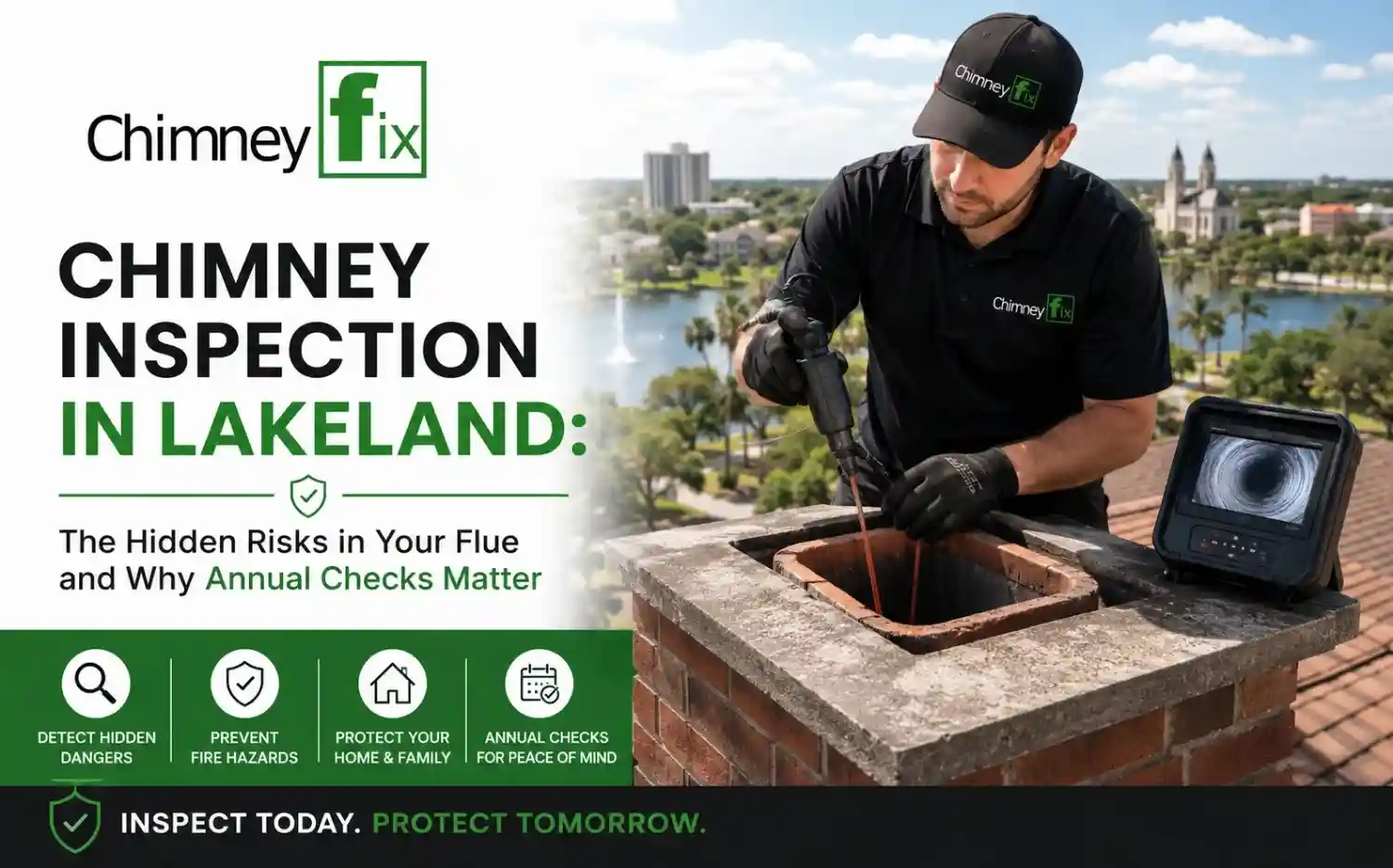
A chimney inspection is a comprehensive, top-to-bottom evaluation of your fireplace, flue liner, and exterior masonry to identify structural damage, combustible creosote buildup, and blockages. According to the National Fire Protection Association (NFPA) 211 standard, every chimney, fireplace, and vent should be inspected at least once a year.
For residents of Central Florida, this guideline is often overlooked. Because fireplaces in Polk County are typically only used a few times during brief winter cold snaps, many homeowners assume their systems are pristine. In reality, infrequent use, combined with our extreme humidity and abundant wildlife, creates a perfect storm for hidden chimney deterioration.
If you live in an older property or simply haven’t had your flue checked in a few years, here is what you need to know about fireplace safety and why local environmental factors make annual maintenance non-negotiable.
Unlike homes in the Northeast where chimneys are subjected to freeze-thaw cycles, Florida chimneys face a different set of destructive elements. A chimney that sits unused for 350 days a year is actually at a higher risk for certain types of degradation than one used daily.
Lakeland’s torrential summer downpours and constant, stifling humidity take a severe toll on brick and mortar. Historic neighborhoods like the Lake Morton and Dixieland districts feature beautiful, decades-old brick chimneys. Unfortunately, masonry is porous like a sponge.
When a chimney lacks a high-quality, properly fitted cap, rain pours directly into the flue. Even with a cap, ambient humidity can penetrate the mortar joints. Over time, this trapped moisture causes the mortar to crumble and the bricks to spall (flake and peel away). Inside the home, this moisture mixes with old soot to create a highly acidic slurry that eats away at terra-cotta clay flue liners, rendering the chimney unsafe for combustion.
An unused, uncapped chimney is essentially a hollow, predator-free tree—the ideal nesting ground for Central Florida wildlife. Raccoons, squirrels, and bats frequently seek shelter in warm, dark flues.
More importantly, chimneys are the preferred nesting site for the Chimney Swift, a small, cigar-shaped bird that migrates to North America in the spring. Because Chimney Swifts are protected under the federal Migratory Bird Treaty Act, it is a federal offense to remove their nests if there are eggs or flightless young inside. You must wait for them to leave. A blocked flue is a massive carbon monoxide hazard; lighting a fire with a nest inside will force toxic gases and thick smoke directly back into your living room.
Scheduling a routine chimney inspection Lakeland homeowners rely on is the only way to detect these blockages before you strike a match on the first chilly night of the year.
Not all chimney inspections are created equal. The Chimney Safety Institute of America (CSIA) recognizes three distinct levels of inspection, each designed for a specific scenario.
If your fireplace has not changed, you plan to use it exactly as you did last year, and you haven’t experienced any structural issues, a Level 1 inspection is sufficient.
During this assessment, the technician visually examines the readily accessible portions of the chimney exterior, interior, and accessible portions of the appliance and the chimney connection. They will check the basic soundness of the structure, look for major obstructions like bird nests, and evaluate the volume of creosote deposits inside the firebox and lower flue.
A Level 2 inspection is required under three circumstances:
You are buying or selling a home.
Your home has experienced an external event that could have caused damage (like a severe hurricane, a lightning strike, or a chimney fire).
You are changing the system’s fuel type (e.g., converting from a wood-burning fireplace to vented gas logs).
This level goes much deeper. In addition to a visual check, the sweep will navigate a specialized closed-circuit camera up the entire length of the flue. This video scan reveals hidden hazards that are impossible to see from the firebox or the roof, such as cracked terra-cotta tiles, missing mortar joints, and dangerous gaps where sparks could escape into the combustible wood framing of your attic. If you are purchasing a home, investing in a Level 2 fireplace assessment can save you thousands of dollars in unexpected repairs.
A Level 3 inspection is rare and only recommended when a Level 1 or 2 inspection suggests a severe, hidden hazard that cannot be evaluated without special access. This might involve removing drywall, dismantling the masonry crown, or taking out the firebox panels to access the surrounding structure.
The most critical safety element of any chimney evaluation is the measurement of creosote. Creosote is a highly flammable, tar-like byproduct of burning wood. According to the CSIA, there are over 25,000 chimney fires in the United States every year, and the vast majority are fueled by neglected creosote.
Creosote develops in three stages:
Stage 1: A flaky, velvety soot that is easily brushed away.
Stage 2: A crunchy, tar-like crust that requires stiff wire brushes and aggressive scraping to remove.
Stage 3: A thick, shiny, hardened glaze that looks like black glass.
Stage 3 creosote is highly concentrated fuel. If the temperature in your flue gets hot enough, this glaze will ignite, burning at upwards of 2,000 degrees Fahrenheit—hot enough to melt mortar, crack masonry, and set the adjacent roof decking on fire. Because Florida homeowners often burn unseasoned (wet) wood or keep their fires smoldering at low temperatures to avoid overheating the room, they are surprisingly susceptible to rapid Stage 3 creosote accumulation.
Most homeowners don’t think about their fireplaces until the first cold front hits in late November or December. By then, reputable chimney sweeps are booked out for weeks or even months.
The smartest time to schedule your maintenance is in the spring or summer. Not only is scheduling much easier, but it also gives you ample time to address any necessary repairs—such as installing a custom chimney cap, applying masonry waterproofing, or repairing a rusted damper—long before fireplace season begins.
A well-maintained chimney adds undeniable charm and supplementary warmth to your home. But an uninspected chimney is a liability. Take the guesswork out of your winter preparations by ensuring your flue is clear, structurally sound, and ready for a safe fire.
About the Author: ChimneyFix is a premier chimney sweep and masonry restoration firm serving Central Florida, dedicated to protecting homes from structural decay and unseen fire hazards. Led by CSIA-certified technicians and licensed masonry experts, the team strictly adheres to NFPA 211 safety standards, ensuring every home receives honest, value-driven diagnostics. Whether you are buying a historic home or preparing for the winter season, ChimneyFix provides comprehensive chimney evaluations tailored to the unique climate challenges of Polk County.

© 2025 Crivva - Hosted by Airy Hosting Managed Website Hosting.