


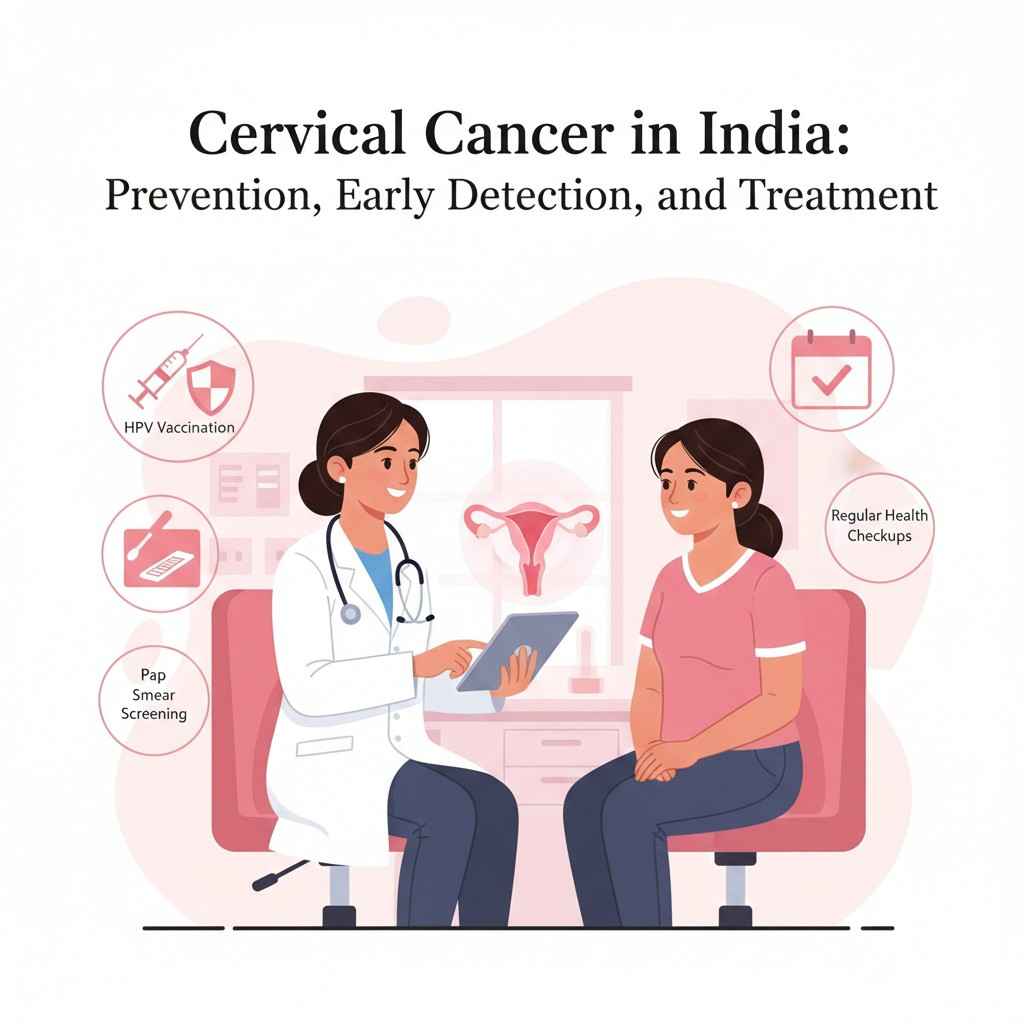
Cervical cancer is the second most common cancer among Indian women, with over 120,000 new cases diagnosed annually. What makes this particularly tragic is that cervical cancer is one of the most preventable and treatable cancers when detected early. Despite advances in screening and vaccination, many Indian women still lack access to preventive services, leading to late-stage diagnoses and poor outcomes. Understanding cervical cancer, its causes, prevention strategies, and treatment options is essential for every woman.
Understanding Cervical Cancer
Cervical cancer develops in the cervix, the lower part of the uterus that connects to the vagina. Unlike many cancers that develop spontaneously, cervical cancer has a clear cause in most cases: persistent infection with high-risk types of human papillomavirus (HPV). HPV is a common sexually transmitted infection, with most sexually active individuals contracting it at some point. While the immune system clears most HPV infections naturally, persistent infection with high-risk HPV types can lead to precancerous changes in cervical cells that, if left untreated, may progress to cancer over many years.
This slow progression from HPV infection to precancerous changes to cancer is what makes cervical cancer so preventable. Regular screening can detect precancerous changes before they become cancer, allowing for simple treatments that prevent cancer development.
Several factors increase cervical cancer risk beyond HPV infection. Early sexual activity, particularly before age 18, increases exposure risk. Multiple sexual partners or having a partner with multiple partners increases HPV exposure. Other sexually transmitted infections like chlamydia or herpes increase risk. Weakened immune system due to HIV infection, immunosuppressive medications, or other conditions reduces the body’s ability to clear HPV. Smoking damages cervical cells and makes it harder to fight HPV infection. Long-term oral contraceptive use (more than five years) may slightly increase risk. Having many pregnancies, especially more than three full-term pregnancies, is associated with increased risk. Family history of cervical cancer and low socioeconomic status, often linked to limited healthcare access, are also risk factors.
In India, several socioeconomic factors contribute to high cervical cancer rates including lack of awareness about HPV and cervical cancer, limited access to screening services, particularly in rural areas, cultural barriers to discussing reproductive health, low HPV vaccination rates, and inadequate follow-up of abnormal screening results. Women in urban areas like Ahmedabad have better access to screening services at facilities like Zanish Cancer Hospital, but awareness remains crucial.
Recognizing Symptoms and Warning Signs
Early cervical cancer often causes no symptoms, which is why regular screening is so important. However, as cancer develops, various symptoms may appear. Abnormal vaginal bleeding is the most common symptom, including bleeding between periods, after intercourse, or after menopause. Heavier or longer menstrual periods than usual also warrant attention.
Unusual vaginal discharge that may be watery, bloody, heavy, or foul-smelling should be evaluated. Pelvic pain or pain during intercourse can indicate cervical problems. Pain during urination or difficulty urinating may occur if cancer affects nearby structures. In advanced stages, symptoms may include back pain, leg swelling, weight loss, fatigue, and loss of appetite.
Many women, particularly in conservative communities, feel uncomfortable discussing these symptoms with doctors or family members. However, timely medical consultation is crucial. Most of these symptoms can be caused by conditions other than cancer, but only a doctor can determine the cause. Delaying consultation due to embarrassment could allow a treatable precancerous condition to progress to cancer. Cancer hospitals in Ahmedabad like Zanish Cancer Hospital provide confidential, compassionate gynecologic evaluation in a supportive environment.
Screening Recommendations for Indian Women
Women should begin cervical cancer screening at age 21, regardless of when they became sexually active. For women aged 21-29, Pap test every three years is recommended. Women aged 30-65 have options including Pap test every three years, HPV test every five years, or co-testing (Pap plus HPV) every five years. Women over 65 with adequate prior screening and no history of precancerous changes can stop screening. Women who have had hysterectomy with cervix removal for non-cancerous reasons can generally stop screening.
However, women with HIV infection, weakened immune systems, or history of precancerous changes or cervical cancer need more frequent screening as recommended by their doctor.
Diagnosis and Staging
When screening tests show abnormalities or symptoms suggest cervical cancer, additional diagnostic procedures are performed. Colposcopy uses a special magnifying instrument to examine the cervix closely, allowing the doctor to identify abnormal areas. During colposcopy, biopsy removes small tissue samples from suspicious areas for microscopic examination. Endocervical curettage scrapes tissue from the cervical canal for examination. If cancer is confirmed, additional tests determine its extent.
Imaging studies including pelvic examination under anesthesia, X-rays, CT scans, MRI, or PET scans show cancer size and spread. Cystoscopy and proctoscopy examine the bladder and rectum to check for cancer spread.
Cervical cancer is staged from Stage I (confined to cervix) to Stage IV (spread to distant organs). Staging is crucial for treatment planning and prognosis. Advanced imaging and diagnostic capabilities at Zanish Cancer Hospital, a leading cancer hospital in Ahmedabad, ensure accurate staging for optimal treatment planning.
Multidisciplinary Care Approach
Effective cervical cancer treatment requires coordination among multiple specialists. A comprehensive team includes gynecologic oncologists performing surgery, radiation oncologists providing radiation therapy, medical oncologists managing chemotherapy and targeted therapies, pathologists analyzing tissue samples, radiologists interpreting imaging studies, specialized nurses providing care and education, social workers addressing practical and financial concerns, and counselors offering emotional support.
This team approach ensures personalized treatment plans that address each patient’s unique medical and personal circumstances, leading to better outcomes and quality of life. Zanish Cancer Hospital’s multidisciplinary cervical cancer program exemplifies this coordinated approach, making it one of the most trusted cancer hospitals in Ahmedabad for women’s cancer care.
Addressing Disparities in Cervical Cancer Care
Cervical cancer demonstrates stark health disparities in India. Urban women with higher education and income levels have better access to screening, vaccination, and treatment, while rural and economically disadvantaged women face significant barriers. Addressing these disparities requires comprehensive efforts including expanding screening programs to rural areas, mobile screening camps and telemedicine, affordable or free HPV vaccination, public awareness campaigns in local languages, training of healthcare workers in underserved areas, and financial assistance programs for treatment.
Government initiatives like the National Cancer Grid and various state programs aim to improve cervical cancer prevention and treatment access. However, much work remains to ensure all Indian women can benefit from available preventive and treatment services.
When to Consult a Specialist
Women should seek consultation with a gynecologic oncologist or cancer specialist if they have abnormal screening results (abnormal Pap test or positive HPV test), symptoms like abnormal vaginal bleeding or discharge, pelvic pain or pain during intercourse, diagnosis of cervical cancer requiring treatment planning, or family history of cervical cancer and concerns about risk.
Early consultation ensures accurate diagnosis, comprehensive treatment options, expert surgical care when needed, and coordination of multidisciplinary treatment. Zanish Cancer Hospital, a trusted cancer hospital in Ahmedabad, provides expert consultation and comprehensive treatment for all stages of cervical cancer.
Conclusion
Cervical cancer is largely preventable through HPV vaccination and regular screening. For women diagnosed with cervical cancer, treatment is highly effective when the disease is caught early. The tragedy is that many Indian women still die from cervical cancer due to lack of awareness, limited access to preventive services, and late-stage diagnosis.
Every woman should know about cervical cancer prevention and screening. If you’re between ages 21 and 65 and haven’t had regular screening, schedule an appointment. If you’re a parent of adolescent girls, consider HPV vaccination. If you have symptoms, don’t delay seeking medical care. These simple steps could save your life.

© 2025 Crivva - Hosted by Airy Hosting Managed Website Hosting.