

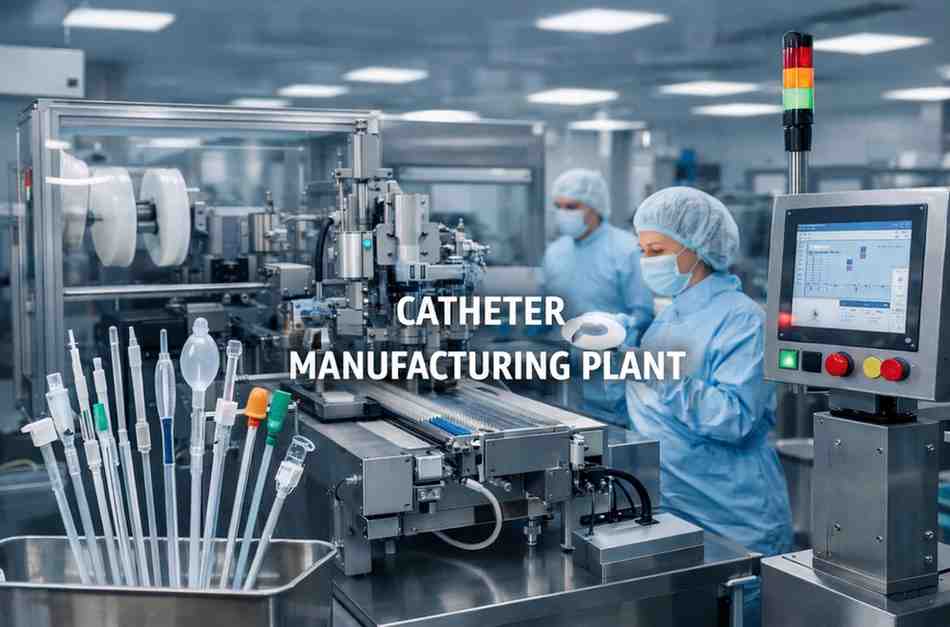
IMARC Group’s “Catheter Manufacturing Plant Project Report 2025: Industry Trends, Plant Setup, Machinery, Raw Materials, Investment Opportunities, Cost and Revenue” report provides a comprehensive guide on how to successfully set up a catheter manufacturing plant. The report offers clarifications on various aspects, such as unit operations, raw material requirements, utility supply, infrastructural needs, machinery models, labour necessities, transportation timelines, packaging costs, etc.
In addition to the operational aspects, the report also provides in-depth insights into catheter manufacturing process, project economics, encompassing vital aspects such as capital investments, project funding, operating expenses, income and expenditure projections, fixed and variable costs, direct and indirect expenses, expected ROI, net present value (NPV), profit and loss account, and thorough financial analysis, among other crucial metrics. With this comprehensive roadmap, entrepreneurs and stakeholders can make informed decisions and venture into a successful catheter manufacturing unit.
What is a Catheter?
A catheter is a thin, flexible medical tube designed to be inserted into the body to deliver or remove fluids, or to allow access to internal organs for diagnostic or therapeutic purposes. Catheters are widely used in hospitals, clinics, and homecare settings across multiple medical specialties, including cardiology, urology, neurology, and critical care. They are commonly employed for procedures such as urinary drainage, intravenous fluid administration, angiography, and minimally invasive surgeries. Depending on the application, catheters are manufactured using materials like silicone, latex, polyurethane, or specialized polymers to ensure biocompatibility, flexibility, and patient comfort. Advances in medical technology have led to the development of specialized catheters with enhanced features such as antimicrobial coatings, pressure sensors, and improved flow control. Catheter manufacturing facilities typically have Class 10K cleanrooms for precise operations like balloon blowing, laser cutting, and drug coating for cardiovascular, urinary, and other applications, requiring significant investment in R&D and certified processes. These facilities use high-tech processes like extrusion, braiding, and cleanroom assembly to produce specialized medical tubes, strictly adhering to FDA/ISO standards (like ISO 13485) for quality and sterility.
Market Trend and Drivers of Catheter:
The catheter market is primarily driven by the rising prevalence of chronic diseases such as cardiovascular disorders, diabetes, kidney failure, and urological conditions, which require frequent diagnostic and interventional procedures. The growing aging population is another key factor, as elderly patients are more prone to conditions that necessitate long-term catheterization and minimally invasive treatments. Technological advancements, including the development of drug-coated and sensor-enabled catheters, are further improving clinical outcomes and expanding adoption. In addition, the global shift toward minimally invasive surgeries has significantly increased demand for advanced catheter-based devices. Expanding healthcare infrastructure in emerging economies, coupled with increasing healthcare expenditure, is also supporting market growth. From an industry perspective, rising interest from investors and manufacturers is evident, as factors such as scalable production, export potential, and detailed assessments of catheter manufacturing plant cost are encouraging new facility setups.
Request a Sample Report: https://www.imarcgroup.com/catheter-manufacturing-plant-project-report/requestsample
Features of a Catheter Production Facility:
Key Aspects to Setup a Catheter Plant:
Requirements to Setup a Facility:
Types of Costs to Setup a Factory:
Project Economics:
Key Questions Answered in the Report:
Key Features:
| Customization Scope | The report can also be customized based on the requirement of the customer |
| Post-Sale Analyst Support | 10-12 Weeks |
| Report Delivery Format | PDF and Excel through email (We can also provide the editable version of the report in PPT/Word format on special request) |
How IMARC Can Help?
IMARC Group is a global management consulting firm that helps the world’s most ambitious changemakers to create a lasting impact. The company provide a comprehensive suite of market entry and expansion services. IMARC offerings include thorough market assessment, feasibility studies, company incorporation assistance, factory setup support, regulatory approvals and licensing navigation, branding, marketing and sales strategies, competitive landscape and benchmarking analyses, pricing and cost research, and procurement research.
Services:
Contact Us:
IMARC Group
134 N 4th St. Brooklyn, NY 11249, USA
Email: [email protected]
Tel No:(D) +91 120 433 0800
United States: (+1-201971-6302)

© 2025 Crivva - Hosted by Airy Hosting Managed Website Hosting.