

Vibe coding platforms are transforming how teams develop AI-native products by enabling the conversion of ideas into functional software through natural language and AI collaboration. They help startups and enterprises move faster from concept to execution without losing alignment.
Think about those times when your meeting room is charged with a genuinely great idea. It could streamline a core process or even open a new revenue stream. The vision is clear, vivid, and the whiteboard proves it. The vibrant energy starts to fade, however, when it comes to translation. You wait for a first draft, for something tangible to finally emerge from the planning stage. This gap is where momentum is most fragile.
What if you could compress that timeline instead? This is the practical promise now offered by vibe coding, driven by AI collaboration and increasingly supported by vibe coding platforms designed to accelerate early product execution. It is a development approach that allows teams to describe logic and interfaces in plain language and see working software emerge as a true starting point.
The platforms enabling this are varied, each with a distinct philosophy. Your choice will decide your workflow. Below is an evaluation of the most capable options among today’s best vibe coding platforms, followed by a selection framework. The goal is not just to be faster, but to be more precisely aligned from the very first line of code.
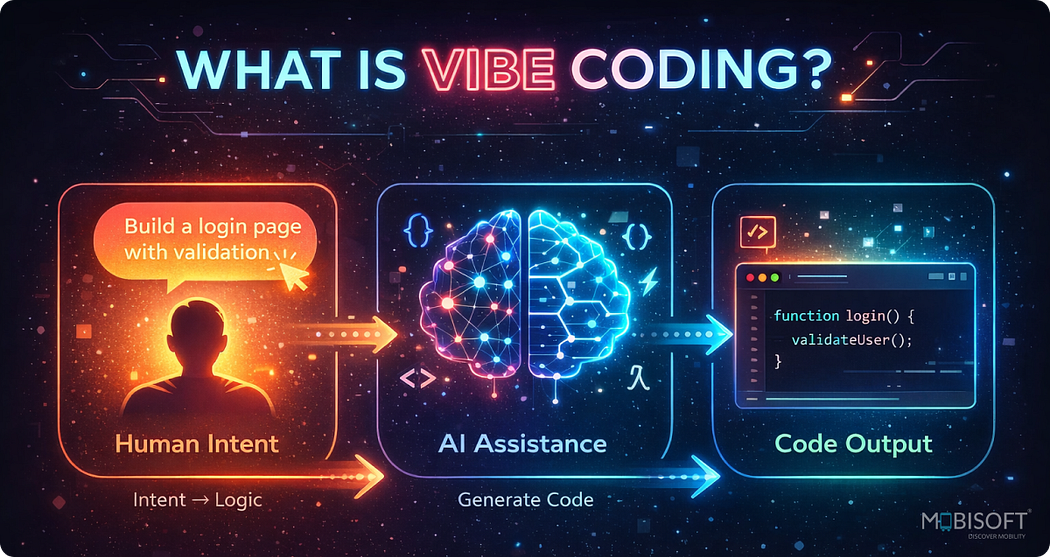
Vibe coding is a term that emerged in late 2024 to describe AI-driven software development where developers and non-developers alike describe what they want in natural language, and AI generates working code and applications. It is unlike traditional coding that requires deep technical knowledge of programming languages and frameworks. With vibe coding, you can communicate your intent conversationally while the AI handles the technical implementation.
This approach has been popularized by the rapid advancement of large language models (LLMs) like Claude, GPT-4, and Gemini, which now power many vibe coding tools capable of understanding complex requirements and generating production-quality code. The term reflects the intuitive, natural way users interact with these systems.
For teams evaluating when and where vibe coding fits into their roadmap, a structured AI strategy consulting approach helps align experimentation with long-term business goals.
The platforms in this guide fall into three distinct categories:
Imagine a different starting point. You describe what you need in plain language, just as you explained it to your team. The platform in your browser listens. Then it begins constructing not just a front-end, but a complete application. It layers the user interface, spins up the necessary backend logic, and prepares the foundation for data. These tools aim to deliver a working, deployable product from a conversation.
These are traditional integrated development environments enhanced with AI capabilities. They integrate into your existing workflow and codebase, acting as an AI pair programmer.
These are terminal-based tools that integrate AI into your command-line workflow. They work alongside your existing tools and IDEs.
Vibe coding works best when integrated with broader artificial intelligence services that address data pipelines, model selection, and system architecture.
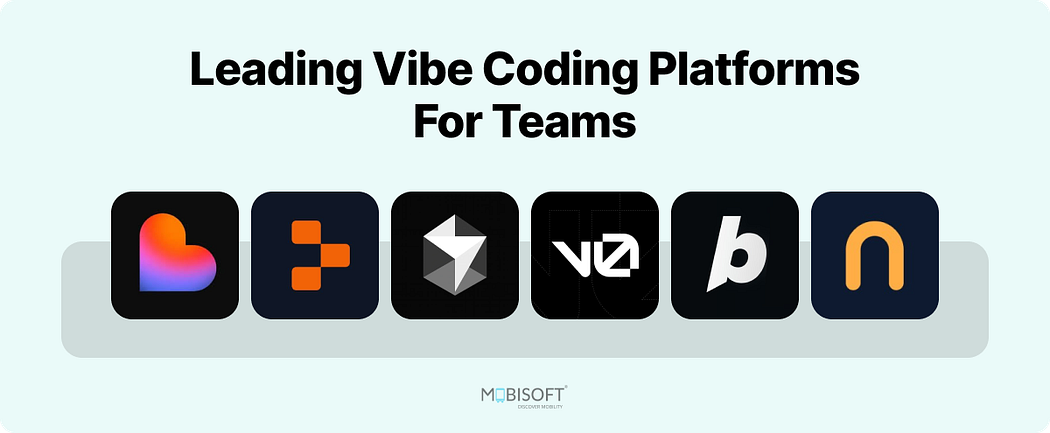
Website: https://lovable.dev/
Lovable believes software should start with a dialogue. Its foundation is that simple truth. The platform is designed for teams where product vision, design intent, and engineering reality must align from the very first moment. It brings everyone into the same creative space, making it well-suited for teams exploring vibe coding platforms for AI development. Product leaders, designers, and engineers can build a shared understanding from the ground up, using conversation as their primary tool. This is a collaborative creation, paced by discussion.
Strengths:
It is a remarkable tool for collaboration and early-stage prototyping. However, its conversational nature can become a constraint when implementing highly custom business logic or integrating with obscure, legacy systems. It thrives in environments where clarity of communication is as valuable as the code itself.
Website: https://replit.com/
Some ideas are too fragile for formal processes too soon. They need a space where teams can think, build, and react together without the overhead of local setups or branch permissions. Replit provides this as a cloud-based development environment where multiple contributors can write, edit, and test code in real time, from anywhere. Its integration of AI agents automates the mundane tasks, freeing the team to focus on the core creative challenge. This is one of the reasons it is often evaluated alongside other vibe coding platforms for rapid experimentation.
Strengths:
Remember, the flexibility it offers is not inherently structured for governance, security, and scalability in the future. It is where you nurture a promising spark before moving it to a more controlled environment.
Website: https://cursor.com/
While many platforms generate applications from prompts, Cursor takes a fundamentally different approach. It is less an automated builder and more like an expert pair programmer deeply integrated into your own development environment. It operates within a familiar IDE (as a VS Code fork), allowing engineers to maintain their established workflows, version control, and tooling. This makes it a strong option for teams comparing vibe coding tools for developers rather than no-code alternatives. You steer it using detailed prompts or adjustments within your active project. It answers with targeted code suggestions, structural refinements, or clear explanations. This approach serves teams that see AI as an amplifier for their own skills. It is for those who want a capable partner, not a substitute for their own expertise.
Strengths:
The platform demands technical proficiency. Its power is unlocked by those who can ask the right questions and critically evaluate its suggestions. For a skilled engineering team, it doesn’t change the game. It simply helps them play it at a remarkably higher level, turning intricate challenges into manageable tasks.
Website: https://v0.app/ (formerly v0.dev)
IMPORTANT UPDATE: Vercel has rebranded this platform from v0.dev to v0.app and significantly expanded its capabilities beyond just React component generation.
For teams where the front-end is a constant negotiation, v0 has evolved from a simple UI generator into a full agentic AI builder. Originally designed to translate simple prompts into React components, v0 now handles planning, task creation, database connections, and full-stack app generation. You descuyribe what you want, and v0 figures out the right steps, remembers what you’ve built, and handles the complexity across every aspect of an app, positioning it among emerging AI vibe coding platforms for product teams.
Strengths:
It is a powerful tool for closing the loop between concept and prototype. Think of it for rapidly building functional MVPs, landing pages, or internal dashboards where you need both frontend polish and backend functionality.
Read More: Best Vibe Coding Platforms for Building AI-Native Products

© 2025 Crivva - Hosted by Airy Hosting Managed Website Hosting.