

Every field crew eventually faces a job where powered lifting and pulling equipment can’t get close enough to operate. In many field environments, powered equipment may not have the necessary access, available power, or level of control required for precise tensioning. This is where a heavy-duty come along becomes essential.
A wire come along provides controlled tension in confined, remote, or uneven areas where precision matters more than speed. Instead of depending on motors, operators use a ratcheting mechanism to pull wire, align posts, tension structural components, or position loads. Whether you’re tightening fence lines, aligning tower assemblies, or managing long cable runs, a wire come along delivers the consistent force and stability that field teams need.
Let’s break down how come alongs function and why wire rope models often become the go-to tool in demanding pulling applications.
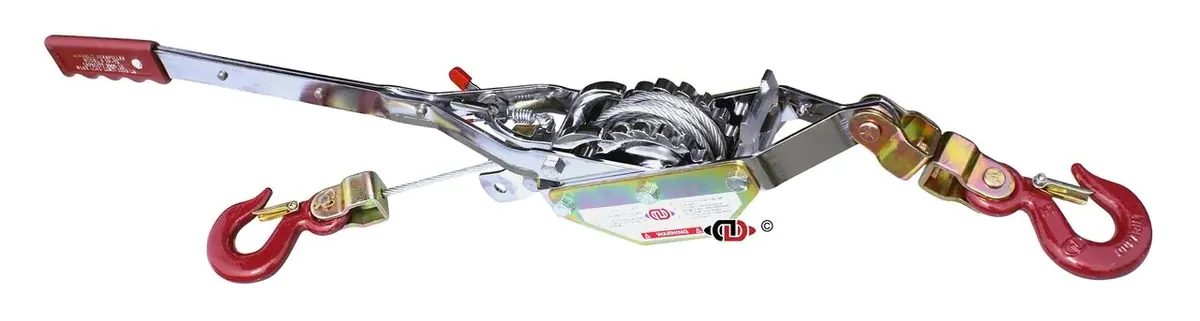
A come along—sometimes called a hand winch or ratchet puller—is a mechanical device that uses leverage and incremental motion to pull, tighten, or position loads.
A typical wire come along includes:
The operator works the lever back and forth, allowing the drum to wind the cable and apply tension. Because the mechanism advances in small increments, it will enable precise control that powered devices can struggle to match.
Key functional advantages include:
In environments without reliable power, this simplicity becomes a significant asset.
While both webbing and wire options exist, a wire come along that stands out for rougher applications where durability and strength come first. Each style has benefits, but they serve different needs.
Wire Rope Come Alongs
These units use galvanized or steel wire rope, making them resilient in abrasive or outdoor conditions.
Advantages:
Wire models are ideal for fencing, structural adjustments, pulling heavy items, or any scenario requiring strong, consistent tension.
Webbing Come Alongs (Strap Style)
A come along strap uses a synthetic web instead of a wire rope.
Advantages:
However, webbing versions typically offer lower capacity and reduced durability when exposed to abrasion or sharp edges.
Which Should You Use?
Field crews who work around steel, timber, concrete, and uneven terrain typically rely on wire versions because they can withstand harsher conditions.
The value of a wire come along becomes clear when you look at the types of jobs it handles better than many powered solutions. These devices shine in environments where space is tight and precision is crucial.
Whether repairing agricultural fencing or installing new boundaries, crews often need strong, even tension.
Wire come alongs allow:
They excel when terrain makes it challenging to position powered winches.
Communication towers, sign structures, and framework assemblies often need minor adjustments to align components at height.
Come alongs make this easier by offering:
A wire rope model provides the strength needed for these high-load scenarios.
Long cable runs require a steady force to pull without damaging the cable. Wire come alongs deliver slow, controlled tension ideal for:
Their portability is a significant advantage when access is limited.
When machinery must be nudged into place—such as generators, small compressors, or fabrication equipment—a come along provides stable, incremental movement.
In breakdown scenarios, crews use come alongs to:
The tool’s simplicity makes it reliable in unpredictable conditions.
Like all lifting and pulling tools, wire come alongs require proper use and routine maintenance to operate safely.
Safety Best Practices
Maintenance Essentials
Following these steps ensures both operator safety and long-term equipment reliability.
A wire come along delivers controlled, dependable pulling when powered equipment can’t reach, can’t fit, or simply isn’t the right tool for the job. Its ability to provide smooth, incremental tension makes it invaluable for fencing, tower alignment, cable work, equipment positioning, and countless field applications.
When selecting a pulling device, consider the load, environment, and level of control required. Wire rope models offer durability, strength, and consistent performance, especially in rugged outdoor conditions.
For field teams who demand dependable gear, Murphy Industrial Products, Inc. offers a range of heavy duty come along solutions built for tough pulling jobs. Explore durable options designed for real-world field conditions—and find the industrial come along that keeps your work moving safely and efficiently.

© 2025 Crivva - Hosted by Airy Hosting Managed Website Hosting.