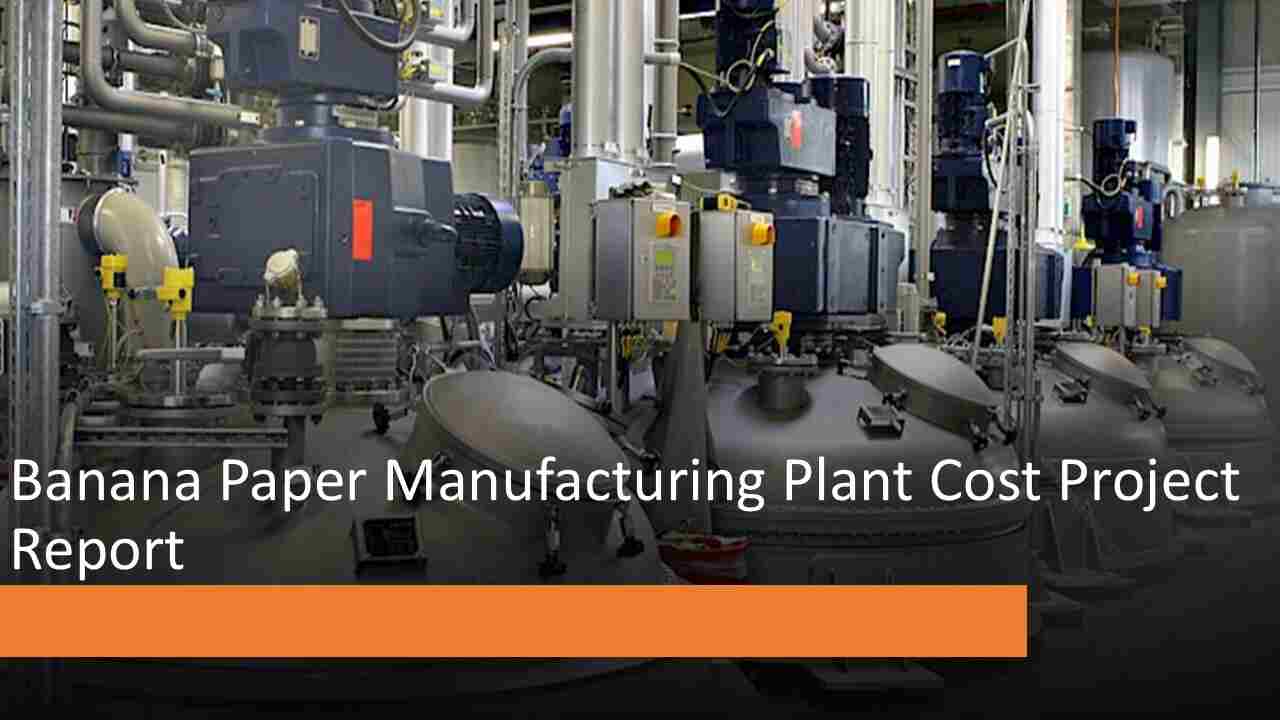
IMARC Group’s “Banana Paper Manufacturing Plant Cost and Project Report 2025: Industry Trends, Plant Setup, Machinery, Raw Materials, Investment Opportunities, Cost and Revenue” provides a comprehensive roadmap for setting up a banana paper production facility. The report covers all essential aspects, including raw material sourcing, production process flow, utility requirements, machinery selection, plant layout planning, infrastructure development, manpower needs, transportation systems, and packaging solutions.
In addition to operational analysis, the study delivers an in-depth financial assessment, covering capital investment, setup costs, operating expenses, project funding, fixed and variable cost breakdowns, revenue forecasts, profit projections, ROI, and net present value (NPV). This structured evaluation helps entrepreneurs, manufacturers, and investors determine feasibility and long-term profitability before initiating a banana paper manufacturing plant.
What is Banana Paper?
Banana paper is an eco-friendly paper product made from agricultural waste, primarily banana stem fibers or discarded peels. It offers exceptional durability, natural texture, and biodegradability, making it an attractive sustainable alternative to wood-based paper. Banana fibers provide strength, flexibility, and environmental benefits due to their rapid renewability and low carbon footprint.
The quality of banana paper depends on fiber length, pulping method, refining process, bleaching approach, moisture levels, brightness, surface smoothness, and adherence to environmental and safety standards.
Request to Get the Sample Report: https://www.imarcgroup.com/banana-paper-manufacturing-plant-project-report/requestsample
How is Banana Paper Produced?
Banana paper production involves mechanical and chemical processing steps designed to convert banana plant waste into usable paper products:
1. Fiber Collection and Preparation:
Banana stems and peels are collected, cleaned, chopped, and dried. Fiber quality and moisture levels are checked prior to pulping.
2. Pulping Process:
Prepared fibers are processed through mechanical or chemical pulping to separate cellulose. This step removes lignin and produces usable pulp. The pulp is washed and refined for improved bonding.
3. Bleaching and Refining:
Chlorine-free bleaching is commonly used to improve brightness. Refining enhances fiber softness, uniformity, and strength.
4. Sheet Formation and Pressing:
The refined pulp is spread on wire mesh screens to form sheets. Excess water is drained, and sheets are pressed for better density and strength.
5. Drying and Finishing:
Sheets pass through drying systems, followed by calendaring for smoothness. The final banana paper is cut, rolled, or shaped depending on the intended application.
Market Trends and Drivers of Banana Paper Manufacturing
Banana paper demand is rising due to:
-
Growing global preference for sustainable and biodegradable paper products
-
Abundant availability of banana stem waste in agricultural markets
-
Increasing adoption in stationery, packaging, crafts, printing, and eco-friendly lifestyle products
-
Rising environmental regulations promoting non-wood alternatives
-
Expansion of banana plantations worldwide supporting raw material availability
-
Consumer demand for natural, chemical-free, and recyclable paper-based essentials
These factors contribute to the strong market potential for banana paper manufacturing across both commercial and artisanal segments.
Types of Banana Paper
Banana paper comes in various forms depending on fiber processing, thickness, and end use. Common types include:
-
Handmade Banana Paper: Produced using traditional methods for stationery, gift wrapping, and artisanal products.
-
Machine-Made Banana Paper: Suitable for large-scale production of printing and packaging papers.
-
Banana Tissue and Soft Paper: Lightweight, absorbent, and eco-friendly for hygiene applications.
-
Banana Craft Paper: Used in decorative items, paper bags, and sustainable packaging.
-
Blended Banana Paper: Combines banana fiber with cotton, recycled paper, or wood pulp for enhanced properties.
Types of Banana Paper Machines
Banana paper manufacturing involves specialized machinery designed to handle fibrous plant material:
-
Banana Fiber Extraction Machines: Remove fibers from stems and peels efficiently.
-
Pulping Units: Convert extracted fibers into pulp using mechanical or chemical processes.
-
Refiners and Screening Equipment: Improve fiber consistency and remove impurities.
-
Sheet Forming Machines: Form continuous sheets from diluted pulp.
-
Drying Systems: Reduce moisture and stabilize sheet structure.
-
Cutting and Rewinding Machines: Customize sheet sizes, rolls, and formats for distribution.
Plant Capacity Overview:
Plant capacity depends on raw material supply, machinery configuration, and automation level. Key factors include:
-
Raw Material Processing Capability: Capacity to handle banana stems, peels, and fiber waste continuously.
-
Production Line Setup: Number of pulping, refining, and sheet-forming units influences daily output.
-
Product Type Flexibility: Tissue, packaging, or craft paper require different processing intensity.
-
Automation and Technology: Higher automation supports consistent production with reduced downtime.
-
Storage and Handling: Efficient warehousing supports continuous plant operation and product flow.
Key Aspects to Setup a Banana Paper Manufacturing Plant:
Location to Setup Plant
Proximity to banana-producing regions, access to water, electricity, and waste management facilities.
Market Research and Demand Analysis
Assessment of demand for eco-friendly paper, handicrafts, packaging, and commercial printing segments.
Plant Layout and Infrastructure
Includes fiber extraction areas, pulping sections, bleaching units, drying systems, finishing lines, storage, and waste treatment.
Construction and Setup Requirements
Industrial buildings, machinery foundations, raw material storage yards, and utility systems.
Procurement of Equipment and Machinery
Fiber extraction units, pulping machines, refiners, paper machine lines, dryers, and finishing equipment.
Documentation and Licenses
Environmental permits, MSME registration, pollution control approvals, and factory compliance documents.
Cost Analysis
Covers land cost, machinery installation, construction, utilities, manpower, and working capital needs.
Raw Materials List:
A banana paper plant requires fiber-rich, chemical, and supportive components, including:
-
Banana stems or banana peel waste
-
Sodium hydroxide for pulping
-
Bleaching agents for whitening
-
Natural binders or strength additives
-
Sizing agents for surface improvement
-
Fillers and coatings for brightness
-
Water for washing, pulping, and forming
Project Economics:
-
Capital Investment
-
Operating Costs
-
Revenue and Profit Forecasts
-
Fixed and Variable Costs
-
Taxation and Depreciation
-
Profitability and Break-even Analysis
-
ROI and NPV Projections
Key Questions Answered in the Report:
-
What is the market outlook for banana paper manufacturing?
-
What are the major stages in banana paper production?
-
What machinery and raw materials are required?
-
What certifications and environmental guidelines must be followed?
-
What is the cost structure and profitability outlook?
-
What is the expected ROI and payback period?
About Us:
IMARC is a global market research and consulting company providing end-to-end support across market entry, feasibility studies, factory setup, regulatory navigation, and financial modeling. With expertise in CAPEX and OPEX assessment, plant layout optimization, and industry benchmarking, IMARC helps businesses reduce risk, optimize costs, and achieve long-term growth across manufacturing sectors.
Our expertise includes:
- Market Entry and Expansion Strategy
- Feasibility Studies and Business Planning
- Company Incorporation and Travel Platform Setup Support
- Regulatory and Licensing Navigation
- Competitive Analysis and Benchmarking
- Industry Partnership Development
- Branding, Marketing, and Technology-Focused Customer Strategy
Contact Us:
IMARC Group
134 N 4th St. Brooklyn, NY 11249, USA
Email: sales[@]imarcgroup.com
Tel No:(D) +91 120 433 0800
United States: +1-201971-6302