Choosing the right asphalt plant capacity is not only about production numbers. It directly affects your project timeline, cost control, and overall profitability. Many contractors face a common problem: either the plant produces too slowly and delays the project, or it produces too much and increases unnecessary costs. So, how can you find the right balance?
In this article, we will break down practical methods to help you match reliable asphalt plant capacity with your project schedule. More importantly, we will look at this from a contractor’s real-world perspective, focusing on efficiency, flexibility, and return on investment.
Before making any decision, you need to understand how plant capacity and project timeline interact. These two factors are closely linked and must work together.
In simple terms, plant capacity determines how much asphalt mix you can produce per hour, while the timeline defines how fast you need to complete the project. Therefore, balancing them means aligning production speed with construction progress.
If your plant capacity is too small, your paving team will wait for materials. This slows down the project and increases labor costs. On the other hand, if your capacity is too large, you may waste fuel, increase wear on equipment, and struggle with material storage.
So, the goal is clear: match production output with actual site demand.
Now that we understand the relationship, the next step is to analyze your project demand in detail. This step sets the foundation for all decisions.
First, estimate the total asphalt required. For example, a 10 km road project may need 15,000–30,000 tons depending on thickness and width. Accurate estimation helps avoid under- or over-sizing your plant.
Next, divide the total volume by the project duration. If you plan to complete the project in 60 days, and the total demand is 24,000 tons, then your daily production target is 400 tons.
At this point, you already have a baseline for choosing plant capacity.
However, real projects rarely follow average numbers. Weather, logistics, and site conditions often cause delays. Therefore, you should plan for peak demand instead of average output.
For instance, if your daily average is 400 tons, your peak requirement may reach 500–600 tons. This is the number your plant should handle comfortably.
After defining demand, you should align it with your actual construction schedule. This step ensures smooth coordination between production and paving.
Your paving team determines how fast asphalt is consumed. For example, a standard paver may lay 200–300 tons per hour depending on road width and thickness.
Therefore, your plant must supply asphalt at a similar rate. If not, the paving process becomes inconsistent, which affects road quality.
In addition, transportation plays a critical role. If your plant is far from the site, trucks will take longer to deliver asphalt. This reduces effective supply rate.
For example:
In this case, you need enough trucks to maintain continuous supply. Otherwise, even a high-capacity plant cannot meet site demand.
Another key factor is daily working hours. If your site operates only 8 hours per day, your plant must produce more per hour compared to a 12-hour schedule.
This is why two projects with the same total volume may require different plant capacities.
Once you align demand and schedule, the next step is selecting the plant capacity. However, instead of focusing on a single number, you should choose a flexible capacity range.
In the market, common asphalt plant capacities include:
For example, if your calculated demand is 120 TPH, choosing a 120–160 TPH plant gives you flexibility to handle peak demand.
Although higher capacity seems attractive, it often increases fuel consumption and maintenance costs. Therefore, avoid oversizing unless you plan to take on multiple projects or sell asphalt commercially.
Even with careful planning, real-world conditions will affect your balance. Therefore, you must consider these variables early.
Rain and extreme temperatures can stop paving work. As a result, your plant may remain idle or need to adjust production quickly.
If aggregates or bitumen supply is unstable, your plant cannot run at full capacity. This directly impacts your timeline.
Unexpected downtime can disrupt the entire schedule. Therefore, choosing a reliable plant with strong after-sales support is essential.
Different projects have different requirements. For example:
This means your plant must adapt to different working conditions, not just deliver high capacity.
After understanding the challenges, you can apply practical strategies to optimize the balance between capacity and timeline.
Hot mix storage silos allow you to store asphalt temporarily. This helps stabilize supply even if production fluctuates.
Efficient truck scheduling reduces waiting time and ensures continuous paving. In many cases, logistics optimization improves performance more than increasing plant capacity.
If you handle multiple projects, consider a slightly higher capacity plant. This allows you to switch between sites and maximize equipment utilization.
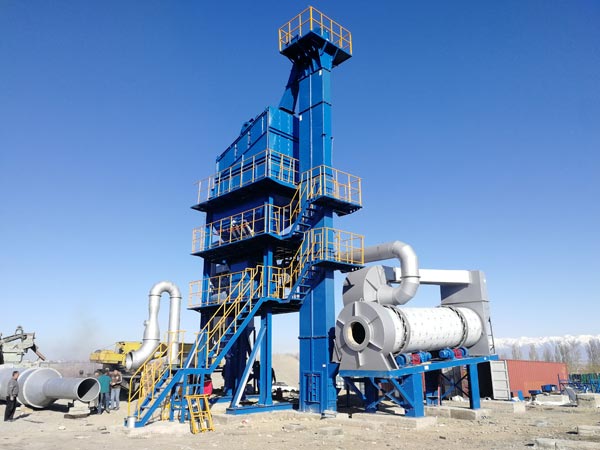
Mobile or modular asphalt plants provide flexibility. The asphalt mixing plant mobile is ideal for contractors who work in different locations or remote areas.
Balancing capacity is not only about meeting deadlines. It is also about controlling costs effectively.
Larger plants consume more fuel. Therefore, running a plant below its optimal load increases cost per ton.
If your plant is too small, your crew may spend more time waiting. If it is too large, you may not fully utilize it. Both situations reduce efficiency.
Ultimately, the right capacity should help you recover your investment faster. A well-balanced setup ensures steady production, timely completion, and stable cash flow.
Let’s consider a practical example to bring everything together.
A contractor plans a 20 km road project requiring 40,000 tons of asphalt. The project timeline is 100 days.
Based on this, the required plant capacity is around 60 TPH minimum. However, to handle peak demand and improve efficiency, a 100–120 TPH plant is a better choice.
This setup ensures smooth paving, reduces risk of delays, and allows some flexibility for unexpected issues.
Balancing asphalt plant capacity and project timeline is not a one-size-fits-all decision. It requires careful analysis of your project demand, schedule, logistics, and real-world conditions.
Instead of simply choosing the biggest or cheapest option, focus on what truly fits your project. A well-balanced solution improves efficiency, reduces costs, and helps you complete projects on time with confidence.
If you are planning a new road construction project and are unsure which asphalt plant capacity suits your needs, now is the right time to take action. Contact a reliable supplier, share your project details, and get a customized solution that matches your timeline and business goals.

© 2025 Crivva - Hosted by Airy Hosting Managed Website Hosting.