

India’s infrastructure boom is no longer a projection — it’s a present reality. With the government’s continued push through programmes like PM Gati Shakti and the National Infrastructure Pipeline (NIP) targeting over ₹111 lakh crore in investment, the demand for high-volume, structurally reliable, and eco-compliant building materials has reached an inflection point.
At the centre of this transformation is fly ash — a fine particulate byproduct of thermal power generation that, when correctly processed, produces bricks far superior in strength, finish, and thermal efficiency to conventional clay bricks. More importantly, fly ash bricks meet Bureau of Indian Standards (BIS) specifications and are widely specified by CPWD and state PWDs for government projects.
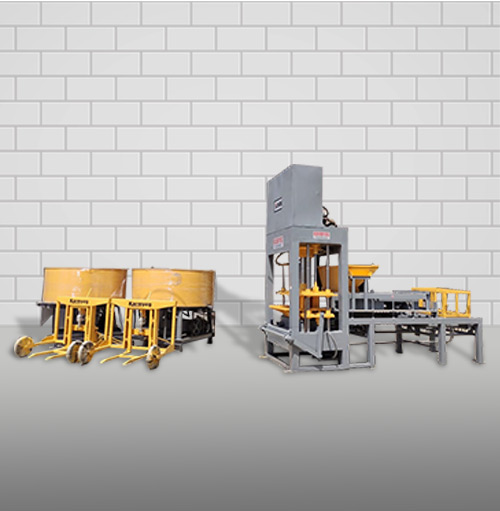
But raw material advantage alone does not build a profitable business. The true differentiator for brick plant owners in 2025 is automation. An Automatic Fly Ash Brick Making Machine is no longer a luxury reserved for large conglomerates — it is the baseline investment for any entrepreneur, contractor, or civil engineer serious about capturing this market at scale.
This guide breaks down exactly what to expect from a fully automated fly ash brick plant — production output, quality standards, ROI timelines, and what separates a reliable machine manufacturer from a costly mistake.
Switching from semi-manual or conventional methods to a fully automatic brick plant restructures your entire cost and output profile. Here is what that means in practice:
Manual and semi-automatic brick production is labor-intensive, susceptible to absenteeism, and difficult to standardize. A fully automated machine reduces operator dependency significantly — typically requiring only 3 to 5 semi-skilled operators per shift to manage what would otherwise demand 20+ manual workers.
For contractors supplying large housing projects, industrial complexes, or government tenders, inconsistent supply is a contract risk. High-capacity automatic machines are engineered to eliminate that risk:
Quality rejection at the construction site is one of the most expensive problems a brick manufacturer can face. Automatic systems address this at the production stage, not after delivery:
Beyond production metrics, the business case for a fly ash brick plant rests on a structural raw material cost advantage that is unique to this product category.
The primary input — fly ash brick raw material — is a Class F or Class C ash sourced directly from thermal power plants. In India, over 200 million tonnes of fly ash is generated annually. Power plants are mandated by the Ministry of Environment, Forest and Climate Change (MoEFCC) to facilitate the utilisation of their fly ash output — which means procurement costs are significantly lower than clay, sand, or crushed stone.
While exact ROI depends on location, scale, and market pricing, the following benchmarks reflect typical scenarios for a mid-capacity automatic plant:
Note: These are indicative figures for planning purposes. Actual results will vary based on production scale, shift utilisation, raw material costs, and prevailing market prices in your geography. Karmyog’s team can provide a customised plant feasibility estimate.
The Indian market for brick-making machinery is crowded with suppliers ranging from established manufacturers to unvetted assemblers. For plant owners committing significant capital to a brick manufacturing business, machine quality, after-sales support, and manufacturer credibility are not secondary considerations — they are the core of the investment decision.
Karmyog Hi-Tech Machineries holds ISO 9001:2015 certification — the globally recognised standard for quality management systems. This is not a marketing label. It means every machine that leaves the Bhuj, Gujarat facility has been manufactured under a documented, audited process covering raw material sourcing, fabrication tolerances, assembly procedures, and pre-dispatch quality inspection.
With more than 20 years of hands-on engineering and manufacturing experience, Karmyog has installed machines across India and for export markets. That field experience translates directly into better-engineered machines:
A brick machine is not a plug-and-play device. Successful plant commissioning requires proper installation, operator training, process calibration, and ongoing technical support. Karmyog’s after-sales infrastructure is designed around this operational reality:
Looking to establish or upgrade your brick manufacturing plant? Reach out to Karmyog Hi-Tech Machineries for expert consultation and customized machinery solutions.
Phone: +91 72260 02284
Email: [email protected]
Plant & Office Address: 107, GIDC Estate, Nagor Road, Bhuj-370001, Gujarat, India
Connect today to explore the right solution for your production needs.

© 2025 Crivva - Hosted by Airy Hosting Managed Website Hosting.