

If you’ve ever attempted to work or stream from a campsite and noticed your connection slow down or vanish, you might have questioned whether satellite internet is truly the only dependable option for camping. For years, that seemed accurate. When you’re surrounded by trees, mountains, or stretches of open land, traditional internet solutions often let you down. But here’s the change that many campers and remote workers are beginning to understand: you no longer have to depend on large, costly satellite systems to stay connected in nature.
Camping used to mean disconnecting or dealing with the struggle to disconnect. If you needed internet access, satellite internet for camping was the preferred option. It made sense; satellites cover large areas, including locations without cable or fiber.
But that came with trade-offs:
For casual campers, it seemed excessive. For remote workers, it often felt unreliable at critical moments, such as during a client call or when uploading a file.
The biggest shift didn’t come from satellites; it came from cellular networks.
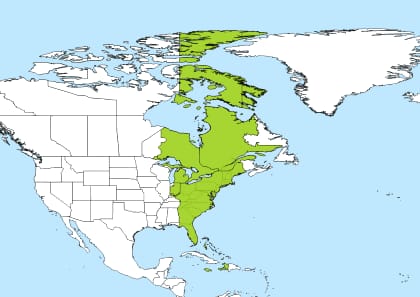
Over the last few years, LTE and 5G coverage has spread well beyond cities and highways. Rural and semi-remote areas now enjoy much better signal access compared to five years ago. This improvement allows campers to connect to a faster and more stable internet with tools that are much easier to use than satellite systems.
Instead of directing a dish toward the sky, you connect to nearby towers, often experiencing lower latency and better real-time performance.
Let’s break down the tools that are replacing satellite setups for many campers and van lifers.
A mobile hotspot is often the first solution people turn to, and for good reason. It converts your phone or a dedicated device into a Wi-Fi source by using cellular data.
Why it works:
Where it struggles:
For weekend camping trips, a mobile hotspot is usually sufficient. However, for full-time travelers or remote workers, it can become limiting fairly quickly.
A travel router improves your connection from basic to reliable. Instead of depending on your phone alone, it sets up a more stable network that multiple devices can use.
What makes it useful:
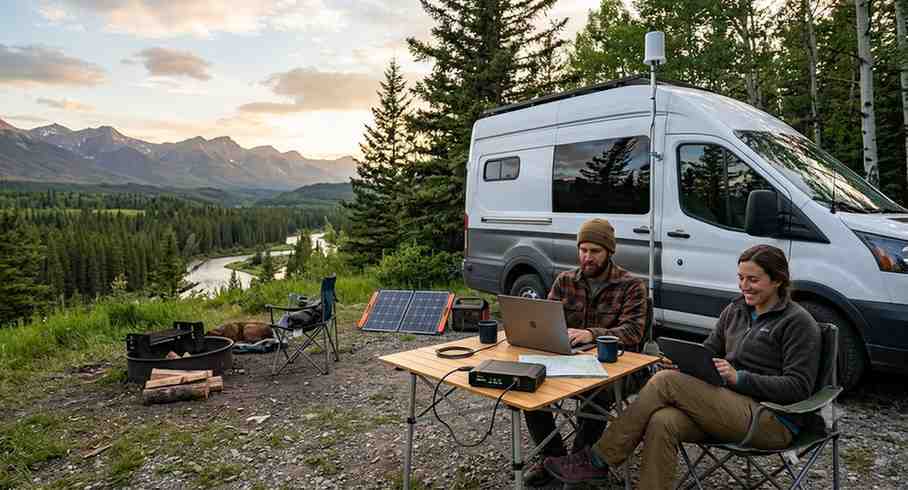
Many campers use a travel router with a data-enabled SIM card, turning it into a mini home network while on the road. This is especially useful if you’re working remotely or traveling with others.
This is where things start to replace satellite internet entirely for camping.
Dedicated LTE/5G routers work like home internet systems, but they use cellular networks instead of cables. You plug them in, connect, and enjoy steady internet on your devices.
Why they’re gaining popularity:
They shine in semi-rural campgrounds, RV parks, and even many remote areas where there’s at least some cellular coverage.
It’s not that satellite internet for camping is obsolete; it’s just no longer the default answer.
The key difference is this: satellite provides connectivity in areas where there is none, while modern cellular solutions enhance the quality of connectivity in areas where a signal is present.
Let’s set realistic expectations.
With LTE/5G-based setups, campers commonly experience:
However, your experience still depends on:
This is why many experienced travelers use a layered approach, combining tools instead of relying on just one.
Instead of choosing between satellite and cellular, many campers now build flexible setups:
This combination gives you adaptability. If one connection weakens, you have alternatives ready without relying on a single, expensive system.
The biggest advantage of moving away from satellite isn’t just its freedom.
Camping no longer has to mean choosing between nature and connectivity. You can have both without overcomplicating your setup.
Satellite internet for camping used to be the only serious option for staying connected off the grid. But that’s no longer true. With LTE and 5G networks growing, plus tools like mobile hotspot devices and travel router setups, campers now have more practical, flexible, and easy-to-use choices than ever.
For most people, especially those moving between campgrounds, rural areas, or semi-remote locations, modern cellular solutions offer a better mix of performance and ease. Satellite still has its benefits, but it’s not the first choice anymore.
The key point? Reliable camping internet isn’t about finding one perfect solution any longer. It’s about picking the right combination based on how and where you travel.
Not in most cases. If you’re camping in areas with LTE or 5G coverage, options like mobile hotspot devices or LTE routers are usually easier and more practical. A satellite is mainly useful for completely off-grid locations with no cellular signal.
Speeds typically range from 10 Mbps to 100 Mbps, depending on signal strength and location. In many cases, this is faster and more responsive than satellite, especially for real-time activities like video calls.
A mobile hotspot creates a connection using cellular data, while a travel router shares and strengthens that connection across multiple devices. Together, they provide a more stable and flexible setup.
No. Nomad internet refers to mobile, cellular-based connectivity that uses LTE or 5G networks, while satellite internet relies on signals from orbiting satellites. They operate differently and have different strengths based on location.
A combination works best: use a primary LTE or 5G router for reliable internet, a travel router for better network management, and a mobile hotspot as a backup. This layered approach keeps you connected in varying conditions.

© 2025 Crivva - Hosted by Airy Hosting Managed Website Hosting.