

You built your WordPress store, set up your products, and got everything running. Then, six months later, you’re facing some challenges. The checkout process feels slow on mobile, your plugins are piling up, and you’re not completely sure if your current setup can support your plans for next year. Does this sound familiar?
Many WordPress store owners and developers are in the same boat. The ecosystem has changed quickly, and 2026 is looking to be a key year. The platforms haven’t just fixed bugs; they have completely changed how eCommerce works on WordPress. If you haven’t examined what’s different and what’s on the way, now is the perfect time to take a closer look.
The future of WordPress eCommerce isn’t just about selling more products. It’s about how the entire technical stack, from storefront rendering to payment processing, is being reimagined for performance, flexibility, and developer experience.
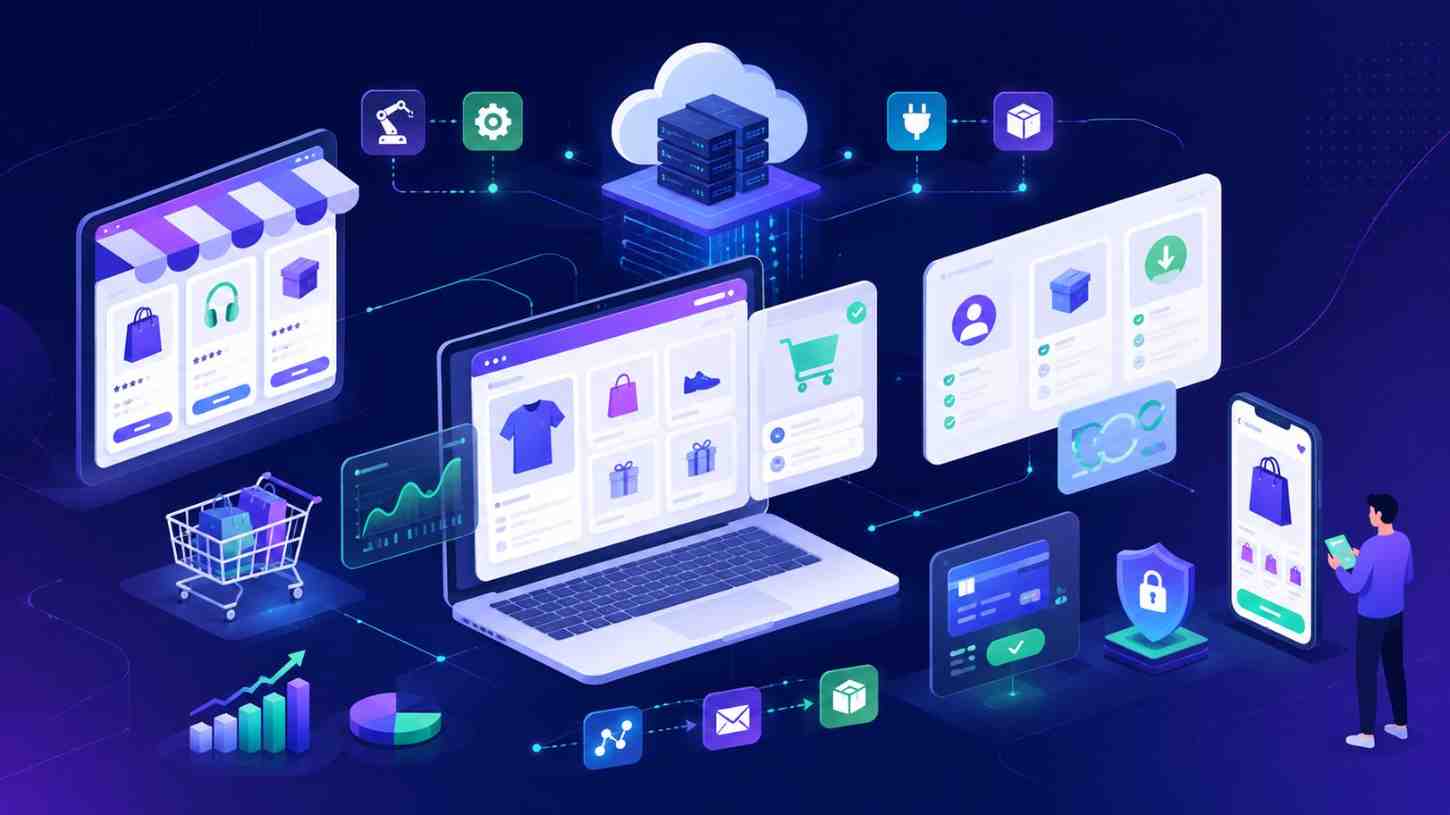
Headless is now a common topic. WooCommerce has made significant progress in supporting headless architecture through its REST API and, more recently, improved GraphQL compatibility with tools like WPGraphQL. This means your WordPress backend can function solely as a commerce engine, while your frontend can be built using React, Next.js, or any other modern framework. For high-traffic stores, where every millisecond counts for conversions, this separation of functions is not just a concept; it delivers a measurable performance boost.
What’s driving this shift in WooCommerce eCommerce development is the growing demand for omnichannel experiences. Merchants don’t want to run a separate mobile app, a web store, and a kiosk system as three disconnected products. With a headless setup, the WooCommerce backend becomes the single source of truth. It serves product data, inventory, and orders to all frontends simultaneously.
The Block Editor (Gutenberg) integration is an important change. WooCommerce’s block-based checkout, product grids, and cart components are now ready for production use. This is significant because it lessens reliance on third-party page builders. It also brings the storefront-building experience closer to the main WordPress workflow. This leads to fewer plugin conflicts and improved performance.
When developers weigh easy digital downloads vs WooCommerce for a new project, the decision used to be fairly straightforward: physical goods go to WooCommerce, digital goods go to EDD. In 2026, that line has genuinely blurred, but the underlying architectural differences still matter.
EDD was built from the ground up for digital product delivery. Its licensing system, software download management, and file access controls are tighter and more purpose-built than WooCommerce’s digital delivery add-ons. If you’re selling software licenses, eBooks, or premium plugins, EDD’s core codebase does less generalized work to accomplish the same outcome. That translates to leaner database queries and fewer hooks firing on every transaction.
WooCommerce, on the other hand, has invested heavily in extensibility. Its product variation system, inventory management, and shipping calculation engine are genuinely more capable for complex catalog scenarios. With recent updates to the High-Performance Order Storage (HPOS) system, WooCommerce has addressed one of its long-standing criticisms: the performance hit from writing orders to custom post type tables. HPOS moves orders to dedicated database tables, which improves query speed significantly at scale.
The practical implication for developers: EDD’s extension ecosystem has grown, but it remains narrower by design. WooCommerce’s extension marketplace is sprawling, which creates flexibility but also demands more rigorous vetting to avoid bloat. Neither platform is universally better — the smarter question is which one aligns with the specific data model and transaction type of the store you’re building.
|
Aspect |
WooCommerce |
Easy Digital Downloads (EDD) |
|
Primary Use Case |
Best for physical, mixed, and large product catalogs |
Best for digital products like software, eBooks, and downloads |
|
Architecture |
Highly extensible with headless and API-first support |
Lean and purpose-built for digital delivery |
|
Headless Support |
Strong REST API and GraphQL compatibility for React/Next.js frontends |
Limited compared to WooCommerce |
|
Performance Improvements |
HPOS, block-based checkout, and optimized order tables improve scalability |
Lightweight core with fewer database operations |
|
Checkout Experience |
Modern block-based checkout with express payments |
Simpler checkout focused on digital transactions |
|
Inventory Management |
Advanced inventory and product variation handling |
Basic inventory features for digital goods |
|
Payment Support |
Multi-currency, Apple Pay, Google Pay, Stripe Link, and more |
Supports standard digital payment workflows |
|
PWA & Omnichannel Readiness |
Strong support for PWAs and omnichannel commerce setups |
Limited omnichannel capabilities |
|
AI & Personalization |
Supports AI recommendations, predictive inventory, and semantic search integrations |
More limited AI ecosystem |
|
Extension Ecosystem |
Large marketplace with extensive plugin support |
Smaller but focused extension ecosystem |
|
Developer Flexibility |
Highly customizable for enterprise and scalable stores |
Easier setup for lightweight digital stores |
|
Best For |
Businesses needing scalability, flexibility, and complex commerce features |
Businesses selling only digital products with minimal overhead |
WordPress eCommerce development in 2026 is faster, more adaptable, and significantly better than it was just a few years ago. Modern WooCommerce development emphasizes performance optimization, headless architecture, dedicated order tables, and block-based checkout experiences to meet growing business demands. WooCommerce continues to evolve as a robust platform for both developers and merchants, while EDD remains a solid option for simple digital product stores. The most successful eCommerce websites are now defined not just by their features but by the architectural choices behind them. Understanding these changing trends in WooCommerce eCommerce development is essential for building scalable, high-performing online stores.
Yes, WooCommerce remains the leading choice for scalable WordPress stores, especially for physical and mixed-product catalogs. EDD is often better suited for stores that sell only digital products.
Headless WooCommerce uses modern frontend frameworks like Next.js, while WooCommerce manages backend commerce logic through APIs. It’s ideal for high-performance, multi-platform stores.
Yes, EDD is designed specifically for digital products like software, eBooks, and courses. It offers a simpler setup than WooCommerce.
Core Web Vitals, fast hosting, HPOS, optimized databases, caching, CDNs, and lightweight plugins are the key factors for performance.
No. AI helps automate tasks, but custom WooCommerce development still needs expert technical knowledge and design decisions.

© 2025 Crivva - Hosted by Airy Hosting Managed Website Hosting.