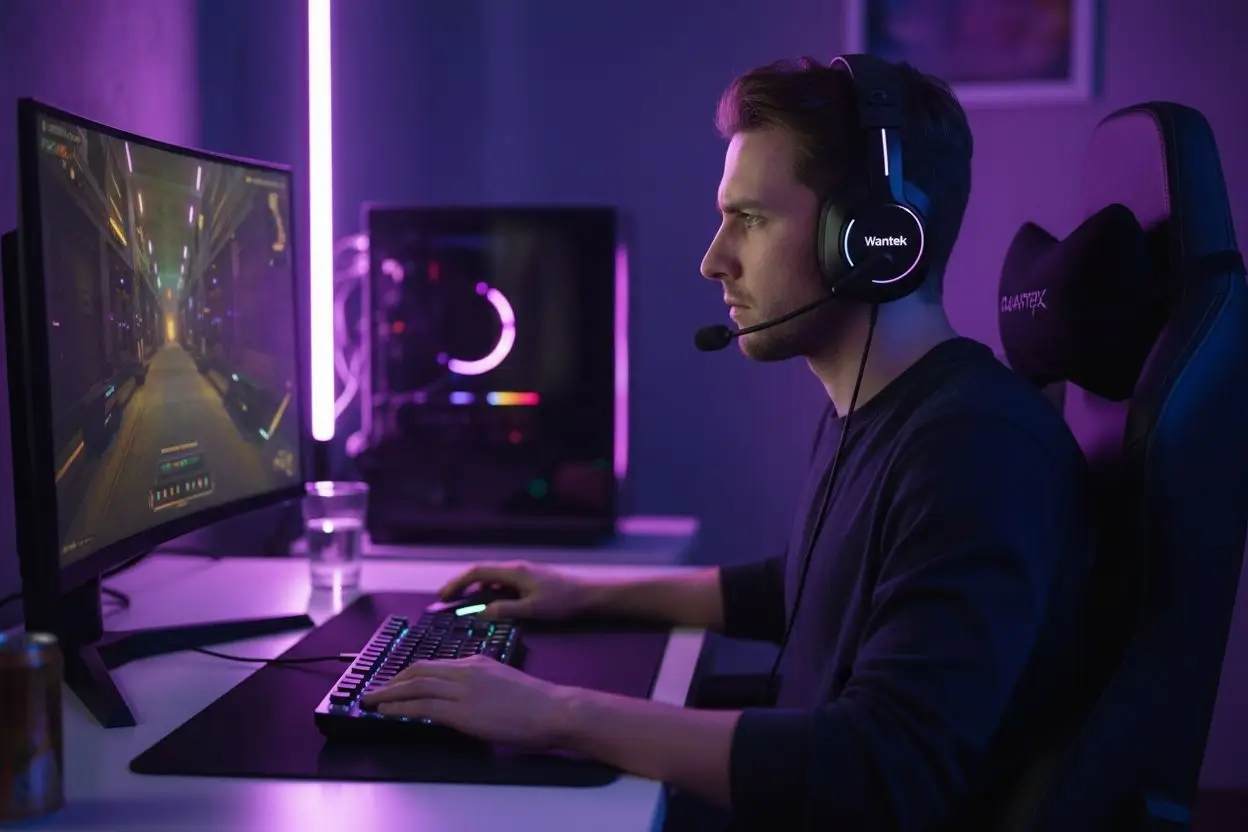
The best gaming headset is a sophisticated, multi-faceted audio hub that transcends microphone clarity by integrating six core pillars: 1) High-Fidelity Drivers & Tuning for accurate sound reproduction, 2) Precision Spatial Audio & Imaging for competitive advantage, 3) Ergonomic, Durable Design for long-term comfort, 4) Robust, Low-Latency Connectivity (wired or wireless), 5) Deep Software Integration & Customization, and 6) Platform-Specific Optimization. While a clear mic is essential for communication, true excellence is achieved through the synergistic relationship between these elements, transforming the headset from a simple peripheral into an instrument for immersion, performance, and content creation.
The question, “What is the gaming headset with best mic?” dominates online forums and shopping searches. This singular focus, while understandable, fundamentally misunderstands the role of modern gaming audio. As an enthusiast who has tested dozens of headsets across PC, PlayStation, and Xbox ecosystems, I’ve learned that fixating solely on microphone quality is like buying a sports car for its cup holders.
A premier gaming headset is an integrated audio-visual sensory augmentation device. It processes complex, object-based audio signals, delivers them with precision to your ears, captures your voice with clarity, and often serves as a control center for your entire audio mix. This article will deconstruct the multifaceted engineering behind top-tier headsets, demonstrating why factors like soundstage width, driver response time, software ecosystems, and biomechanical design are not just add-ons but essential components that define the elite from the ordinary.
Let’s be unequivocal: a superior microphone is non-negotiable. In team-based tactical shooters like Valorant or Counter-Strike 2, or during complex raid coordination in Destiny 2, clear communication is a force multiplier. Modern microphone technologies have evolved dramatically:
However, this represents only the output channel. The input channel—what you hear—is a richer, more complex domain that directly dictates in-game performance and immersion. A headset with a stellar mic but poor audio fidelity handicaps the user, creating a critical imbalance.
The core of any headset is its transducer technology. This is where the journey beyond the microphone begins.
This is arguably the most significant differentiator between a basic and a best-in-class headset. Spatial audio isn’t a gimmick; it’s a data-to-ears translation layer.
A headset is a wearable device, often for 6+ hour sessions. Engineering for comfort is as critical as engineering for sound.
The debate between wired and wireless is largely settled for gaming, thanks to technological leaps.
The companion software suite is what transforms a static audio device into a dynamic, personalized command center. This is a critical entity often overlooked in simple microphone comparisons.
A headset designed for the Xbox Series X/S must handle the console’s unique audio pipeline, including support for Windows Sonic and Dolby Atmos for Headphones via license. PlayStation 5 headsets benefit from optimization for Tempest 3D AudioTech. PC headsets leverage the full power of their software suites. The best headsets are either platform-native or come with explicit multi-platform support and the necessary dongles or adapters.
| Feature Entity | Why It Matters Beyond the Mic | Key Technologies & Brand Examples |
|---|---|---|
| Driver Technology | Determines detail, speed, and accuracy of all audio input. | Planar Magnetic (Audeze), Neodymium Dynamic, Bio-Cellulose Diaphragms, Hi-Res Audio Certification |
| Spatial Audio Processing | Translates in-game 3D audio data into competitive/intuitive cues. | Dolby Atmos for Headphones, DTS Headphone:X v2.0, Sony Tempest 3D AudioTech, Windows Sonic |
| Wireless Protocol | Dictates freedom, latency, and connection stability. | 2.4GHz RF (Logitech Lightspeed, Razer HyperSpeed), Bluetooth Multipoint 5.2+, LE Audio (future-proofing) |
| Software DSP & Mixing | Enables personalized audio profiles and complex audio routing. | SteelSeries Sonar, Logitech G HUB EQ, Elgato Wave Link Integration, Parametric Equalizers |
| Ergonomic Design | Impacts wearability, long-term comfort, and physical durability. | Suspension Headbands, Memory Foam with Cooling Gel, Aluminum/Magnesium Frames, Swiveling Earcups |
| Microphone Technology | Ensures clear outgoing communication in noisy environments. | Broadcast-Directional Capsules, AI Noise Cancellation (Krisp, NVIDIA Broadcast), Detachable Boom Arms |
While a clear microphone (like a cardioid or broadcast-quality mic) is crucial for team communication, it’s only one component of the holistic gaming experience. The best gaming headsets balance exceptional microphone clarity with superior sound drivers, surround sound processing, and comfort. Prioritizing only the mic neglects the audio feedback you receive, which is vital for immersion and competitive advantage. A great mic lets you be heard, but the headset’s audio lets you understand the game world.
The best gaming headsets integrate several key entities and technologies:
Superior audio provides tactical awareness. In competitive gaming (esports), this is known as “audio cue differentiation.” A premium headset with accurate soundstage and imaging allows you to pinpoint the direction, distance, and elevation of sounds—such as an enemy reloading, a sniper bolt action, or a vehicle approaching. This low-latency audio information is processed faster than visual cues, giving you a reaction-time advantage.
Gaming sessions often last hours. Ergonomic design prevents listening fatigue and physical discomfort, which directly impacts performance and enjoyment. Features like clamping force distribution, weight, and material breathability are engineered to be forgotten. A headset that causes pain will detract from immersion and focus, regardless of how good its microphone or speakers are.
You can (“headphones + standalone mic” setup), but a dedicated best gaming headset offers optimized integration. Gaming headsets are tuned specifically for the dynamic range of video games—explosions, quiet dialogues, and sharp treble cues. They also integrate game/chat audio mixers, on-headset controls, and unified software for seamless operation. While a studio setup offers peak individual performance, a top gaming headset provides a convenient, purpose-built, and balanced solution.
Surround sound (7.1 virtual surround) and object-based spatial audio technologies create a three-dimensional soundscape. This transforms stereo’s left/right channel into a 360-degree audio field. You don’t just hear a footstep; you hear it from behind and to the left, or above you on a staircase. This immersive audio is essential for realism in open-world RPGs and survival games, and for tactical precision in battle royale and shooter genres.
Companion software unlocks the headset’s full potential. It allows for:
Not anymore. Modern premium wireless headsets using low-latency 2.4GHz RF connections (like Slipstream or Lightspeed) offer near-lossless audio quality rivaling wired headsets. They add the critical benefit of unrestricted movement, enhancing comfort and reducing clutter. While Bluetooth may still compromise for gaming, dedicated RF wireless is now a core feature of the best gaming headsets, proving that top-tier audio, microphone, and convenience are a unified package.
The journey to find the best gaming headset is a pursuit of synergy. It requires understanding that a pristine microphone is merely one node in a complex network of acoustic, ergonomic, and digital entities. The pinnacle of headset design is achieved when high-resolution drivers, precision spatial audio, enduring comfort, seamless wireless freedom, and a powerful software brain converge into a single, cohesive system.
This holistic approach transforms your gameplay. It turns directional audio into actionable intelligence, long sessions into comfortable marathons, and chaotic audio mixes into a controlled soundscape. Brands like SteelSeries, Logitech G, Audeze, and EPOS lead this charge by engineering not just a peripheral, but a personalized audio interface. So, when you ask, “Why is the best gaming headset more than just a microphone?” the answer is clear: because gaming itself is more than just talking. It’s about hearing, feeling, reacting, and immersing yourself in worlds built on sound. Your headset should be built to deliver all of that.

© 2025 Crivva - Hosted by Airy Hosting Managed Website Hosting.