Building an NSFW AI voice chat experience sounds exciting on the surface. Founders imagine an intelligent, emotionally aware voice companion capable of real-time conversations, expressive tones, and immersive intimacy. The market is exploding, user engagement is high, and monetization potential is significantly stronger than text-only AI products. Yet the same founders who get excited about this space become overwhelmed once development begins. The truth is simple: NSFW AI voice chat is one of the most technically demanding verticals in modern AI, and most startups fail long before their product sees meaningful traction.
The reason isn’t the idea. It’s the engineering. There’s a wide gap between creating a basic voice feature and building a real-time AI voice companion that sounds alive, emotionally present, and able to maintain a relationship with the user. Once you factor in long conversation lengths, intense GPU load, latency expectations measured in milliseconds, and memory systems designed for emotional continuity, the technical pressure becomes enormous. Voice changes everything. And NSFW voice increases that pressure tenfold.
So let’s take a deeper look at why so many founders struggle, where systems break, and the architectural principles required to build something durable enough to scale.
The first challenge is that voice fundamentally differs from text in ways founders often underestimate. A text-based LLM can afford a few seconds of processing time. Users read at their own pace. A slight delay goes unnoticed. But voice is synchronous. Users expect instant responses, natural pauses, breathing patterns, and emotional variance. A delay of even a single second makes the AI feel robotic or disconnected. Achieving that kind of responsiveness requires a sophisticated pipeline that can listen, understand, generate, synthesize, and speak all in real time.
The second layer of complexity is specific to NSFW interactions. These conversations are far longer than typical chatbots, often stretching into detailed, descriptive exchanges that multiply token consumption. They require deeper memory, sustained context retention, and more emotional nuance than general-purpose AI. While a standard chatbot may navigate simple queries, NSFW AI companions must simulate connection. That need for continuity increases the computational cost dramatically.
This is why many early-stage NSFW voice apps look stable with fifty users but collapse at two hundred. The stress isn’t only volume — it’s the nature of the workload. Every additional minute of conversation amplifies the backend strain. Founders rarely see this coming until latency spikes, voice glitches, or full-system instability begin to appear.
One of the earliest failure points is latency. Real-time voice requires a pipeline tight enough to process speech-to-text, generate an LLM response, synthesize high-quality emotional audio, and stream it back to the user without noticeable lag. Most teams try to stitch services together using standard APIs, only to discover that each step adds delay. By the time the system responds, the illusion of natural conversation is gone.
A second point of collapse is GPU pressure. NSFW voice users often spend twenty to forty minutes in a single session. During that entire period, GPUs remain active, processing both the LLM’s output and the emotional voice synthesis. Startups that budget for short bursts of traffic quickly find themselves drowning in cloud bills. Those who fail to optimize batching, quantization, and streaming inference burn cash long before they see revenue.
Memory mismanagement is another major issue. Many founders assume that larger context windows alone solve continuity. In practice, sustained NSFW sessions involve multiple emotional states, callbacks to earlier interactions, and preference tracking. Without structured memory — both short-term and long-term — the AI loses coherence, breaks character, or shifts tone unexpectedly. This destroys user immersion and leads to churn.
The final and most destructive failure point is scalability. A system that works for fifty users doesn’t automatically scale to five hundred. NSFW voice usage is unpredictable. Concurrency spikes happen at night, on weekends, and during special promotions. When systems aren’t designed for horizontal scaling or load-specific routing, startups experience crashes at the exact moment their user base begins to grow.
A scalable NSFW AI voice system requires more than good models — it requires an architecture purpose-built for real-time communication. The core pipeline begins with speech-to-text, moves through the LLM for response generation, and ends with expressive speech synthesis. Each part must minimize latency without compromising quality. That means asynchronous task queues, event-driven processing, WebRTC-based streaming, GPU-aware inference routing, and incremental audio generation to make the voice feel smoother and more alive.
Choosing the right models also matters. Founders are often tempted to use large LLMs for consistency, but real-time voice conversations benefit from models optimized for faster inference. Emotional TTS engines need expressive depth, varied tone, and the ability to adjust personality based on context. STT systems must handle rapid speech and nuance. All three components must be tuned together, not treated as separate modules.
Memory must be engineered intentionally. Short-term memory handles the present session. Long-term preference memory stores traits, history, and emotional footprints. Vector embeddings help the AI recall past details without relying on massive context windows. Without proper memory structure, voice personas drift or break, leading to awkward responses that ruin immersion.
Scaling requires an even deeper layer of planning. Workloads must be distributed across dedicated inference clusters for LLM processing, TTS, and STT. Auto-scaling has to be tied to concurrency metrics, not basic CPU usage. GPU utilization must be constantly monitored to prevent overload. This is where agencies like Triple Minds, who work on advanced NSFW AI chatbot systems including voice and video call features, become valuable for founders who need reliable architectural support embedded early in development rather than patched in later.
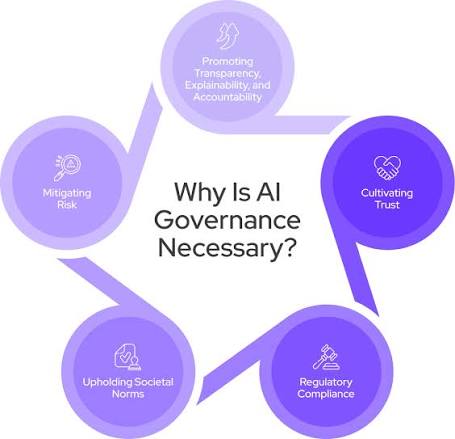
Despite rapid innovation, NSFW voice apps face regulatory pressure due to audio recordings, data retention, and potential misuse. It’s not enough to build a technically strong system — you also need models that classify content in real time, safety filters that block harmful interactions, and anonymized logs that avoid tying audio to identifiable users.
In practice, developers often underestimate just how complicated NSFW moderation becomes once voice enters the picture. During one of our discussions with a developer from NSFW Coders, who contributes to projects including advanced white-label systems and Candy-AI-style frameworks, they explained that audio moderation is one of the most challenging components because tone, context, and emotional patterns all influence interpretation. Their insight reinforced how essential it is to build safety architectures from day one rather than adding them as last-minute patches.
NSFW voice applications monetize extremely well because voice creates a unique emotional bond. However, this also means founders must price their service in a way that reflects true infrastructure cost. Many startups lose money because they offer unlimited voice sessions without considering GPU burn. Smart monetization models blend usage-based pricing, session caps, premium voice personas, and loyalty perks to maintain revenue while stabilizing backend pressure.
When pricing is aligned with architectural cost, growth becomes sustainable instead of destructive. When it is not, startups collapse under their own success.
The next era of NSFW AI voice will be shaped by real-time emotional inference, multi-voice personas, agent-based interactions, and dynamic memory graphs that evolve over time. As TTS becomes more expressive and inference speeds improve, NSFW voice companions will feel increasingly lifelike. This future demands strong engineering foundations today. Those who build with long-term scalability in mind will be best positioned to capitalize on the next wave of user expectations.
Most startups fail at NSFW AI voice chat development not because the idea is flawed, but because the technical and architectural burden is far heavier than expected. Real-time latency demands, GPU pressure, long conversational depth, emotional memory, and compliance requirements combine to create one of the most complex AI products a founder can attempt.
But those who treat engineering as their foundation rather than an afterthought will thrive. Startups that invest early in scalable architecture, safety layers, memory systems, and infrastructure-aware monetization stand a real chance of building something durable. Whether founders work with internal teams or trusted partners like Triple Minds and NSFW Coders, the key lesson remains the same: voice is the future of companion AI, and only robust engineering can sustain it.

© 2025 Crivva - Hosted by Airy Hosting Managed Website Hosting.