


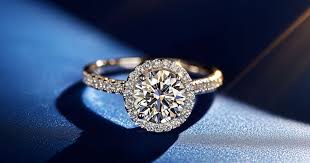
When most people picture a diamond ring, they are almost certainly imagining a round brilliant cut stone. It is the most recognised, most purchased, and most studied diamond shape in the world — and for good reason. The round brilliant cut is not just popular by tradition or marketing; it is engineered to produce the maximum possible light performance from a diamond. Understanding why this cut endures helps any buyer make a more informed decision.
The round brilliant cut as we know it today was developed in the early 20th century through a combination of mathematical analysis and practical refinement. Belgian mathematician Marcel Tolkowsky published a seminal study in 1919 that described the ideal proportions for a round diamond to maximise both brilliance (white light return) and fire (the dispersion of light into spectral colours). That framework, refined over the decades, forms the basis of modern round brilliant cut grading.
A round brilliant cut diamond has 57 or 58 facets — flat polished surfaces — arranged across the crown (top), girdle (middle band), and pavilion (bottom). Each facet is positioned at a specific angle to redirect light internally and reflect it back through the top of the stone. When the proportions are well-executed, the result is the characteristic sparkle that makes a fine diamond so arresting.
The key measurements that determine a round brilliant’s performance include the table percentage (the size of the flat top facet relative to the stone’s diameter), the crown angle, the pavilion depth, and the overall depth percentage. When these fall within the ideal range, the stone achieves what gemologists call “the triple excellent” — excellent cut, polish, and symmetry grades from a laboratory such as the GIA.
These three terms describe distinct optical effects that a well-cut round brilliant produces. Brilliance refers to the white light reflected back to the eye from inside the stone. Fire describes the flashes of spectral colour — violet, blue, green, yellow, and red — produced as light disperses within the diamond. Scintillation is the dynamic sparkle and pattern of light and dark areas visible when the stone, the viewer, or the light source moves.
No other diamond shape produces all three effects as consistently and powerfully as the round brilliant. This is the core reason for its dominance in diamond ring designs and the reason it accounts for approximately three-quarters of all diamond sales worldwide.
Round brilliant cut diamonds typically command a price premium over fancy-shaped stones of equivalent carat weight and quality. This is partly because the cutting process wastes more of the rough diamond than most other shapes, and partly because demand is so consistently high. A round brilliant of one carat will generally cost more than a cushion, oval, or pear diamond of the same weight and grade.
For buyers who prioritise maximum sparkle and are working within a specific budget, it may be worth considering a well-cut fancy shape that delivers impressive light performance at a lower per-carat cost. However, for those who want the definitive, universally recognisable diamond look, the round brilliant remains worth the premium.
Because cut is the most critical factor in a round brilliant’s performance, it deserves careful attention when purchasing. The GIA grades cut on a five-point scale: Excellent, Very Good, Good, Fair, and Poor. For the best visual result, an Excellent or Very Good cut grade is strongly recommended. Avoid Good or below for a round brilliant — the difference is visible even to an untrained eye.
When buying online, look for cut quality indicators beyond just the grade. Proportions data, hearts-and-arrows imagery (which shows the symmetry of the facet pattern under special viewers), and HD video footage of the specific stone under different lighting conditions are all valuable tools for evaluating a round brilliant remotely.
The round brilliant’s symmetry makes it versatile across a wide range of settings. The classic six-prong solitaire remains the most popular choice, allowing maximum light to enter the stone from all sides. Four-prong solitaires give the stone a slightly more contemporary, geometric look. Bezel settings complement the round shape beautifully, creating a sleek, modern aesthetic.
Halo settings — where a ring of smaller round brilliant diamonds surrounds the centre stone — amplify the visual impact dramatically. Pavé and channel-set bands add brilliance along the ring shank. For diamond rings uk buyers who want something a little different, a round brilliant centre stone in an asymmetric or vintage-inspired setting offers a distinctive alternative to the classic symmetrical design.
Round brilliant cut diamonds are available in an enormous range of carat weights. Half-carat and one-carat stones remain the most popular size benchmarks in the UK. It’s worth noting that a well-cut 0.90-carat diamond often looks virtually identical in size to a 1.00-carat stone, but can cost significantly less due to the price jump at the one-carat threshold.
Similarly, well-cut stones in the 0.45–0.49 carat range can offer excellent value relative to half-carat stones. If budget is a consideration, discussing these “near-size” options with a jeweller can be a very effective strategy.
Fluorescence refers to the way some diamonds glow blue under ultraviolet light. Approximately 25–35% of diamonds exhibit some degree of fluorescence. In round brilliants, strong fluorescence occasionally gives the stone a slightly hazy or oily appearance in bright natural light, though this is relatively rare and most fluorescent round brilliants look perfectly fine in everyday conditions.
Medium and faint fluorescence in a colourless or near-colourless round brilliant is generally considered harmless and can sometimes make the stone appear whiter to the eye. Ask your jeweller about fluorescence and, where possible, view the stone in different lighting conditions before purchasing.
The round brilliant cut diamond has earned its status through genuine optical excellence rather than fashion alone. For anyone buying a diamond ring and wanting absolute confidence in their choice, it remains the benchmark against which all other cuts are measured — and for most people, it is simply the finest choice available.

© 2025 Crivva - Hosted by Airy Hosting Managed Website Hosting.