You type a question into an AI tool, and the response you get back is… vague. Unhelpful. Maybe even completely off-topic. Sound familiar?
You’re not alone. Millions of people use AI tools every day and walk away frustrated because the output just doesn’t hit the mark. But here’s the thing: the problem usually isn’t the AI. It’s the way we’re talking to it.
That’s exactly where prompt engineering comes in. And the more you understand it, the more you’ll realize just how much it changes the game, whether you’re a business owner, a developer, a marketer, or someone who just wants AI to actually be useful.
At its most basic level, prompt engineering is the practice of crafting inputs (called prompts) in a way that gets the best possible output from an AI model. Think of it like giving directions. You can say ‘take me somewhere good for dinner’ and end up anywhere, or you can say ‘I want a quiet Italian restaurant near downtown that’s open late and takes reservations.’ One of those gets you a great meal. The other? A coin flip.
Prompt engineering works the same way. It involves choosing the right words, context, structure, and format to guide an AI model toward the response you actually need. It’s part art, part science, and entirely learnable.
AI models like large language models are incredibly powerful, but they don’t read minds. They work by predicting the most relevant response based on the input they receive. If your input is fuzzy, your output will be too.
Here’s why that matters at scale: businesses and teams using AI for customer support, content creation, data analysis, coding, and countless other tasks are only as efficient as the prompts they use. A poorly structured prompt doesn’t just produce a bad response once. It compounds across every use, wasting time and eroding trust in AI tools altogether.
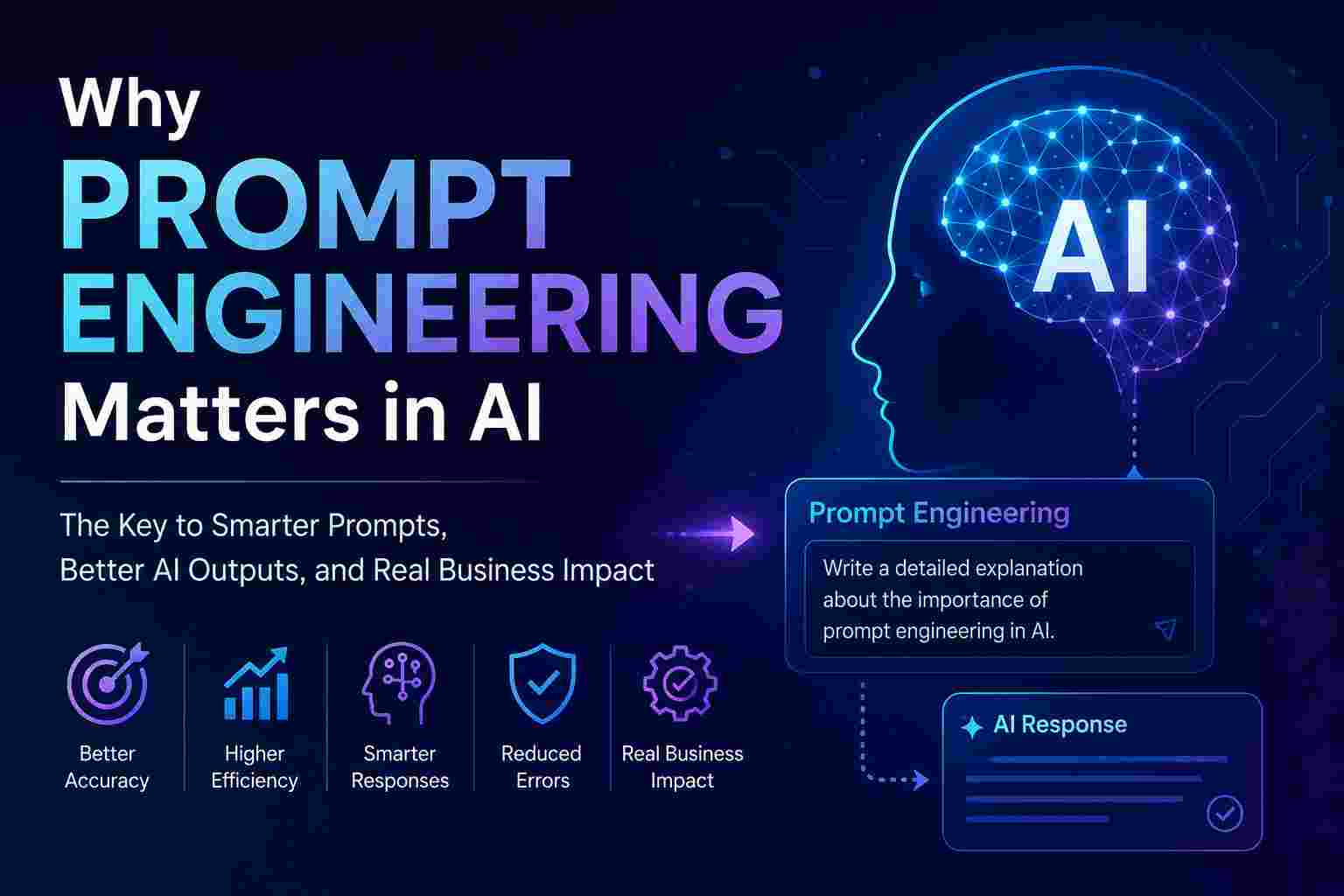
On the flip side, a well-crafted prompt can dramatically improve accuracy, reduce back-and-forth, cut down on manual editing, and deliver results that genuinely add value. That’s not a small thing. That’s a competitive advantage.
You don’t need a computer science degree to write better prompts. But understanding a few key principles can make an enormous difference.
The more specific you are, the better. Instead of asking ‘write me a blog post,’ try ‘write a 600-word blog post for a small business audience about the benefits of cloud-based accounting software, using a friendly and informative tone.’ The second version gives the model everything it needs to succeed.
AI models don’t have backstory unless you provide it. If you want a response tailored to your industry, audience, or goal, include that context upfront. Telling the model who it’s writing for, what tone to use, and what outcome you want sets the stage for much stronger results.
Great prompts are rarely written on the first try. Skilled prompt engineers treat it as a process: test, review, adjust, and repeat. Each iteration teaches you something new about how the model interprets your instructions, and over time you build a mental library of what works.
This isn’t just about personal productivity. The stakes are much higher for organizations deploying AI at scale.
When a company integrates AI into its workflows, every prompt that runs through that system is either adding value or costing time and money. An AI assistant that consistently misunderstands requests, produces off-brand content, or requires constant human correction isn’t saving anyone anything. It’s just a new kind of friction.
That’s why more businesses are turning to professional prompt engineering services to build the kind of carefully designed, tested, and reusable prompt frameworks that actually deliver reliable results across teams and departments.
The payoff is real: faster content production, more consistent customer communications, smarter data queries, and AI tools that feel like genuine team members rather than unpredictable wildcard tools.
One of the most fascinating aspects of prompt engineering is how much it influences the underlying model’s behavior. The same AI system can behave like a cautious analyst, a creative copywriter, a patient teacher, or a concise executive, depending entirely on how you prompt it.
Techniques like role-based prompting (asking the AI to respond as a specific expert), chain-of-thought prompting (instructing the model to reason step-by-step), and few-shot examples (showing the model examples of the output you want) are all powerful tools in a prompt engineer’s toolkit.
These aren’t tricks or workarounds. They’re legitimate strategies that align with how large language models are designed to process information. Understanding them means understanding how to truly unlock the potential of modern AI.
Honestly? Everyone who uses AI tools regularly.
Marketers who rely on AI for copy and campaigns will see better brand alignment. Developers building AI-powered applications will create more responsive, accurate products. Customer service teams using AI chatbots will see higher satisfaction scores. Educators using AI to create learning materials will get more relevant, well-structured content.
And for businesses that are still early in their AI journey, building strong prompt practices from the start means avoiding costly rework down the road.
Prompt engineering is not a niche technical skill reserved for AI researchers. It’s quickly becoming one of the most practical and in-demand competencies of the modern AI era. As AI tools become more embedded in how we work, create, and communicate, the ability to direct those tools clearly and effectively becomes genuinely valuable. The gap between someone who uses AI casually and someone who uses it strategically often comes down to how well they understand their prompts.
Whether you’re an individual looking to get more out of the tools you already use, or an organization trying to build scalable AI workflows, investing in prompt engineering is investing in results. The AI is ready. The question is: are your prompts?

© 2025 Crivva - Hosted by Airy Hosting Managed Website Hosting.