Professional design used to be a “gated community.” If you didn’t have a four-year degree in graphic arts or the patience to spend six hours watching Photoshop tutorials, you were largely out of luck. But in the last few years, the barrier to entry hasn’t just been lowered—it’s been demolished. At the center of this shift is the PicsArt AI photo editor, a platform that has transformed from a simple mobile app into a sophisticated, intelligence-driven creative suite used by over 150 million people monthly.
The real story here isn’t just about “filters.” It’s about how artificial intelligence is taking the most tedious, technical parts of photography and turning them into one-tap solutions. For the modern creator, time is the most valuable currency, and Picsart is effectively a time-saving machine.
We’ve all been there: you take a near-perfect photo, but there’s a stray power line cutting through the sky, or a photobomber in the background, or the lighting makes everything look like it was shot in a basement. Historically, fixing these issues required “surgical” precision. You’d have to zoom in 400%, use a clone stamp tool, and hope the pixels blended naturally.
With the AI Remove Object tool, that workflow is dead. You simply brush over the distraction, and the AI “hallucinates” what should have been behind the object—whether it’s a brick wall, a sunset, or a grassy field—and fills it in with shocking accuracy. It’s not just erasing; it’s reconstructing.
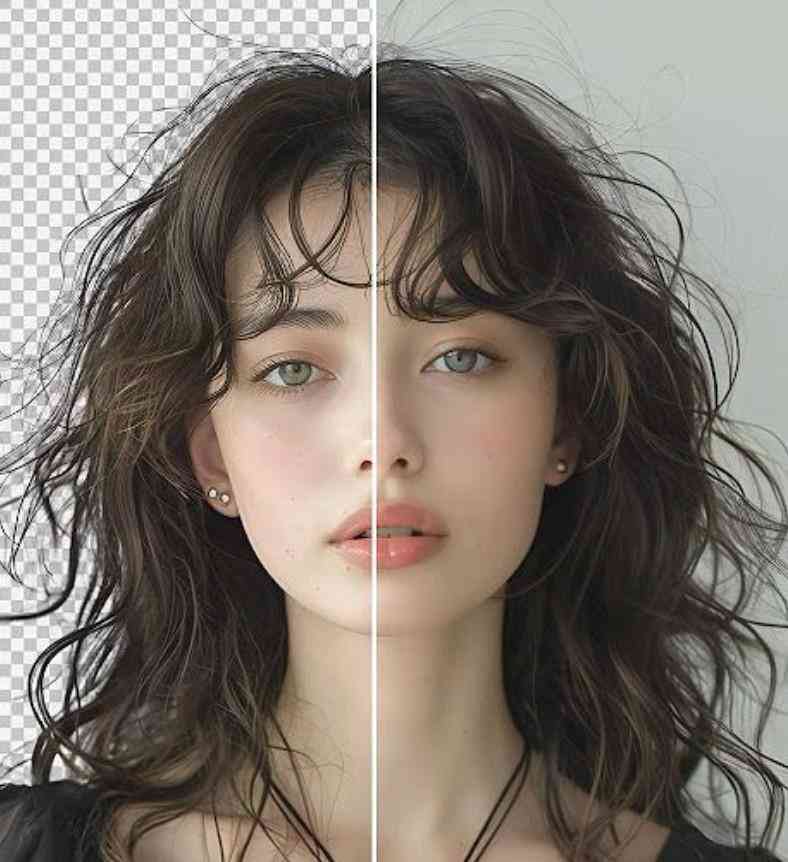
Then there is the Background Remover. For e-commerce sellers or small business owners, this is a literal lifesaver. Cutting out a product shot used to take twenty minutes of careful tracing. Now, the AI identifies the subject—distinguishing between a person’s flyaway hairs and the background—and isolates it in seconds. When you combine this with the Smart Background feature, which suggests contextually relevant backdrops based on the lighting of your subject, you can go from a kitchen-table product shot to a professional-grade advertisement without ever leaving your phone.
The most significant evolution in the Picsart ecosystem arrived in 2022 and 2024 with the introduction of Generative AI. This moved the editor beyond “fixing” what already exists and into “creating” what doesn’t.
AI Expand (Outpainting): Imagine you have a vertical portrait that you need to turn into a horizontal banner for a website. In the past, you’d have to crop it and lose half the person’s face. AI Expand looks at the edges of your photo and “paints” more of the scene. If you’re standing in a forest, it generates more trees and sky that match your photo’s specific lighting and texture. It effectively “zooms out” on a moment that’s already been captured.
AI Replace (Inpainting): This is perhaps the most “magical” tool in the kit. You can highlight a specific part of an image—say, a shirt someone is wearing—and type “a red leather jacket” or “a floral silk blouse.” The AI swaps the item while maintaining the shadows, folds, and perspective of the original photo. It’s a tool for rapid prototyping that, until recently, was only possible for high-end digital artists.
Text-to-Image Generation: For those moments when you don’t even have a starting photo, the text-to-image generator allows you to describe a scene and have the AI build it from scratch. This is particularly useful for creators who lack access to expensive stock photography or need a very specific, surreal visual for a mood board.
As AI-generated content becomes more common, a massive legal question has loomed over the industry: Who owns the copyright? Many AI models were trained on data scraped from the internet without permission, making businesses nervous about using AI for their marketing.
Picsart took a bold step to solve this in 2024 by partnering with Getty Images. Together, they are building a “commercially safe” AI model trained exclusively on Getty’s licensed, high-quality library. This is a massive “adult in the room” move. It means a marketing team can use Picsart’s generative tools to create a global ad campaign with the peace of mind that they aren’t infringing on anyone’s intellectual property. It’s the bridge between “fun AI toy” and “serious business tool.”
What many users don’t realize is that Picsart’s “intelligence” isn’t just bought off the shelf—it’s home-grown. Founded in Armenia by Hovhannes Avoyan, the company has maintained a deep commitment to academic research. In 2020, they partnered with the American University of Armenia (AUA) to launch an AI Lab.
This lab isn’t just about making better cat filters. It’s a hub for research into machine learning and computer vision. By investing in the next generation of engineers in Yerevan, Picsart ensures that their tools stay at the cutting edge of how software “sees” and “understands” pixels. This academic backbone is why their AI feels more “intuitive” than many of the fly-by-night AI apps that appear on the App Store every week.
Despite its power, PicsArt has managed to avoid the “bloatware” trap. The interface remains remarkably clean. Whether you’re using the mobile app during a commute or the web-based editor on a 30-inch monitor, the experience is cohesive.
The platform offers a robust free tier, but for those who need high-resolution exports, ad-free workflows, and the full suite of Getty-powered AI tools, the PicsArt Pro subscription has become an essential line item for freelancers. When you consider that a single professional retouching job could cost $50, a monthly subscription that lets you do it yourself in seconds is an easy sell.
We are living in an era where visual literacy is just as important as verbal literacy. Whether you’re a solopreneur trying to stand out on Instagram, a student building a portfolio, or a brand manager coordinating a product launch, the quality of your visuals dictates your success.
The Picsart AI photo editor has effectively “democratized” the aesthetic. It has taken the power once reserved for the elite and put it into the pockets of 150 million people. As the technology continues to advance—moving into more complex video AI and even 3D asset generation—Picsart isn’t just keeping up; it’s setting the pace.
In the end, the “AI” in PicsArt isn’t there to replace the creator. It’s there to be the “assistant” that handles the boring, technical chores so the creator can focus on the one thing a machine can’t do: having an original idea

© 2025 Crivva - Hosted by Airy Hosting Managed Website Hosting.