


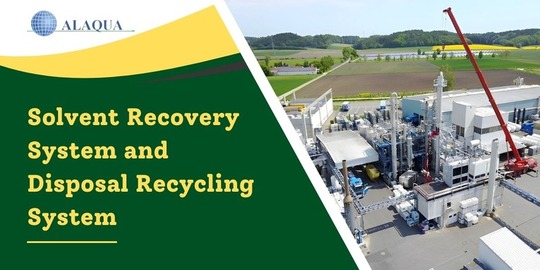
Industrial manufacturing is undergoing a major transformation. Across sectors such as pharmaceuticals, chemicals, food processing, coatings, and specialty manufacturing, businesses are searching for smarter ways to reduce waste, cut costs, and improve sustainability. One technology that has rapidly moved from being an optional investment to a strategic necessity is the solvent recovery system. Companies that once viewed solvent disposal as a routine operational expense are now recognizing the significant financial and environmental benefits of recovering and reusing valuable solvents.
The global focus on sustainability is no longer limited to corporate social responsibility reports. Governments are implementing stricter environmental regulations, customers are demanding greener products, and investors are paying closer attention to environmental performance metrics. At the same time, the cost of purchasing fresh solvents and managing hazardous waste continues to rise. These pressures are driving industries toward technologies that support a circular manufacturing model rather than a waste-intensive one.
Modern solvent recovery systems provide a practical solution by allowing companies to reclaim and reuse solvents that would otherwise be discarded. Advanced technologies, including Falling Film Evaporators, have dramatically improved recovery rates, energy efficiency, and operational reliability. Market research indicates that industrial users accounted for more than 71% of solvent recovery system adoption in 2025, with recovery efficiencies commonly reaching between 85% and 98%. These numbers demonstrate why solvent recovery is becoming a critical component of modern manufacturing operations.
Manufacturing facilities around the world are facing increasing pressure to reduce their environmental footprint. Traditional production methods often generate substantial amounts of solvent waste that require expensive treatment and disposal. This approach not only increases operating costs but also contributes to environmental pollution and resource depletion. As sustainability becomes a competitive differentiator, businesses are looking for technologies that help them minimize waste while maintaining productivity.
Think of solvents as fuel for many industrial processes. Discarding used solvents after a single use is similar to throwing away a partially filled fuel tank every time a vehicle stops moving. It simply does not make economic or environmental sense. Solvent recovery systems transform what was once considered waste into a reusable resource, allowing companies to maximize the value of every gallon or liter purchased.
The movement toward circular manufacturing has accelerated the adoption of solvent recovery technologies. Circular manufacturing focuses on keeping valuable materials in use for as long as possible. By recovering solvents and returning them to production processes, manufacturers significantly reduce their dependence on virgin raw materials while lowering overall waste generation. This strategy aligns perfectly with modern sustainability goals and regulatory expectations.
Economic factors are also playing a significant role in the growing demand for solvent recovery systems. Solvents represent a substantial operating expense for many industrial facilities. Fluctuations in raw material prices, supply chain disruptions, and increasing transportation costs can significantly impact profitability. Recovering and reusing solvents helps protect businesses from these market uncertainties.
Waste disposal costs have also increased dramatically in many regions. Hazardous waste handling requires specialized transportation, treatment, documentation, and compliance procedures. Every gallon of solvent sent for disposal represents both a direct cost and a lost opportunity to recover valuable material. By implementing recovery systems, companies can simultaneously reduce disposal expenses and lower solvent purchasing requirements, creating a powerful dual-source return on investment.
A solvent recovery system is designed to separate usable solvents from contaminants generated during manufacturing processes. Depending on the application, recovery can be achieved through distillation, evaporation, filtration, membrane separation, or a combination of these technologies. The objective is straightforward: remove impurities while preserving the solvent’s properties so it can be reused effectively.
The process typically begins with the collection of solvent-containing waste streams. These streams are then processed through specialized equipment that exploits differences in boiling points, volatility, or molecular characteristics. During treatment, contaminants are separated from the solvent, resulting in a purified product that can be reintroduced into production.
Advanced systems incorporate automation, monitoring controls, and energy-efficient technologies that optimize performance while reducing operating costs. Modern equipment can continuously process large volumes of solvent with minimal operator intervention, making recovery practical for facilities of all sizes.
A wide variety of solvents can be recovered depending on the manufacturing process involved. Common examples include ethanol, methanol, acetone, isopropyl alcohol, toluene, xylene, and numerous specialty solvents used in pharmaceutical and chemical production. These materials often represent significant financial investments, making recovery particularly attractive.
Industries that rely heavily on solvent-intensive processes frequently achieve substantial savings through recovery programs. In many cases, recovered solvents can meet quality specifications comparable to newly purchased materials, allowing companies to maintain product standards while dramatically reducing procurement costs.
One of the most compelling reasons companies invest in solvent recovery systems is the opportunity for significant cost savings. Recovering solvents reduces the need to purchase fresh materials while simultaneously decreasing disposal expenses. Over time, these savings can be substantial, often allowing facilities to recover their initial investment within a relatively short period.
Industry reports suggest that many industrial solvent recovery installations achieve payback periods ranging from two to five years while maintaining high recovery efficiencies. This financial advantage becomes even more attractive as solvent prices continue to rise and environmental compliance requirements become more demanding.
Environmental regulations governing hazardous waste management have become increasingly stringent across global markets. Manufacturers must demonstrate responsible waste handling practices while minimizing environmental impacts. Solvent recovery systems directly support these objectives by reducing the volume of waste requiring disposal.
By recovering solvents rather than discarding them, companies can lower emissions, reduce landfill contributions, and decrease the environmental burden associated with solvent production. This proactive approach not only supports compliance but also enhances corporate sustainability initiatives and public perception.
Efficiency is the lifeblood of modern manufacturing. Recovery systems contribute to operational excellence by creating a reliable source of reusable solvent. Instead of relying entirely on external suppliers, facilities gain greater control over their solvent supply chain.
This improved control can help reduce production interruptions, stabilize operating costs, and improve overall process consistency. As a result, solvent recovery becomes more than an environmental initiative—it becomes a strategic operational advantage.
Pharmaceutical production relies heavily on solvents throughout extraction, purification, formulation, and cleaning processes. Because many pharmaceutical solvents are expensive and highly regulated, recovery systems offer significant economic and compliance benefits.
Maintaining product quality is critical in pharmaceutical applications, which is why advanced recovery technologies are essential. Systems that provide precise temperature control and gentle processing conditions help preserve solvent integrity while meeting stringent industry standards.
Chemical manufacturers often process large solvent volumes on a continuous basis. Recovery systems allow these facilities to reduce operating costs while improving sustainability performance. Many chemical operations incorporate integrated recovery solutions directly into production lines to maximize efficiency.
The chemical sector has become one of the largest adopters of advanced recovery technologies because even small improvements in solvent utilization can generate substantial financial returns across large-scale operations.
The food and beverage industry increasingly utilizes solvent recovery for extraction processes involving flavors, fragrances, botanical ingredients, and specialty compounds. Gentle processing technologies are particularly important in this sector because heat-sensitive products can be easily damaged during concentration or recovery operations.
Paint, coating, and printing manufacturers consume large quantities of organic solvents. Recovery systems enable these industries to reduce hazardous waste generation while controlling production costs. Given the sector’s ongoing focus on sustainability and emissions reduction, solvent recovery has become an important competitive advantage.
Among the technologies used in solvent recovery, Falling Film Evaporators stand out as one of the most effective and energy-efficient solutions available. A Falling Film Evaporator distributes liquid at the top of vertical tubes, allowing it to flow downward as a thin film along the tube walls while heat is applied. As the liquid travels downward, solvent evaporation occurs rapidly and efficiently.
This design creates exceptional heat transfer while minimizing the time products spend exposed to elevated temperatures. Because the liquid forms a thin film, evaporation occurs quickly and uniformly, making the technology especially valuable for heat-sensitive materials.
As industries continue their transition toward more sustainable and efficient manufacturing practices, companies require partners capable of delivering advanced process solutions. Alaqua Inc supports this evolution by providing innovative technologies that help manufacturers reduce waste, improve resource utilization, and achieve operational excellence.
Solutions incorporating advanced solvent recovery technologies and Falling Film Evaporators enable businesses to recover valuable materials, lower operating costs, and meet increasingly demanding environmental standards. By investing in efficient recovery systems today, manufacturers position themselves for long-term success in a marketplace that increasingly rewards sustainability and resource efficiency.
Solvent recovery systems have evolved from niche equipment into essential infrastructure for modern manufacturing. Rising solvent costs, stricter environmental regulations, and growing sustainability expectations are driving unprecedented adoption across multiple industries. Businesses are recognizing that recovering solvents is not simply an environmental initiative—it is a practical strategy for improving profitability, resilience, and operational efficiency.

© 2025 Crivva - Hosted by Airy Hosting Managed Website Hosting.








