Have you ever thought that your WordPress website is too slow, inflexible, or not meeting today’s user expectations? You’re not alone. As websites become more dynamic and app-like, many businesses realize that traditional WordPress setups can hold back performance, scalability, and innovation.
This is where Headless WordPress comes into play.
In today’s digital-first world, users expect lightning-fast load times and seamless experiences across devices. Content is no longer confined to a single website—it needs to flow smoothly across websites, mobile apps, and emerging digital platforms. Headless WordPress development addresses these demands by separating content management from the presentation layer, enabling greater flexibility and performance.
For organizations planning to modernize their digital presence, the decision to hire WordPress experts can play a key role in successfully implementing a headless architecture, integrating modern technologies, and ensuring long-term scalability.
Let’s explore why Headless WordPress is becoming the future of web development—and why modern brands are rapidly adopting it.
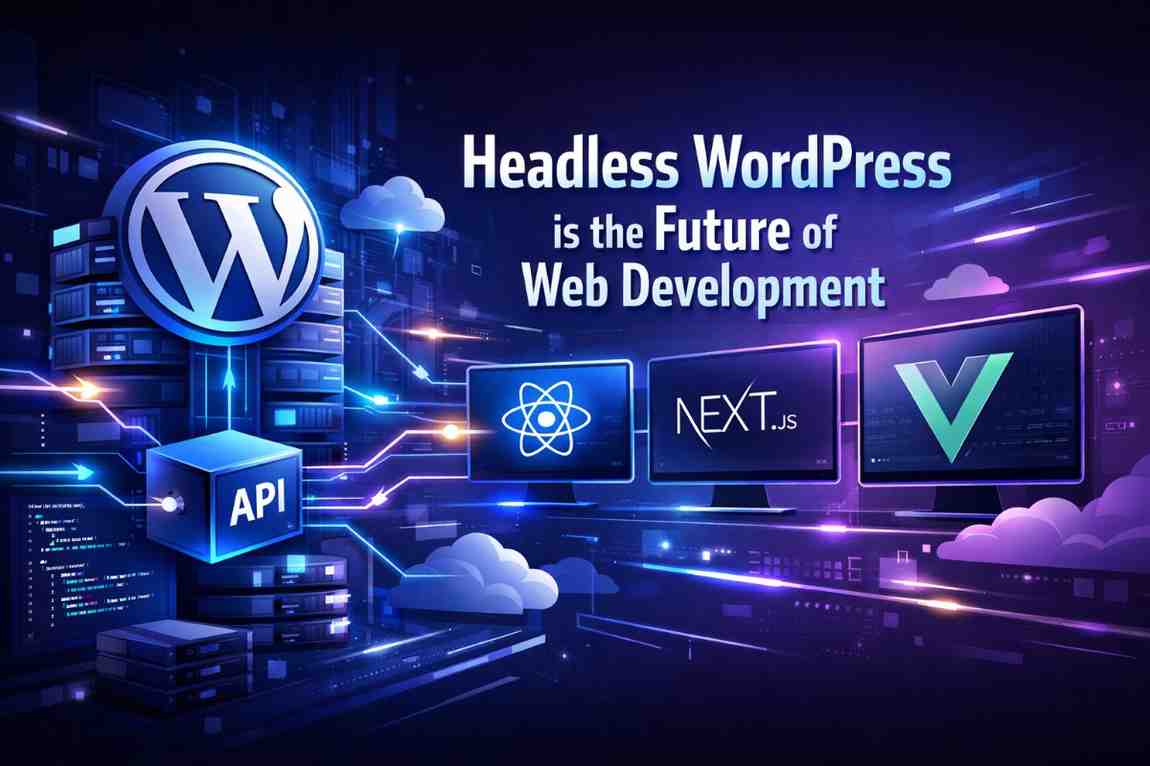
At its core, Headless WordPress means using WordPress solely as a content management system while creating the frontend with modern technologies.
In a Headless WordPress architecture:
This approach turns WordPress into an API-driven platform rather than a traditional monolithic CMS.
Decoupled WordPress, often called headless, completely separates the backend from the frontend. Instead of rendering pages on the server, content is fetched using the WordPress REST API or WordPress GraphQL and displayed through modern frontend frameworks.
This separation allows developers to create faster, more flexible, and more secure digital experiences something traditional WordPress struggles with at scale.
To understand why headless is the future, let’s compare Headless WordPress vs traditional WordPress.
Traditional WordPress:
Headless WordPress:
This shift is driving the future of WordPress development.
One of the main benefits of Headless WordPress is performance. When content is delivered through APIs and frontends are built with static or server-side rendering, sites load much faster.
Headless WordPress performance advantages include:
Speed is no longer optional, it’s a ranking factor and a conversion driver.
With frontend frameworks and WordPress, developers can pick the right tools for their projects rather than being limited to PHP themes.
Popular combinations include:
This flexibility is why developers are embracing JAMstack WordPress solutions.
Large organizations need scalability, security, and reliability. Enterprise WordPress solutions increasingly use headless setups to manage heavy traffic and complex digital environments.
Headless WordPress enables:
This makes it ideal for enterprises, SaaS platforms, and media companies.
With API-driven WordPress, your content isn’t tied to one website. Using the WordPress REST API or WordPress GraphQL, the same content can power multiple platforms.
This omnichannel approach is essential in the modern digital landscape and a key reason headless is shaping the future.
JAMstack WordPress merges JavaScript, APIs, and Markup to create fast, secure websites. When used with Headless WordPress, JAMstack allows:
This architecture is now widely adopted by top WordPress development agencies.
A common worry is whether Headless WordPress is friendly to SEO. The answer is yes, when set up correctly.
Using headless WordPress with Next.js, server-side rendering or static generation allows search engines to index content fully. When combined with optimized metadata and structured data, headless setups often perform better than traditional WordPress in SEO.
Modern WordPress development services are changing. Professional WordPress development companies now offer headless solutions to meet clients’ needs better.
Agencies choose headless because it allows:
In 2026, offering Headless WordPress development is no longer a bonus—it’s a necessity.
Headless WordPress is not just a trend, it’s being used across industries:
These real-world applications reinforce why it’s shaping the future of WordPress development.
While powerful, Headless WordPress does require expertise. Challenges include:
That’s why businesses partner with an experienced WordPress development agency that specializes in headless architecture.
As user expectations grow and digital ecosystems expand, Decoupled WordPress is becoming the go-to choice for innovative brands. WordPress continues to invest in APIs, making headless setups even more powerful and accessible.
This evolution clearly signals where WordPress is heading.
Headless WordPress is the future of web development because it meets modern websites’ demands for speed, flexibility, scalability, and omnichannel capabilities.
From Headless WordPress with React and Next.js to JAMstack WordPress and API-driven WordPress, this approach allows businesses to create future-proof digital experiences.
If you want to stay competitive in 2026 and beyond, adopting Headless WordPress development isn’t just wise, it’s necessary.
Headless WordPress uses WordPress just for content management while the website’s frontend is built with modern frameworks like React or Next.js. Content is delivered through APIs, allowing for faster performance, better security, and more flexibility than traditional WordPress setups
Headless WordPress is better for websites with high traffic and a focus on performance and scalability. It offers faster load times, improved security, and greater customization. However, traditional WordPress is still best for simpler sites that need quicker setup and easier content management.

© 2025 Crivva - Hosted by Airy Hosting Managed Website Hosting.