


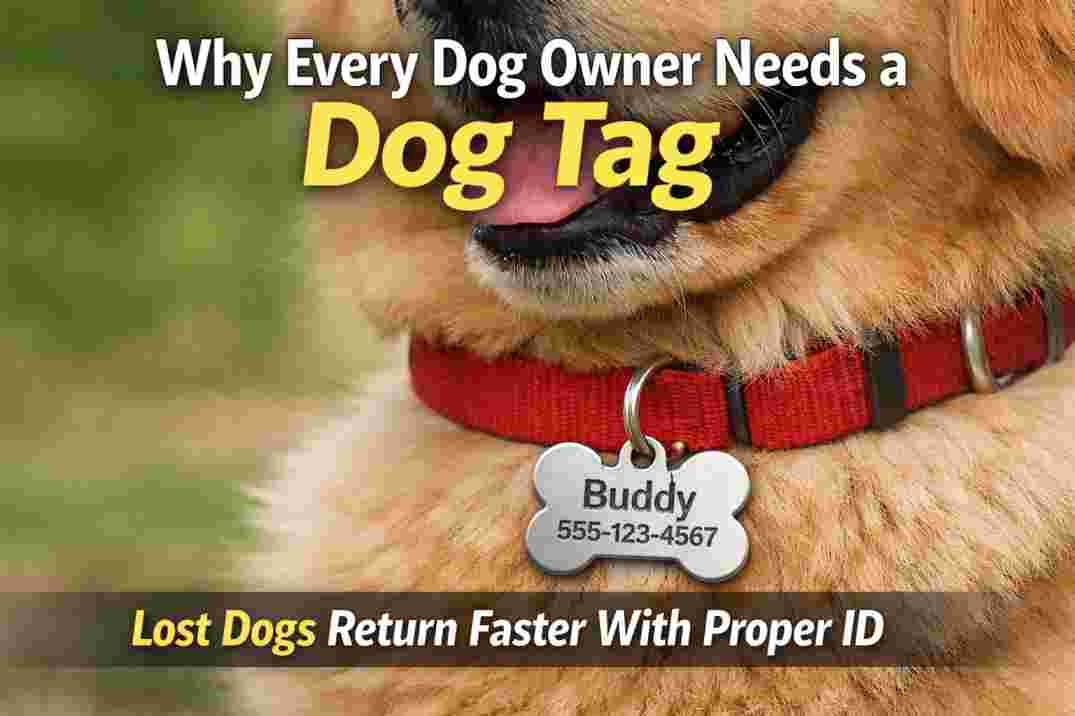
Many dog owners focus on food, grooming, exercise, and regular vet visits, but one small item is often underestimated: the dog tag. It may look simple, but a dog tag plays a major role in keeping a pet safe.
No matter how obedient a dog may be, accidents happen. Gates are left open, leashes slip, and unexpected noises can make even calm dogs run.
A dog without identification becomes much harder to return if it gets lost. In many situations, the fastest way for someone to help a lost dog get home is by checking the information on its collar.
That is why a personalized dog tag remains one of the most practical things a dog owner can provide.
Microchips are now common, and many owners assume that microchipping alone is enough. While microchips are important, they are not immediately visible. A person who finds a lost dog cannot read a microchip without visiting a veterinary clinic or shelter.
A visible tag solves that problem instantly. It gives immediate access to basic information such as the owner’s phone number and sometimes the pet’s name. In urgent situations, this can save valuable time.
A personalized dog tag adds another advantage because owners can choose exactly what information to include based on the dog’s needs and lifestyle.
Dogs can become disoriented very quickly, even in familiar surroundings. A loud sound, crowded road, or sudden distraction may cause a dog to run farther than expected.
If someone finds a dog wearing a readable tag, the process becomes simple. Instead of taking the dog to a shelter, they can call the owner directly. In many cases, dogs return home within minutes because of this small detail.
Without visible identification, even a friendly dog may spend hours or days waiting in an unfamiliar environment until ownership is confirmed.
Basic tags usually contain limited details, but a personalized dog tag allows owners to decide what is most useful.
Some owners include:
dog’s name
primary phone number
alternate emergency contact
medical note such as allergies
statement like “microchipped”
This customization helps when the dog has specific medical conditions or when the owner wants an additional contact available.
Clear identification also helps reduce confusion if multiple dogs in the same neighborhood look similar.
Travel creates more opportunities for dogs to become separated from owners. Parks, road trips, public spaces, and new environments can increase distraction and unfamiliar reactions.
A dog tag becomes especially important during travel because local people do not know the dog or owner personally. If a pet slips away in a new place, identification immediately becomes the fastest way for strangers to assist.
Even during short daily walks, tags remain useful because accidents usually happen unexpectedly rather than during planned risky situations.
Dog tags are not only useful for lost pets. They also help in emergencies.
If a dog is involved in an accident or found injured, emergency contacts can be reached immediately. This becomes critical when urgent veterinary care is needed.
A visible note such as “needs medication” or “anxious dog” can also help strangers handle the animal more carefully.
Many dog owners now rely on microchips because they provide permanent identification under the skin. While microchips are extremely useful, they do not replace a visible tag.
A person who finds a dog cannot read a microchip without taking the animal to a veterinarian, shelter, or rescue center where scanning equipment is available. That process takes time and often delays direct contact with the owner.
A dog tag solves this immediately. Someone finding the dog only needs to read the collar and call the number shown.
This is why many veterinarians still recommend combining microchips with a instead of choosing only one method.
Dog tags are not only about getting lost. They also help if a dog is injured or involved in an accident.
If someone finds an injured dog near a road, immediate owner contact becomes critical. Veterinary decisions often need quick approval, especially when treatment cannot wait.
A visible contact number allows strangers or local clinics to reach the owner quickly.
For dogs with health conditions, tags can also include short alerts such as:
needs medication
diabetic
hearing impaired
That small information may directly affect how safely the dog is handled.
Some owners assume tags matter only for adventurous dogs or dogs with poor recall, but everyday situations cause most accidental escapes.
A gate left open for delivery, a collar slipping during a walk, or a sudden loud sound can affect any dog.
Because these moments happen unexpectedly, identification should already be in place before it is needed.
Many owners believe their dog will stay close if it gets loose, but dogs often move farther than expected once they become confused.
A familiar neighborhood can suddenly become disorienting if the dog follows noise, another animal, or unfamiliar movement. Once the dog enters a busy road or unfamiliar lane, stress increases and it may continue moving without stopping.
If a tag is visible, anyone who spots the dog can act immediately. Without identification, the finder may hesitate, unsure whether the dog belongs nearby or whether help is needed.
Many pet products are chosen for comfort or appearance, but a dog tag serves a practical daily purpose. It does not replace training, supervision, or microchipping, but it adds immediate protection in situations where time matters most.
Dogs cannot explain where they belong. A tag gives them that voice when owners are not present.
That is why even though it is small, a dog tag remains one of the most important things every dog owner should treat as essential
Many pet accessories are optional, but identification is practical protection. A collar may be chosen for style, but a tag serves a direct purpose every day.
Dogs cannot explain where they belong, but a tag speaks for them when needed. In a moment of confusion, one small piece of information can make the difference between stress and a quick reunion.
That is why for responsible pet ownership, a dog tag should never be treated as an afterthought.

© 2025 Crivva - Hosted by Airy Hosting Managed Website Hosting.