


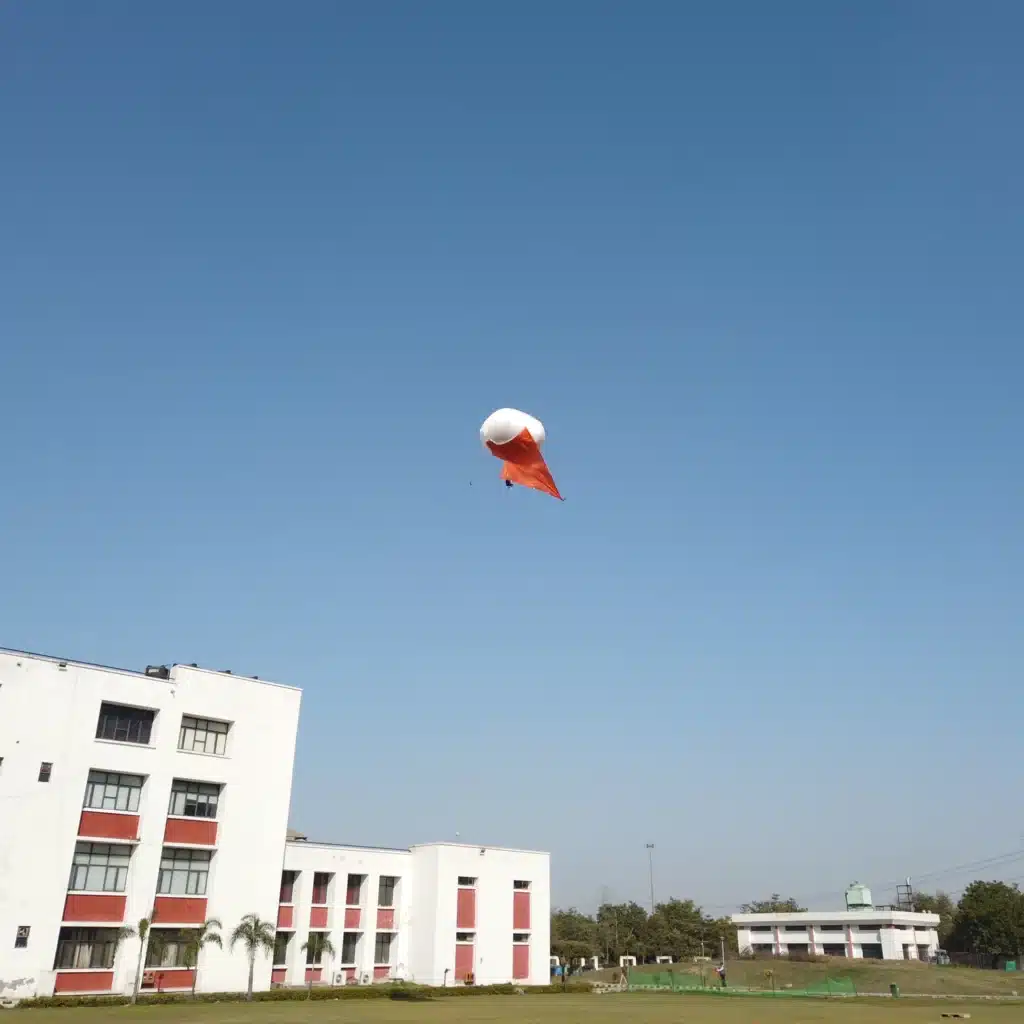
Sustainability has become the defining evaluative criterion of our technological era. The systems, platforms, and solutions that will define the next generation of aerial technology are being assessed not only by their operational performance but by the environmental footprint they carry, the resource efficiency with which they deliver their capabilities, and the alignment of their design principles with the imperative to reduce the ecological impact of human technological activity across every domain where that activity can be made cleaner, more efficient, and more responsible without compromising the operational effectiveness that makes technology genuinely valuable to the organisations and communities it serves. Aerial technology is not exempt from this sustainability evaluation, and when the full range of aerial platforms currently deployed across surveillance, monitoring, communication relay, and inspection applications is assessed against the criteria that sustainability demands, the aerostatic drone emerges as the platform architecture most naturally and comprehensively aligned with the green innovation principles that the aerial technology industry’s sustainable future requires. This alignment is not the product of sustainability-focused engineering add-ons applied retrospectively to a platform designed without environmental considerations, but the natural consequence of an architectural approach to aerial platform design whose foundational physics, operational characteristics, and resource consumption profile are inherently more sustainable than the mechanically lifted alternatives against which aerostatic technology is most frequently compared. Understanding why aerostatic drone technology is leading sustainable aerial innovation requires examining the specific dimensions of its sustainability advantage and the operational contexts in which that advantage creates the most significant environmental and resource efficiency benefits.
The Physics of Sustainable Flight
The sustainability advantage of aerostatic drone technology begins at the most fundamental level of aerial platform physics, with the mechanism by which the platform maintains its position at altitude. Every conventional aerial platform, from the simplest battery-powered multirotor drone to the most sophisticated military unmanned aircraft system, maintains altitude by generating aerodynamic lift forces that counteract gravity. This lift generation requires continuous energy expenditure that dominates the power budget of conventional platforms, consuming the majority of available energy to keep the platform airborne and leaving a relatively small energy margin for the sensors, communication systems, and other operational equipment that generate the actual monitoring and intelligence value the platform is deployed to provide.
The aerostatic drone eliminates this continuous energy expenditure for altitude maintenance by achieving buoyancy through the passive physics of a lighter-than-air gas envelope whose density difference from the surrounding atmosphere provides the lift needed to support the platform and its payload without any energy expenditure whatsoever. This is not an efficiency improvement within the conventional aerial platform paradigm. It is a structural transformation of the energy economics of aerial operation that changes the sustainability profile of the platform architecture at its most fundamental level, removing the largest single category of energy consumption from the operational equation and directing the power supplied through the ground tether almost entirely toward the productive operational systems that justify the platform’s deployment.
The practical sustainability consequences of this architectural difference are substantial and multidimensional. Total energy consumption per hour of operational aerial coverage is reduced dramatically relative to conventional alternatives providing equivalent sensor payload capability. The ground power supply that sustains the aerostatic platform’s operational systems can be sourced from renewable energy infrastructure including solar photovoltaic arrays and wind generation systems, creating aerial monitoring programmes whose entire operational energy chain is decoupled from fossil fuel consumption. Carbon emissions associated with aerial surveillance and monitoring operations are reduced to near-zero for deployments powered by renewable energy sources, compared to the significant emissions generated by the aviation fuel consumption of helicopter and fixed-wing UAV surveillance alternatives.
Resource Efficiency Across the Operational Lifecycle
The sustainability advantage of aerostatic drone technology extends beyond the immediate energy efficiency of its flight operations to encompass the broader resource efficiency of its operational lifecycle across the procurement, deployment, maintenance, and end-of-life phases that determine the total environmental footprint of any technology platform. The reduced mechanical complexity of aerostatic platforms relative to rotary-wing and fixed-wing alternatives, which results from the elimination of the high-stress propulsion systems that generating aerodynamic lift requires, translates into longer component lifespans, lower maintenance material consumption, and reduced frequency of component replacement that collectively moderate the resource throughput of the aerostatic platform’s operational lifecycle.
The persistent endurance characteristic that makes aerostatic platforms operationally superior to conventional alternatives for continuous monitoring applications also contributes to their lifecycle resource efficiency by enabling a single platform deployment to provide the monitoring coverage that would require multiple conventional platform deployments to replicate. The aerostatic drone that maintains continuous surveillance over a border corridor for seventy-two hours provides the same monitoring coverage duration as dozens of battery-powered drone sorties, each requiring battery manufacturing resources, charging energy, and the personnel and logistics overhead of frequent deployment cycles that multiply the total resource consumption of equivalent conventional monitoring programmes.
Environmental Monitoring as a Sustainability Application
The sustainability credentials of aerostatic drone technology are expressed not only through the environmental performance of the platform itself but through the conservation and environmental protection value of the monitoring applications it enables. The persistent aerial presence that aerostatic platforms provide over protected forest areas, wildlife reserves, coastal ecosystems, and river systems represents one of the most powerful tools available to conservation managers for detecting and responding to the illegal activities and ecological changes that threaten India’s most ecologically significant natural environments.
Illegal deforestation operations that exploit the predictable gaps in conventional surveillance schedules to conduct clearing activities during unmonitored intervals find those intervals eliminated when a persistent aerostatic platform is deployed over the protected area, deterring illegal activity through the continuous overhead presence that makes working undetected operationally impractical rather than merely risky. Wildlife poaching operations that target high-value species during the night hours when conventional surveillance is least effective encounter the thermal detection capability of aerostatic platforms that maintains observation effectiveness through darkness with the same reliability that optical sensors provide in daylight, removing the night-time protection that conventional surveillance gaps historically provided.
The Atal DrishTI Tactical Aerostat demonstrates how advanced aerostatic platforms integrate environmental monitoring capability alongside their surveillance and communication relay functions, enabling deployments that serve conservation protection objectives as part of the same persistent presence that addresses security and infrastructure monitoring requirements simultaneously. This multi-function capability maximises the environmental protection value delivered per unit of deployment resource, improving the sustainability efficiency of conservation monitoring programmes that must balance limited resources against the growing scale of the ecological threats they face.
Sustainable Urban Monitoring and Smart City Applications
Smart city sustainability programmes that are committed to reducing the environmental footprint of urban governance and management operations are finding in aerostatic drone monitoring an aerial intelligence solution whose sustainability profile aligns naturally with the environmental commitments that serious smart city programmes make across their operational systems. The ability to power aerostatic urban monitoring deployments from renewable energy sources transforms what would otherwise be a continuous aviation operation with significant energy consumption into a green monitoring infrastructure contribution that supports rather than contradicts the sustainability objectives of the cities it serves.
Urban air quality monitoring from aerostatic platforms supports sustainability goals directly by providing the continuous atmospheric intelligence that effective pollution management programmes require to identify the sources, patterns, and exposure distributions of urban air pollution with the spatial and temporal resolution needed to target regulatory and operational interventions where they will achieve the greatest reductions in the health and environmental impacts of urban air quality challenges. The better the monitoring intelligence, the more precisely interventions can be targeted, and the more resource-efficiently the air quality improvements that sustainable urban development requires can be achieved.
The Innovation Ecosystem That Connects Sustainability to Celebration
The aerostatic drone technology leading sustainable aerial innovation belongs to the same aerial innovation ecosystem that advances creative applications including drone show for event productions and drone show for wedding displays. The energy-efficient tethered architecture, durable multi-sensor payload integration, reliable real-time communication, and operationally resilient design that define the sustainability excellence of advanced aerostatic platforms share foundational engineering principles with the technologies enabling spectacular aerial performances above celebrations across India.
A drone show for event performance creating luminous choreographed formations above a national celebration or major public festival, and a drone show for wedding display weaving coordinated aerial patterns above a family gathering, both reflect the maturation of the aerial engineering disciplines that make the Atal DrishTI Tactical Aerostat and similar platforms leaders in sustainable aerial innovation. The energy-efficient flight systems, precise positional control, and reliable communication that make a drone show for wedding both visually spectacular and operationally sustainable above its audience are expressions of the same engineering philosophy that makes aerostatic monitoring platforms the greenest, most resource-efficient, and most operationally credible sustainable aerial solution that the surveillance, monitoring, and connectivity technology landscape currently offers.

© 2025 Crivva - Hosted by Airy Hosting Managed Website Hosting.








