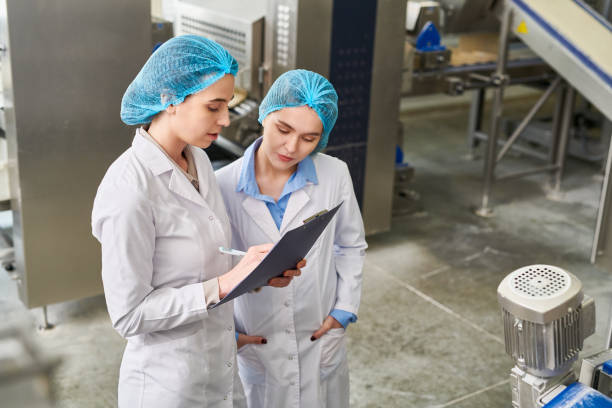
Anyone who works in food manufacturing knows that designing a production facility is nothing like designing a regular warehouse or industrial building. The requirements are stricter, the regulations are more complex and the consequences of getting things wrong are more serious. A factory that makes car parts can be designed very differently from a factory that makes sandwiches or processes meat. Food safety, hygiene standards and production efficiency all depend on getting the design right from the start.
Food factory design isn’t just about putting up four walls and a roof. It’s about creating an environment where food can be produced safely, where contamination risks are minimised and where workers can do their jobs efficiently without compromising quality. Every decision from where the loading bay goes to how the drains are angled affects the final result.
This guide explains what makes food factory design unique, what factors you need to consider and how proper planning prevents costly mistakes down the line.
Regular industrial buildings follow standard building codes and safety regulations. Food factories follow all of those plus an additional layer of food safety requirements that don’t apply to other industries. The Health and Safety Executive, local environmental health officers and often industry-specific certification bodies all have standards that the facility must meet.
Food factories need:
A regular warehouse doesn’t need any of this. But a food factory can’t function properly without it.
The layout of a food factory determines how efficiently production flows and how well contamination risks are controlled. Poor layout decisions made during design are expensive or sometimes impossible to fix later.
Food should move through the facility in one direction from raw materials to finished product. Backtracking and crossed paths create contamination risks. If raw chicken needs to cross paths with cooked chicken at any point in the building, you’ve got a design problem.
Food factories are typically divided into zones based on contamination risk:
Each zone has different requirements for surfaces, equipment and staff access. The design needs physical separation between these zones with controlled access points where staff can change clothing and wash hands properly.
Workers need to be able to move through the facility without creating contamination risks. That means:
If the layout makes it inconvenient to follow proper hygiene procedures, people will take shortcuts. Good design makes doing the right thing the easiest option.
Food production often requires precise control of temperature, humidity and air quality. The building design needs to support these systems effectively.
Different foods need different temperatures. A facility producing ice cream needs freezer space. A bakery needs ovens that generate enormous heat. The design must account for:
Too much moisture creates conditions where bacteria and mold thrive. Too little moisture affects product quality in some foods. The ventilation system needs to remove moisture from cooking, washing and other processes while maintaining appropriate humidity levels for the products being made.
Positive air pressure in high-risk areas prevents contaminated air from flowing in from lower-risk zones. Filtered air systems remove particles and potential contaminants. The design needs to specify:
Every surface in a food factory is a potential place for bacteria to grow if it’s not designed properly.
Walls in production areas need to be:
Ceilings need to be designed so condensation doesn’t drip onto food or work surfaces. That might mean insulated panels, special coatings or designing the air handling system to prevent condensation forming.
Floors in food factories take enormous abuse from cleaning chemicals, temperature changes, impacts from dropped equipment and constant foot traffic. They need to be:
Epoxy resin flooring is popular in food manufacturing because it meets these requirements. The installation needs to be done correctly with proper drainage falls built in from the start.
Food factories use substantial amounts of water, power and sometimes gas or steam. The design needs to accommodate current needs while allowing for future expansion.
Production processes need water at different temperatures and pressures. Cleaning requires hot water at high pressure. Some processes need chilled water. The design should specify:
Modern food factories run on electricity for refrigeration, cooking, processing equipment, lighting and controls. The electrical design needs to:
Many food processes use compressed air for pneumatic controls, cleaning or product handling. Some use natural gas or LPG for cooking. These systems need to be designed into the building services from the start with proper sizing, safety measures and maintenance access.
Food factory design must comply with multiple sets of regulations and often needs to meet standards for specific certifications that customers require.
The building must meet standard construction regulations for structural safety, fire protection, accessibility and energy efficiency. Planning permission may require specific considerations for noise, odour, traffic and environmental impact.
In the UK, food businesses must comply with food safety legislation enforced by the Food Standards Agency and local authorities. The facility design affects compliance with requirements for:
Many food businesses need certification to standards like:
Each certification has facility requirements that should be built into the design rather than retrofitted later.
Food factory design requires input from multiple specialists who understand both construction and food manufacturing.
Oakley Food Projects works with food businesses throughout the UK to design facilities that meet regulatory requirements while supporting efficient production. The complexity of coordinating architects, engineers, equipment suppliers and construction teams while keeping the project on schedule and budget requires experience in food manufacturing specifically.
The best results come from involving specialists early in the planning process before major decisions are locked in. Changes made during design are easy and inexpensive. Changes made during construction are difficult and costly. Changes made after the building is complete are sometimes impossible.
Good food factory design starts with understanding the products you’ll make, the volumes you’ll produce and the standards you need to meet. It continues with careful planning of layout, systems and finishes that support safe and efficient production. And it finishes with construction that turns those plans into a facility that works properly from day one.
Whether you’re building a new facility from scratch, expanding an existing operation or refurbishing an old building for food production, the design decisions you make now will affect your business for decades. Choose specialists who understand food manufacturing and invest the time in planning properly. Your future self will thank you for it.

© 2025 Crivva - Hosted by Airy Hosting Managed Website Hosting.