Have you ever noticed your internet slowing down just when you need it most, like during an important video meeting or while streaming your favorite show? It’s frustrating. Many people face the same problem, which often stems from outdated internet technology. This is where fiber optic internet comes in, providing a faster, more reliable solution for how we use the internet today.
So, what sets fiber apart from cable or DSL? And how does it work behind the scenes? Let’s simplify it.
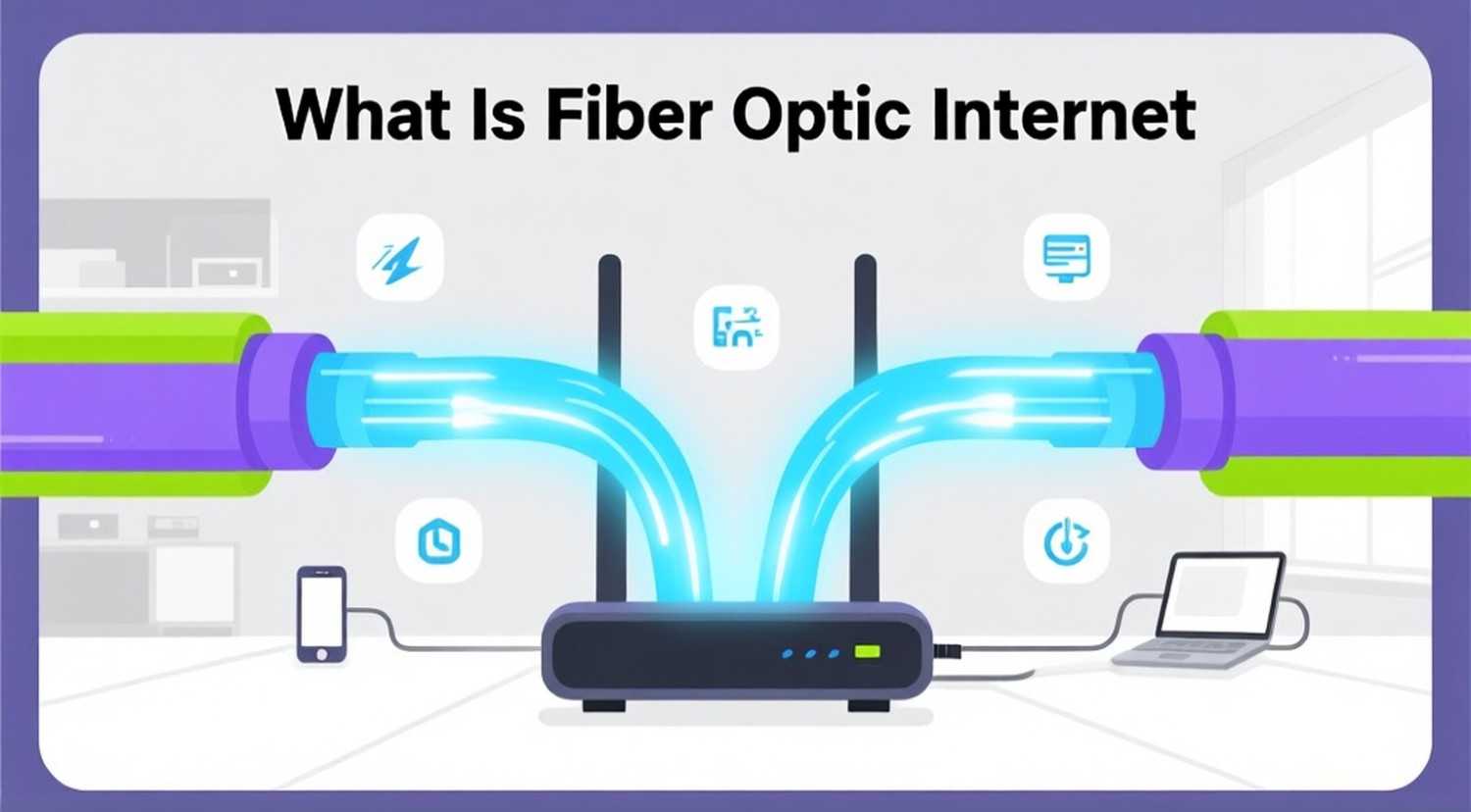
Fiber optic broadband is a type of internet that uses thin strands of glass or plastic, known as optical fibers, to transmit data. Instead of sending electrical pulses like copper cables, fiber sends information as flashes of light. Since light travels incredibly fast, data moves through these cables at remarkable speeds.
This is why fiber internet connection is known for:
If you’ve dealt with buffering, slow downloads, or lag during online games, fiber can significantly improve your experience.
To understand how fiber works, picture a long, clear tube that carries beams of light from one point to another. Fiber cables operate similarly but on a smaller scale each fiber is about the width of a human hair.
Here’s how a fiber internet connection works step-by-step:
Your internet provider transforms digital data, such as videos, emails, or game downloads, into light signals.
These signals travel through the optical fiber using a process called total internal reflection. The light bounces within the core of the fiber, enabling it to travel long distances without losing strength.
When these signals reach your home, your equipment, often an ONT (Optical Network Terminal), converts the light back into data your devices can use. This whole process happens in milliseconds, which is why browsing, streaming, and downloading feels almost instantaneous with fiber broadband.
However, not all fiber connections are the same. Your speed and experience depend on the types of fiber optic internet connections available to you:
Fiber cables run directly to your home, the best and fastest option available.
Fiber reaches your apartment or office building, but the final connection may use copper or Ethernet cables.
Fiber reaches your apartment or office building, but the final connection may still use copper or Ethernet cables.
This setup is similar to FTTH but is more commonly used for business-level fiber installations. Each type offers different performance levels, with FTTH providing the most consistent fiber broadband experience.
Speed is the number one reason people switch to fiber. But what makes it so quick?
Fiber optic internet uses light to transfer data. Light can travel long distances without slowing down, unlike electrical signals in copper cables.
Fiber can manage large amounts of data at once, allowing more devices to connect without slowing the network.
Even over long distances, fiber experiences minimal signal loss, something traditional cables have trouble with. Whether you’re downloading large files or streaming multiple 4K videos in different rooms, fiber handles it with ease.
Switching to a fiber internet connection isn’t just about speed. The benefits go far beyond that:
Cable and DSL connections typically offer fast downloads but slow uploads. In contrast, fiber provides symmetrical speeds, meaning uploads and downloads are equally fast.
Perfect for:
Latency is the delay between sending and receiving data. Fiber offers the lowest latency among home internet types. This is ideal for:
Because fiber uses light instead of electrical signals, it isn’t affected by:
You’ll see fewer outages, fewer slowdowns, and overall better performance.
Today’s homes often have many devices connected to smart TVs, laptops, phones, tablets, cameras, and even household appliances. Fiber broadband provides the bandwidth needed to keep everything running smoothly.
Fiber is designed to meet future digital needs. With technology evolving quickly, from smart homes to virtual reality, fiber is prepared for what’s next.
Depending on your provider, fiber speeds usually range from 100 Mbps to 1 Gbps or more. Some areas even have plans offering 2 to 5 Gbps.
Here’s what these speeds mean in real-life use:
Fiber broadband is designed for those who want consistent speeds without interruptions, even during peak usage times.
To understand fiber better, here’s a simple comparison:
Fiber clearly outperforms cable and DSL in every important category.
Fiber is not universally available yet, but coverage is expanding quickly. Many cities, suburbs, and even rural areas are building fiber networks. Since fiber requires new infrastructure, availability may vary, but providers are working diligently to bring fiber to more places.
If you’re unsure whether fiber is available where you live, checking with local ISPs is easy.
If you’re frustrated by buffering, lag, or slow downloads, fiber optic internet can make your online experience dramatically better. It delivers:
For most households, switching to fiber is one of the best tech upgrades you can make.
Fiber optic internet is among the most reliable internet technologies today. It uses light to transmit data, allowing for fast speeds, consistent performance, and a smooth online experience. With various types of fiber optic internet connections and increasing coverage, fiber broadband is becoming the top choice for homes and businesses.
If you want a modern and dependable internet solution, consider a fiber internet connection.
Yes, fiber is noticeably faster because it uses light instead of electrical signals. This allows higher download and upload speeds and consistent performance during peak hours, unlike cable, which often slows down with many users.
Fiber broadband transmits information as pulses of light that travel through ultra-thin optical fibers. This method enables data to move incredibly fast with almost no signal loss, even over long distances, making your connection smoother and more reliable.
Absolutely, fiber provides stable, symmetrical speeds that keep video calls clear and cloud tools responsive. Whether you’re in virtual meetings or streaming online lectures, fiber prevents lag and buffering that can disrupt your workflow.
Yes, you typically need an ONT (Optical Network Terminal) along with a fiber-compatible router. Most internet providers install or supply this equipment, making setup simple and prepared for high-speed performance.
Fiber internet is a high-speed broadband connection that uses thin strands of glass or plastic, called fiber-optic cables, to transmit data as pulses of light. Because information travels at nearly the speed of light, fiber provides faster and more reliable performance than traditional copper-based connections like cable or DSL. The internet signal travels from your provider through the fiber network to an Optical Network Terminal (ONT) in your home. The ONT converts the light signals into data your devices can use. This technology offers very fast uploads and downloads, low latency, and consistent performance, even during busy times.

© 2025 Crivva - Hosted by Airy Hosting Managed Website Hosting.