


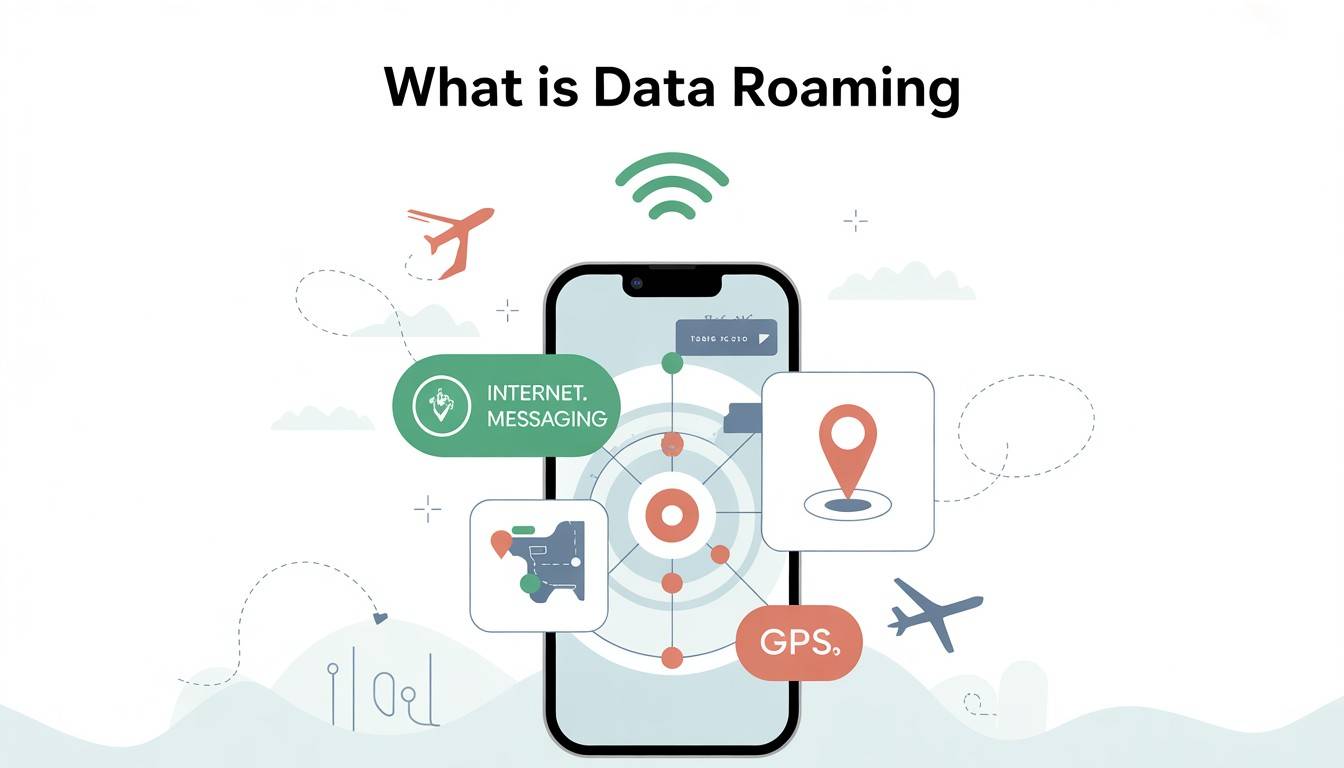
Have you ever traveled abroad, opened your phone, and seen that annoying “Roaming Charges Apply” message? You might find yourself wondering what data roaming really is and why it seems like your wallet is also on vacation. You’re not alone. For many people, the term “data roaming” seems technical, confusing, and costly, but it doesn’t have to be. Whether you travel frequently or are planning your first international trip, understanding data roaming can help you avoid unexpected bills and stay connected wherever you are.
In this guide, we’ll explain what data roaming is, how it works, the costs involved, and easy ways to manage it in simple terms you can actually understand.
At its core, data roaming occurs when your mobile device connects to a cellular network outside your home carrier’s coverage area. This could be in another country or even a different region within your own country. Your phone essentially “borrows” another network to send texts, make calls, or access the internet.
Think of it this way: if your regular carrier is like your home network, roaming is like visiting a friend’s house and borrowing their Wi-Fi. However, unlike using Wi-Fi at a friend’s place, using someone else’s network brings extra charges.
When you travel, your phone automatically searches for available networks in the area. If your carrier has agreements with foreign networks, your device will connect to one of them. This connection lets you:
All this happens without needing to manually switch SIM cards. But there’s a catch: every time your device uses another carrier’s network, it’s billed differently. This is why roaming fees can be higher than your regular mobile plan.
Understanding the different types of data roaming helps you manage costs better. The two main types are:
Roaming fees exist because your carrier pays another network to handle your data and calls. This cost often gets passed on to you, which is why some bills can be surprisingly high. The exact charges depend on:
For example, checking emails might cost a few cents per MB, but streaming videos can run several dollars per hour if roaming isn’t part of your plan.
Most smartphones make it easy to check and control roaming settings. Here’s how:
Turning off data roaming can prevent accidental charges while still allowing you to connect via Wi-Fi.
You don’t have to fear a huge phone bill when traveling. Here are some practical tips:
By combining these strategies, you can stay connected without emptying your bank account.
Despite the costs, data roaming offers real benefits:
In short, data roaming isn’t just a luxury; it’s a travel essential when used wisely.
Many people avoid data roaming because of myths and misinformation. Here’s the truth:
Understanding the facts can help remove unnecessary worries and help you make smart choices.
Data roaming doesn’t have to be complicated or scary. If you know how it works, what it costs, and how to manage it, you can stay connected, navigate foreign cities, and share experiences without stressing over high bills. Whether it’s a short vacation or a long business trip, a little planning can make your mobile experience smooth and stress-free.
Remember, roaming is a tool, not a trap. Use it wisely, and your phone can be your best travel companion.
Yes, data roaming is safe. Your data travels over the same secure channels as it does on your home network.
Absolutely. Turning off data roaming prevents mobile network charges, but Wi-Fi remains fully functional.
Most smartphones and carriers provide real-time data usage trackers. You can also set daily or monthly alerts.
Yes. Using Wi-Fi, downloading offline content, or buying a local SIM card are cost-effective options.
Roaming availability depends on your carrier’s agreements. Some countries may have limited or no roaming support.

© 2025 Crivva - Hosted by Airy Hosting Managed Website Hosting.








