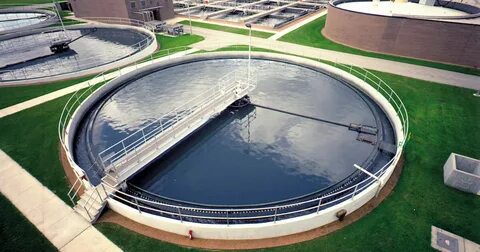
Imagine millions of litres of wastewater being released untreated into India’s rivers every single day. The only reliable barrier between public health and this crisis is a well-designed Sewage Treatment Plant (STP). However, even the most advanced sewage treatment solutions fail prematurely when critical lifespan factors are overlooked.
Rapid urbanization has pushed India to install thousands of STPs in the last decade. Yet, many plants shut down within 10–15 years instead of the expected 40–50 years. Understanding what truly determines longevity has therefore become essential for developers, municipal corporations, and industries alike.
Interestingly, forward-thinking organizations — including renewable energy solutions companies — are now integrating sustainable engineering practices that dramatically extend STP durability while reducing operational stress.
Moreover, data-driven planning and proactive monitoring have emerged as game-changers. A renewable energy solutions company that specializes in hybrid systems, for example, can optimize energy use and protect mechanical components, and indirectly add decades to plant life through stable power supply and intelligent load management.
The foundation of any long-lasting STP is laid long before the first drop of wastewater is treated. Superior sewage treatment solutions begin with meticulous design and flawless construction quality. When civil structures, piping networks, and treatment units are engineered with precision, the entire plant resists chemical attack, hydraulic shocks, and structural fatigue far more effectively.
Material selection plays a pivotal role. Reinforced cement concrete (RCC) with proper anti-corrosive epoxy coating easily achieves 50+ years of service life in aggressive environments, whereas poorly specified mild steel succumbs to rust within a decade. Similarly, the choice between sequential batch reactors (SBR), membrane bioreactors (MBR), or moving bed biofilm reactors (MBBR) must align with influent characteristics and future load projections.
In India, the Central Pollution Control Board (CPCB) reported in 2025 that approximately 34% of STP failures before 20 years were directly linked to design deficiencies or construction shortcuts. Common issues include inadequate hydraulic profiling, undersized aeration tanks, and missing expansion joints — all preventable through experienced consultancy.
Several elements must be prioritized during the planning phase:
| Component | Recommended Material | Expected Life (Years) | Common Failure Mode |
|---|---|---|---|
| Primary Tanks | RCC with epoxy coating | 50–60 | Cracking due to settlement |
| Aeration Tank | RCC + acid-resistant tiles | 45–55 | Tile detachment, rebar corrosion |
| Piping | HDPE / Ductile Iron (epoxy lined) | 50+ | Joint leakage, internal scaling |
| Blowers & Pumps | Stainless Steel 316L / Super Duplex | 20–25 | Impeller cavitation |
| Diffusers | EPDM or PTFE membrane | 10–15 | Membrane fouling & tearing |
Well-executed sewage treatment solutions incorporate these standards from day one, ensuring the plant remains operational across generations.
Even the best-designed plant will collapse without disciplined operation and maintenance (O&M). In India, plants operated under 5-year O&M contracts with trained agencies consistently outperform self-managed facilities by 40–50% in longevity metrics.
Daily removal of screenings, weekly desludging of clarifiers, and quarterly calibration of instruments are non-negotiable. Real-time SCADA systems now allow operators to detect dissolved oxygen drops or unusual power draw instantly — preventing major breakdowns.
The 2025 Performance Audit Report of urban STPs (NITI Aayog) revealed that plants following ISO 55000 asset management principles achieved 92% uptime compared to 67% for others. Simple habits like maintaining logbooks, stocking 10% critical spares, and conducting annual third-party audits make an extraordinary difference.
| Activity | Frequency | Impact on Lifespan |
|---|---|---|
| Screen & grit removal | Daily | Prevents 80% of pump clogging |
| Aerator grease lubrication | Weekly | Extends motor life by 8–10 years |
| Sludge wasting & recirculation | Continuous monitoring | Maintains MLSS balance |
| Effluent quality testing | Daily + weekly lab analysis | Ensures biological health |
| Structural inspection | Annual + post-monsoon | Early crack detection |
India’s diverse climate creates unique challenges. Coastal plants in Chennai and Mumbai battle saline intrusion, while Himalayan towns face sub-zero temperatures that freeze pipelines. Monsoon surges routinely overwhelm older STPs designed for average flow.
Soil conditions also matter immensely. Expansive black cotton soil in Maharashtra and Madhya Pradesh causes differential settlement, cracking tanks within 5–7 years if pile foundations are skipped.
Industrial discharges containing heavy metals, oils, or extreme pH shorten biological treatment life drastically. Pre-treatment mandates under the Water Act 1974 must be enforced rigorously.
States like Tamil Nadu and Punjab that adopted climate-resilient guidelines in 2023–2025 report 18–22% longer average STP lifespan than the national average.
Retrofitting older plants with modern technology is often more economical than building new ones. Replacing coarse bubble diffusers with fine bubble membranes alone can reduce energy consumption by 40% and extend blower life by 10 years.
Adding anoxic zones or tertiary filtration transforms a conventional activated sludge plant into a nutrient-removal facility capable of meeting stricter 2025 discharge norms (BOD <10 mg/L, TSS <10 mg/L).
| Parameter | Okhla STP Delhi (Pre-2022) | Okhla STP Delhi (Post-2024 Retrofit) |
|---|---|---|
| Technology | Conventional ASP | MBR + Tertiary UF |
| Treatment Capacity | 564 MLD | 600 MLD (after optimization) |
| Energy Consumption | 0.48 kWh/m³ | 0.31 kWh/m³ |
| Average Equipment Life | 12–18 years | Projected 35+ years |
| Reuse Potential | 30% | 95% (supplied to power plants) |
Similar success stories are emerging from Surat, Bengaluru, and Indore where public-private partnerships introduced smart sensors and predictive maintenance algorithms.
Non-compliance doesn’t just invite fines — it accelerates wear. Plants regularly audited by state pollution control boards maintain better records, calibrate instruments accurately, and replace parts on schedule.
Continuous training is equally vital. Operators certified under the Skill Council for Green Jobs or NIUA programs reduce human-error-related failures by over 60%.
Digital asset registers, GIS mapping of underground lines, and 3D BIM models created during construction become invaluable during the operations phase for quick troubleshooting.
The lifespan of a Sewage Treatment Plant is not determined by chance or manufacturer claims alone. It is the cumulative result of superior design, uncompromising construction quality, disciplined maintenance, climate adaptation, timely technological upgrades, and strict regulatory adherence.
When developers, consultants, and operators align on these principles, Indian STPs can reliably serve for 50–70 years while delivering reusable water and protecting precious rivers. The technology and knowledge already exist — the only missing piece is consistent implementation.
Ready to build or upgrade sewage treatment solutions that stand the test of time? Partner with experienced teams that prioritize longevity from day one and turn wastewater challenges into sustainable opportunities.
1. How long should a modern STP last in Indian conditions? With excellent design, quality construction, and professional O&M, 50–70 years is achievable and already demonstrated in several cities.
2. Which single factor affects STP lifespan the most? Poor construction quality and inadequate maintenance together account for over 60% of premature failures across India.
3. Can an old 20-year-old STP be extended beyond 40 years? Yes. Targeted retrofitting (liners, new diffusers, automation, and structural repairs) has successfully extended life by 20–30 additional years in multiple projects.
4. How does monsoon overloading affect plant life? Repeated hydraulic overloading causes scour, settlement, and equipment fatigue. Bypass arrangements and equalization tanks are proven mitigation measures.

© 2025 Crivva - Hosted by Airy Hosting Managed Website Hosting.