When I first experienced water damage in my home, I had no idea how serious it could get. What started as a small leak quickly turned into a situation that required professional water damage restoration. If you’re new to this, let me walk you through exactly what it means, how it works, and what I learned from working with Hudson Valley Damage Restoration Experts.
Water damage restoration is the process of cleaning, drying, repairing, and restoring a property after water has entered areas where it shouldn’t be. This water intrusion can come from many different sources such as leaking pipes, broken appliances, heavy rain, flooding, or roof damage.
The goal of water damage restoration is not just to remove the visible water but also to eliminate hidden moisture, prevent mold growth, and restore the affected areas of your home to their original condition.
Many homeowners assume that once the water is gone, the problem is solved. Unfortunately, that is rarely the case. Moisture can remain trapped inside walls, insulation, flooring, and even furniture. If it isn’t properly addressed, it can lead to mold growth, structural damage, and long-term health concerns.
In simple terms, water damage restoration is about safely returning your home to a dry, clean, and livable state.
In my case, the issue started with what seemed like a small roof leak. After a period of heavy rain, I noticed a faint water stain on the ceiling. At first, I assumed it was a minor issue that could be fixed with simple roof damage repair.
However, things escalated quickly.
Within a couple of days, the stain grew larger, and I began to notice a damp smell in the room. That’s when I realized water had already seeped deeper into the ceiling, walls, and insulation. What I thought would be a quick repair turned into a much larger restoration process.
The biggest lesson I learned from this experience was how important it is to act quickly. Water damage spreads faster than most people expect. The longer moisture sits inside building materials, the more damage it can cause.
Delaying repairs can lead to:
• Mold growth
• Structural weakening
• Damage to flooring and drywall
• Higher restoration costs
Calling professionals early can save both time and money in the long run.
Before going through this experience, I had no idea how detailed the restoration process actually is. Professional restoration teams follow a structured approach to ensure that every stage of the damage is properly handled.
Here is the typical process explained in a simple way.
The first step in water damage restoration is a thorough inspection of the affected area. When the restoration team arrived at my home, they didn’t immediately start removing water or tearing down walls. Instead, they carefully evaluated the situation.
They used specialized tools to measure moisture levels and detect hidden water behind walls and under floors. They also looked for potential risks such as mold development or structural weakening.
This step is essential because it helps create a clear restoration plan. Without a proper assessment, it’s easy to miss hidden damage that could cause problems later.
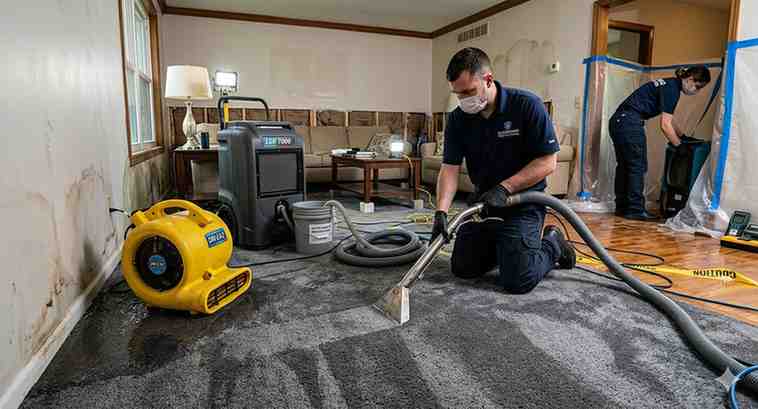
Once the inspection was complete, the next step was removing the standing water. Depending on the severity of the damage, this can involve professional pumps, industrial vacuums, and other extraction equipment.
In situations involving flood damage cleanup, this step becomes even more important because floodwater can carry contaminants such as dirt, bacteria, and chemicals.
Removing water quickly helps minimize damage and prevents moisture from spreading further into the building materials.
In my case, there wasn’t a large amount of standing water, but moisture had already seeped into the ceiling and insulation, which still required professional extraction.
After the visible water is removed, the next challenge is eliminating hidden moisture.
This is where drying and dehumidification come in.
Even when surfaces appear dry, moisture can remain trapped inside walls, carpets, wooden floors, and furniture. Restoration teams use powerful air movers and industrial dehumidifiers to pull moisture out of these materials.
This stage plays a critical role in preventing mold growth and protecting the structural integrity of your home.
The drying process also helps speed up recovery and prepares the space for repairs.
In my experience, this stage lasted a few days. Large drying machines ran continuously to ensure the entire area was completely dry.
Once everything is dry, the next step is cleaning and sanitizing the affected areas.
Water damage often leaves behind bacteria, odors, and contaminants. This step ensures your home is safe and comfortable again.
The cleaning process may include:
• Disinfecting surfaces
• Removing odors caused by moisture
• Treating areas for bacteria or mold prevention
• Cleaning carpets, furniture, and personal items
This stage is especially important in flood situations where water contamination can pose serious health risks.
By the time this stage was completed in my home, the damp smell had completely disappeared and the space finally felt normal again.
The final step is restoring the damaged areas of your home.
Depending on how severe the water damage is, restoration may involve minor repairs or major reconstruction work.
Some common restoration tasks include:
• Drywall repair or replacement
• Ceiling repairs
• Flooring replacement
• Insulation repair
• Roof damage repair
• Painting and finishing work
In my case, part of the ceiling had to be replaced and the roof required repair to stop the leak permanently. Fortunately, the restoration team handled both the repairs and the cleanup, which made the entire process much smoother.
The goal of this final stage is to bring your home back to the condition it was in before the water damage occurred.
Before dealing with this situation, I didn’t realize there was a difference between water damage and flood damage.
Water damage typically comes from internal sources such as leaking pipes, broken appliances, roof leaks, or plumbing issues. It usually affects specific areas within the home.
Flood damage, on the other hand, is caused by external water entering the property. This can happen during storms, heavy rainfall, or natural disasters.
Floodwater is often contaminated with debris, chemicals, and bacteria, which makes the cleanup process more complicated and hazardous.
Understanding this difference helped me see why professional restoration services are often necessary, especially when dealing with large amounts of water or potential contamination.
At the beginning, I considered handling the problem myself. I thought a few fans, some cleaning supplies, and a bit of DIY effort would be enough.
Looking back, that would have been a mistake.
Professional restoration experts have specialized equipment and training that most homeowners simply don’t have access to. They know how to detect hidden moisture, prevent mold growth, and repair damage safely.
Here are a few reasons hiring professionals made a big difference in my situation:
• They detected hidden moisture behind walls
• They used professional drying equipment
• They prevented mold before it started
• They handled both restoration and repairs
• They completed the process much faster
Working with a reliable company like Hudson Valley Damage Restoration Experts didn’t feel like dealing with a contractor trying to sell services. Instead, it felt like having experienced professionals guiding me through a stressful situation and helping restore my home properly.
If you ever face water damage in your home, there are a few important lessons worth remembering.
First, never ignore small signs of water damage. A small leak can quickly turn into a much bigger problem.
Second, act quickly. The sooner you address the issue, the easier it is to prevent long-term damage.
Third, always assess the full extent of the problem. Water can spread behind walls, under floors, and into insulation where it’s not immediately visible.
Finally, know when to call professionals. While small spills can be handled on your own, larger water damage situations often require expert equipment and experience.
Taking the right steps early can save you significant time, money, and stress.
The first step is a detailed inspection and damage assessment. Restoration professionals evaluate the affected areas, measure moisture levels, and create a plan for removing water and repairing the damage.
The timeline depends on how severe the damage is. Drying typically takes between three and seven days, while repairs may take longer depending on the amount of reconstruction required.
Small cases may be manageable, but flood damage often involves contaminated water and hidden moisture. Because of the health risks and structural concerns, professional help is usually recommended.
Water damage can be stressful, but understanding the restoration process can make the situation much easier to manage. With the right approach and timely action, it’s possible to restore your home safely and prevent long-term problems.
ue to contamination risks.

© 2025 Crivva - Hosted by Airy Hosting Managed Website Hosting.