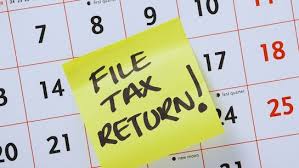
Meeting your tax return deadline is one of the most important parts of financial compliance in Ireland. Whether you’re self-employed, a company director, or someone earning income outside the PAYE system, understanding when and how to file your tax return helps you avoid penalties, interest, and unnecessary stress.
This guide explains everything you need to know about Ireland’s tax return deadlines — including key dates, filing options, penalties for late submission, and practical tips to stay on top of your obligations.
The tax return deadline is the latest date by which you must submit your completed income tax return and pay any taxes due for the previous tax year.
In Ireland, the self-assessment system applies to people who are self-employed, company directors, landlords, or anyone earning income not taxed at source. These individuals must declare their income, claim reliefs, and pay any outstanding taxes to the Revenue Commissioners.
The two key responsibilities are:
Filing the annual income tax return (Form 11 for self-assessed taxpayers).
Paying both the final tax due for the previous year and preliminary tax for the current year.
The tax year in Ireland runs from 1 January to 31 December. The filing and payment deadlines depend on how you choose to submit your return.
If you file a paper Form 11, the deadline is typically 31 October of the year following the tax year.
For example:
For the 2024 tax year (1 January 2024 – 31 December 2024), your paper return must be filed by 31 October 2025.
Paper returns are less common now, as Revenue encourages digital filing.
If you use Revenue Online Service (ROS), you usually get an extension — generally to mid-November.
For example:
For the 2024 tax year, the online filing and payment deadline may be around 19 November 2025, provided both filing and payment are completed through ROS.
If you only file online but pay separately, or vice versa, the extended date does not apply. Both must be completed on ROS to qualify for the extension.
In addition to paying any remaining tax from the previous year, self-employed individuals must also pay preliminary tax for the current year.
Preliminary tax is an advance payment based on estimated income. To avoid interest charges, you must pay enough preliminary tax by the filing deadline — usually 100% of your previous year’s liability or 90% of your estimated current year’s liability.
For example:
If your 2024 income tax liability was €6,000, you must pay at least that amount (or 90% of your estimated 2025 liability) by the 2025 filing deadline.
This ensures Revenue receives ongoing payments and helps taxpayers avoid large year-end bills.
Missing the tax return deadline can lead to several financial penalties and administrative issues:
If you file your return after 31 October but before 31 December, a 5% surcharge applies (up to a maximum of €12,695).
If you file after 31 December, the surcharge increases to 10% (capped at €63,485).
Interest is charged on unpaid tax from the due date until payment is made. The current rate is 0.0219% per day (approximately 8% per year).
Late filing can result in delays or loss of certain tax reliefs or credits, especially for business expenses or capital allowances.
Revenue may also impose additional compliance checks or audits for repeated late filers.
In short, missing the tax return deadline can be costly — both financially and administratively.
The structure of Ireland’s tax deadlines is designed to ensure a steady flow of revenue and to encourage timely compliance.
For taxpayers, these deadlines:
Promote financial discipline and planning.
Help avoid interest or penalties.
Provide a clear annual cycle for reviewing income, expenses, and reliefs.
Revenue’s system of extending deadlines for digital filing also supports Ireland’s ongoing shift toward online compliance, making it faster and more efficient for taxpayers to manage their obligations.
Meeting the tax return deadline doesn’t have to be stressful. Here are some practical steps to simplify the process:
Register Early for ROS
Setting up your Revenue Online Service account can take several days. Register well before the deadline to avoid last-minute issues.
Keep Accurate Records Year-Round
Maintain organized records of invoices, receipts, and expense claims throughout the year. Good bookkeeping makes filing faster and more accurate.
Estimate Preliminary Tax in Advance
Use your previous year’s liability as a guide to budget for preliminary tax. Setting aside funds monthly can ease the payment burden.
Double-Check for Reliefs and Deductions
Review available reliefs — such as pension contributions, medical expenses, or capital allowances — to ensure you’re not paying more tax than required.
Submit Before the Rush
Avoid filing close to the deadline. The ROS system can experience heavy traffic in late October and November, leading to delays or login issues.
Consult a Professional if Needed
If your finances are complex (for example, rental income, foreign earnings, or multiple business streams), seek advice from a qualified accountant or tax advisor.
You must file a self-assessment income tax return if you:
Are self-employed or run your own business.
Are a company director (except certain non-proprietary directors).
Receive rental income from property.
Have foreign income or investment income.
Are a proprietary director or receive untaxed income outside PAYE.
If you are a PAYE employee with no additional income, you usually don’t need to file a return unless claiming reliefs not handled by your employer.
Filing your return involves several steps:
Log in to ROS using your digital certificate or MyAccount.
Complete Form 11, declaring your income, expenses, credits, and reliefs.
Review preliminary tax for the upcoming year.
Submit and pay online before the due date.
ROS automatically calculates tax due and generates a Statement of Net Liabilities (SNL), confirming your final position.
If you realize you’ve missed the tax return deadline:
File and pay as soon as possible — surcharges and interest accrue daily.
Contact Revenue if genuine circumstances caused the delay; they may consider mitigating factors.
Adjust your preliminary tax payments for the next year to stay current.
Consistent late filing can attract greater scrutiny, so taking immediate corrective action is essential.
Tax deadlines shouldn’t be viewed in isolation. They form part of broader financial management.
Set reminders at least 60 days before the due date.
Schedule reviews with your accountant quarterly to monitor your estimated tax position.
Use digital bookkeeping tools to track income and expenses automatically.
Planning ahead not only ensures compliance but also gives you better control over your finances throughout the year.
Revenue continues to promote digital transformation through ROS and real-time data collection. Future changes may include further automation of reporting and integration with accounting software.
Understanding your obligations now ensures you stay ahead of future compliance developments and remain efficient in managing your financial responsibilities.
Knowing and meeting your tax return deadline is a crucial part of responsible financial management in Ireland. Whether you file on paper by 31 October or online through ROS by mid-November, timely submission and payment help you avoid penalties, maintain compliance, and stay organized.
With good preparation, clear records, and awareness of your key dates, filing your annual tax return becomes a straightforward part of your financial routine — not a last-minute rush.

© 2025 Crivva - Hosted by Airy Hosting Managed Website Hosting.