Short-form video can look simple from the outside. A brand posts a creator ad, a podcast clip, a founder reel, or a product demo, and all of it appears inside the same feed. But the strategy behind each format is different. Some videos are built to sell. Some are built to educate. Some are built to keep the brand visible over time.
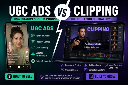
That is why UGC Ads vs Clipping matters for brands that want to use short-form video properly. Both can help with attention, but they are made for different jobs.
Clear definition
UGC ads are advertising videos made to look like content created by a real customer, creator, or everyday user. They often include product reviews, demos, testimonials, unboxings, before-and-after examples, or problem-solution stories. Brands usually use them for paid campaigns because they feel more natural than polished ads.
Clipping is the process of taking long-form content and turning the strongest parts into short-form videos. The source can be a podcast, webinar, interview, YouTube video, livestream, product demo, event recording, or founder video. Good clipping is not just trimming. It means finding moments that can stand alone, adding context, improving pacing, and preparing the clip for platforms like TikTok, Instagram Reels, YouTube Shorts, LinkedIn, and Facebook.
The simple difference is this: UGC ads are created around a campaign message. Clipping turns existing long-form value into short-form assets.
Quick answer
UGC ads are better when a brand needs paid creative, product demos, offer testing, retargeting, or direct-response videos.
Clipping is better when a brand already has long-form content and wants more reach, authority, trust, and consistency from it.
The strongest approach is often to use both. Clipping can show which ideas people respond to, then those ideas can become stronger UGC ad scripts.
Why the choice matters
A UGC ad usually starts with a brief. The brand decides the product benefit, audience pain point, hook, creator style, and call to action. The video is then tested through paid media.
A clipped video starts with a longer recording. A strategist or editor reviews the content and finds moments that are useful, clear, emotional, specific, or interesting enough to work on their own.
This matters because brands waste money when they use the wrong format for the wrong goal. A product launch may need UGC ads. A webinar library may need clipping. A podcast-led brand may need clips before it needs more ads.
Step-by-step process to choose the right option
Step 1: Check your current content
Start by looking at what already exists. Many brands have useful content sitting unused.
Look for:
Podcasts
Webinars
Founder videos
Customer interviews
Product demos
YouTube videos
Livestreams
Training sessions
Event recordings
If this content already exists, clipping can help you create more short-form assets without starting from zero. If there is no useful long-form content, UGC ads may be easier to launch first.
Step 2: Define the goal
Use UGC ads when the goal is:
Paid traffic
Product sales
Lead generation
Retargeting
App installs
Offer testing
Product demonstration
Objection handling
Use clipping when the goal is:
Organic reach
Content consistency
Founder visibility
Podcast growth
Thought leadership
Education
Content repurposing
Audience building
A brand that wants conversions may need UGC ads. A brand that wants trust and reach from existing ideas may need clipping.
Step 3: Review budget and production
UGC ads can work well, but they often need creator sourcing, briefs, scripts, filming, editing, revisions, usage rights, product shipping, and ad spend. Paid creative also needs regular refreshes because performance can drop.
Clipping works differently. If the brand already records long-form content, one recording can create several short clips. A podcast can become reels. A webinar can become clips around use cases, objections, and customer questions. A founder interview can become a month of short-form posts if the source material is strong.
Step 4: Decide how much control you need
UGC ads give more control. You can define the script, hook, offer, product benefit, and call to action.
Clipping gives a more natural content feel. A founder explaining a real lesson or a guest sharing a useful point can feel more trustworthy than a scripted ad.
If the message must be exact, use UGC ads. If the goal is trust, authority, and consistent content, clipping may be the better fit.
Step 5: Use both together
The strongest brands connect the two.
A simple workflow looks like this:
Record useful long-form content.
Clip the strongest moments.
Publish clips across relevant platforms.
Track which topics get saves, comments, shares, and watch time.
Turn winning ideas into UGC ad briefs.
Test those ads with paid media.
Use results to plan future content.
This gives the brand a smarter feedback loop instead of guessing what people care about.
Pros and cons of UGC ads
Pros
Strong fit for paid campaigns
Useful for product demos
Good for testing hooks and objections
Can be created without long-form content
Works well for ecommerce, apps, SaaS, courses, and services
Cons
Can become expensive when scaled
Needs regular creative refreshes
Creator management takes time
Usage rights can add cost
Many UGC ads start to look similar
Weak scripts can feel forced
UGC ads work best when the brand has a clear offer, clear audience, and proper testing process.
Pros and cons of clipping
Pros
Turns existing content into more assets
Supports consistent organic publishing
Builds trust through real expertise
Helps brands get more from podcasts and webinars
Reveals which ideas people respond to
Creates a repeatable short-form system
Cons
Needs strong source content
Not every recording has good clips
Requires editorial judgment
Weak hooks can waste strong ideas
Results depend on regular distribution
Clips need enough context to stand alone
Clipping works best when it is treated as strategy, not just basic editing.
Common mistakes
One mistake is assuming any creator-style video will feel authentic. If the script is weak, the hook is generic, or the claim feels exaggerated, the audience can tell.
Another mistake is treating clipping as simple trimming. A good clip needs a clear opening, useful context, strong pacing, readable captions, and a reason to keep watching.
Brands also measure both formats the same way. UGC ads are often judged by clicks, conversions, cost per acquisition, and return on ad spend. Clipping may be judged by watch time, saves, shares, comments, profile visits, lead quality, and publishing consistency.
Other mistakes include:
Posting clips with weak hooks
Making every clip a sales pitch
Hiring creators without a clear brief
Ignoring audience questions
Using long intros
Copying competitors without understanding the audience
Creating content once instead of building a system
Clipping Agency’s angle
From Clipping Agency’s point of view, the biggest difference is leverage.
UGC ads are campaign assets. They are created, tested, scaled, refreshed, and replaced. That can work well when paid media is already strong.
Clipping can become a content operating system. It takes the best ideas already inside a brand and turns them into short-form assets that support awareness, trust, education, social reach, and future paid campaigns.
The original insight is that clipping does more than create extra content. It helps a brand see which ideas are worth repeating. If a clipped founder video performs well, that topic can shape UGC ad scripts, landing page copy, sales calls, emails, and future videos.
This is why clipping is not just a cheaper version of UGC. UGC ads help brands test paid creative. Clipping helps brands turn existing knowledge into repeatable distribution.
Real business use cases
A B2B agency can use clipping to turn founder interviews, client conversations, service explainers, and podcast appearances into short-form videos that build trust before a sales call.
A SaaS company can clip webinars, demos, onboarding videos, and customer education content. These clips can explain use cases naturally and support organic reach and retargeting.
An ecommerce brand can use UGC ads for promotions, product launches, and retargeting. It can also use clipping if the founder, team, or customers create longer educational content.
A podcast can use clipping to make every episode work harder. The best moments become short-form posts that introduce the guest, topic, and value of the conversation.
FAQs
Is clipping better than UGC ads?
Clipping is better when the brand has strong long-form content and wants reach, trust, and consistent publishing. UGC ads are better when the brand needs paid creative for a clear offer.
Can both work together?
Yes. Clipping can reveal which ideas people respond to, then those ideas can become UGC ad briefs.
Do UGC ads only work for ecommerce?
No. SaaS brands, apps, coaches, courses, and service businesses can also use UGC-style ads if the message is clear.
Does clipping require a podcast?
No. Clipping can work with webinars, YouTube videos, livestreams, founder videos, interviews, demos, and training sessions.
Which should a small brand start with?
A small brand with a clear offer and no long-form content may start with UGC ads. A small brand with webinars, interviews, podcasts, or founder videos should usually start with clipping.
Final thoughts
UGC ads and clipping both have value, but they are not the same thing. UGC ads are usually better for paid performance and offer testing. Clipping is better for distribution, consistency, authority, and turning long-form content into short-form assets.
Clipping Agency helps brands turn long-form content into short-form videos that are easier to publish, test, and distribute. If your team creates useful content but most of it disappears after one post, a structured clipping system can help you get more value from every recording.

© 2025 Crivva - Hosted by Airy Hosting Managed Website Hosting.