


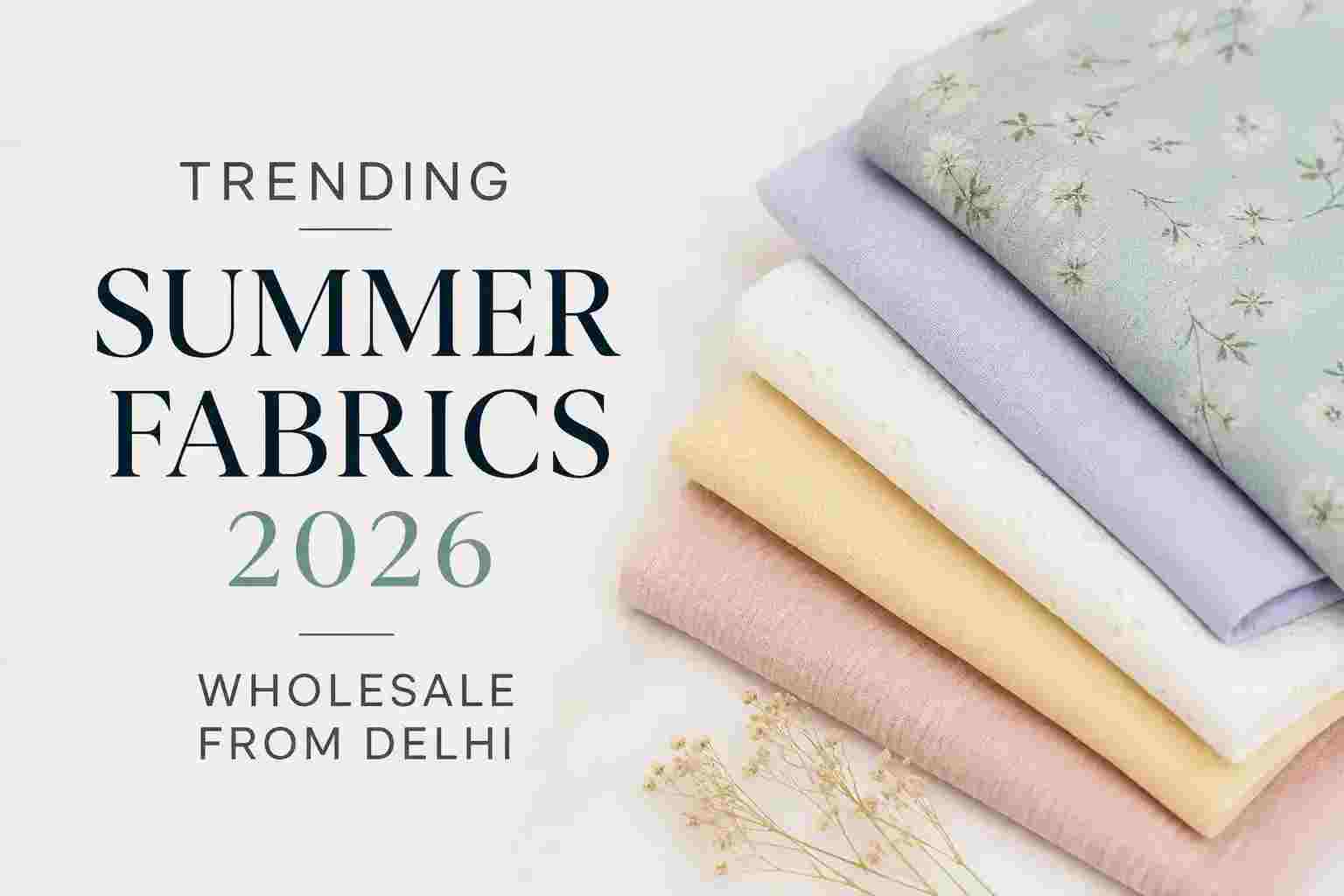
Summer shopping looks simple. You pick something lightweight, comfortable, and clothes that feel good. But when you start buying in bulk in Delhi markets, you quickly realize that first impressions don’t matter much.
A fabric that feels perfect in the shop can become uncomfortable after a few hours. Another one may look basic but becomes your best-selling item. The gap between how it looks and how it performs is where most wholesale mistakes happen. Delhi gives you access to almost every type of summer fabric with large verieties of wholesale fabric in Delhi.
That’s the advantage. But it also creates confusion if you don’t know what you are buying. This guide focuses on what actually works in summer 2026. Not just trends, but fabrics that handle heat, stay consistent, and work well for bulk buying.
Fresh does not mean new designs. In wholesale, fresh means a fabric that customers keep buying again, feels comfortable for long hours, and works well in real summer conditions. If a product sells only once because it looks good, it is not fresh. If it sells again because it feels right, that is where the real value is.
Before choosing any fabric, follow one rule. Do not judge it in the first 5 minutes. Think about how it will feel after half a day. Ask yourself: does it feel heavy after sweating? Does it stick to the skin? Will it still feel comfortable outside, not just inside a store? This way of thinking completely changes buying decisions.
Muslin is no longer just about softness. Buyers now want muslin that holds its shape and still allows airflow. Too soft and it becomes loose after stitching. Too tight and it blocks air. Good muslin feels light, stays comfortable for long hours, and does not stick easily. It works well for daily suits, summer kurta sets, and lightweight dupattas.
Linen is not just a luxury fabric anymore. It is practical. It stays slightly away from the skin, allowing air to pass through, which helps in long outdoor wear. Linen blends are also popular because they reduce wrinkles and still allow airflow. It is best for coord sets, travel wear, and premium daily outfits.
Regular cotton does not always handle extreme heat well. Buyers now prefer lighter types like cotton voile, fine cambric, and soft summer weaves. These are less heavy and allow better airflow. They are great for office wear, daily ethnic outfits, and repeat purchase categories.
Mulmul has changed. Earlier, softness was enough. Now buyers check if it holds shape after washing, keeps a good fall, and stays stable after stitching. Good mulmul feels soft but not weak and lasts longer even after repeated use.
Kota Doria is not a trending fabric, but it works extremely well in heat. Its open weave allows strong airflow. It is best for dupattas, sarees, and light layering. It works best when kept simple, as heavy designs reduce its effectiveness.
Rayon is still popular, but now buyers prefer lighter versions. It should not trap heat, should flow well without sticking, and should suit relaxed fits. It works well for modern fusion wear and daily outfits.
Summer requires balance. Chanderi works well when you want something slightly dressy but still comfortable. Always choose lighter options, not heavy ones. It is suitable for day events, simple festive wear, and semi-formal outfits.
Delhi markets can feel overwhelming. The best way to handle this is to stay organized. Do not rush into buying. Walk first and observe. Notice which fabrics repeat across shops, which ones feel better in hand, and which have consistent finishing. Even a simple comparison can change how you see quality and pricing.
They do not buy just because something looks good. They start with small quantities, check what sells, and only then increase stock. They focus more on how the fabric performs rather than how it looks. Design attracts attention, but comfort brings repeat customers.
Buying only based on softness. Soft does not always mean breathable. Some fabrics feel soft but trap heat after a few hours.
Ignoring fabric structure. Breathability depends on weave, not just the material. A tightly woven cotton can feel hotter than a well-made blend.
Buying too much without testing. Large bulk buying without testing demand leads to slow stock. Starting small always gives better control.
Summer fabrics are sensitive. Small quality differences become noticeable quickly. Choosing the right supplier reduces risk because quality stays consistent, variation is controlled, and you save time by avoiding repeated testing. At Paras Gallery Fabrics, selection is based on how fabrics perform in real use, not just how they look. This helps buyers make better bulk decisions.
Instead of asking which fabric is best, ask who your customer is, how long they will wear it, and whether they will buy it again. If a fabric answers these well, it is worth scaling.
Summer fabrics in Delhi are not just about trends, its about the fashion and the best varieties of fabrics. They are about how they perform after use and how often they sell again and do reocuuring business. When you shift focus from style to function, your buying becomes more accurate and reliable. You stop guessing and start building a strong collection. That is when wholesale becomes an advantage, not a risk.

© 2025 Crivva - Hosted by Airy Hosting Managed Website Hosting.