


Ask five civil engineering graduates where they pictured themselves five years after graduation, and you’ll get five different answers. One imagines steel-toed boots and a clipboard on a metro construction site. Another sees herself running load calculations in an air-conditioned design office. A third is deep into GATE preparation, eyeing a government engineering service. All three are on legitimate, well-paying paths — and that’s really the point of this degree. Civil engineering doesn’t funnel you into one job title; it opens a dozen doors, and the one you eventually walk through depends on the skills you build, the specialization you chase, and yes, the B.Tech Civil Engineering College you build them at.
If you’re a student or parent currently comparing colleges, this guide walks through where a civil engineering degree can actually take you — not in vague “great scope” language, but in specific roles, realistic starting numbers, and the skills each path actually demands.
India’s construction and infrastructure sector hasn’t slowed down — metros, expressways, smart cities, airports, and large-scale housing projects all need engineers who can plan, design, and execute. That breadth is exactly why civil engineering branches into so many specializations instead of one straight-line job. A graduate from one Civil Engineering College might end up supervising a flyover; a classmate from the same batch might end up in an office, modelling a 40-storey tower in Revit. Both are doing civil engineering. Neither is doing the same job.
Here’s a closer look at the roles civil engineering graduates most commonly move into, roughly in the order most students discover them.
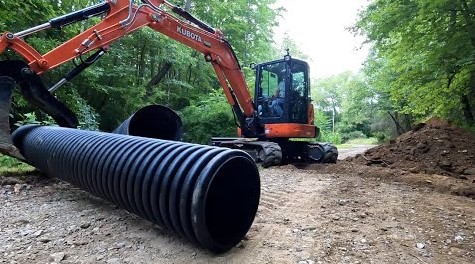
This is usually the first job for most fresh graduates, and for good reason — it’s where classroom theory meets actual concrete. Site engineers supervise day-to-day construction, coordinate with contractors and labour teams, and make sure work on the ground matches the drawings and safety codes on paper.
If you’d rather be indoors with software than outdoors with a measuring tape, structural design is the natural pivot. Using tools like STAAD.Pro and ETABS, structural engineers analyse and design the beams, columns, slabs and foundations that keep a building standing — and keep it standing through an earthquake or a monsoon.
After a few years of site exposure, many engineers move up into project management — owning the budget, the schedule, and the coordination between architects, contractors, and clients. It’s less about the math now and more about keeping a hundred moving parts on track at once.
Every project lives or dies by its budget, and quantity surveyors are the ones who get the numbers right before the first brick is laid. They estimate material quantities, prepare Bills of Quantities (BOQs), and negotiate rates with vendors and subcontractors.
This path usually comes with an additional postgraduate specialization in urban planning, but it starts with a civil engineering base. Planners decide how land gets used, how a township’s roads and utilities are laid out, and how a city absorbs the next decade of growth.
Before anything gets built, someone has to study what it’s being built on. Geotechnical engineers test soil and rock behaviour and design foundations for everything from ordinary buildings to tunnels and dams — a path that rewards patience and a real interest in lab work.
A large number of civil engineering graduates write the GATE exam specifically to qualify for organisations like NHAI, RVNL, NBCC, state PWDs, and the engineering services. The appeal is obvious: job security, structured growth, and PSU pay scales that often beat private-sector entry salaries.
Building Information Modelling has quietly become one of the highest-paying entry points in the field. BIM specialists build coordinated 3D models in Revit and Navisworks that merge design, cost, and scheduling data — and companies are actively paying a premium for engineers who combine site knowledge with this digital skill set.
Not every graduate jumps straight into a job. Many use an M.Tech (in India) or an MS (abroad) to specialize in structures, geotechnics, transportation, or environmental engineering — a route that costs time upfront but tends to pay off through senior technical and research roles later.
After a decade or so of site and design experience, a meaningful number of civil engineers start their own contracting firms or consultancy practices. It’s the riskiest path on this list, and also, for the right person, the one with no real salary ceiling at all.
| Career Path | What You’ll Actually Do | Typical Starting Range (India)* | Core Skills to Build |
|---|---|---|---|
| Site / Execution Engineer | Supervise construction, coordinate contractors and labour | ₹2.5–4.5 LPA | Site supervision, drawing interpretation, basic surveying |
| Structural Design Engineer | Design beams, columns, foundations using analysis software | ₹3–6 LPA | STAAD.Pro/ETABS, IS codes, structural analysis |
| Construction Project Manager | Own project budget, timeline and team coordination | ₹6–12 LPA (with experience) | MS Project/Primavera, budgeting, leadership |
| Quantity Surveyor / Estimator | Estimate costs, prepare BOQs, negotiate vendor rates | ₹3–5.5 LPA | Costing software, contract basics, negotiation |
| Urban & Town Planner | Plan land use, zoning and city infrastructure layout | ₹3.5–7 LPA | GIS tools, urban policy, spatial design |
| Geotechnical Engineer | Test soil/rock, design foundations for major structures | ₹3–6 LPA | Soil mechanics, lab testing, foundation design |
| Government Sector (PSU/GATE) | Join NHAI, RVNL, PWD or state engineering services | ₹6–12 LPA (PSU) | GATE preparation, core fundamentals |
| BIM Specialist | Build coordinated 3D models for design, cost & scheduling | ₹5–9 LPA | Revit, Navisworks, BIM coordination |
| Higher Studies (M.Tech/MS) | Specialize further; research or teaching track later | Investment phase | GATE/GRE, research aptitude |
| Entrepreneurship | Run an independent contracting or consultancy practice | Variable, scales with projects | Client handling, finance, credibility |
*Figures are broad, India-wide indicative ranges drawn from current industry salary data; actual pay depends heavily on company tier, city, and specialization.
A degree gets you in the room; skills decide which door you walk through. A few show up across almost every path above:
It’s tempting to treat the college as a formality and the career as something you’ll figure out later. In civil engineering, that’s a risky assumption. The labs you train in, the software licenses your department actually has, the live-project exposure during internships, and the recruiters who show up on placement day — all of that gets decided by which Civil Engineering College you choose, long before you write your first resume.
This is also where ranking labels get genuinely useful, if you read past the marketing. A Best Civil Engineering College isn’t the one with the flashiest brochure; it’s the one with verifiable placement data, NAAC/AICTE accreditation that’s actually current, faculty with real industry or research background, and tie-ups that translate into internships rather than just logos on a website. Similarly, when you see a Top Civil Engineering College ranking, it’s worth checking whether it’s measuring outcomes — placement percentage, average package, higher-studies conversion — or just measuring infrastructure photos.
Which civil engineering career path pays the most? In the early years, BIM specialists and PSU roles tend to start highest. Over a 10–15 year horizon, project management and entrepreneurship typically pull ahead, since both scale with responsibility rather than a fixed pay band.
Do I need an M.Tech to grow in this field? No — site, project management, and entrepreneurship paths don’t require one. An M.Tech mainly matters if you’re aiming for design-heavy, research, or teaching roles.
Is civil engineering still worth it in 2026? Yes. India’s ongoing investment in metros, highways, and smart cities means demand for civil engineers isn’t slowing down — if anything, the digital skills layer (BIM, GIS) is making good engineers more valuable, not less.
The honest answer to “what can I do after a civil engineering degree” is: a lot more than most people assume going in. Site execution, structural design, government service, digital construction, planning, and entrepreneurship are all genuinely open paths from the same four-year degree. What decides which ones are realistically available to you is the foundation you build — and that’s exactly why picking the right B.Tech Civil Engineering College, rather than settling for any Civil Engineering College with a seat available, deserves more thought than it usually gets. Whether an institute markets itself as the Best Civil Engineering College in the state or simply tops a Top Civil Engineering College ranking list, the only number worth actually verifying is its placement and outcomes data.

© 2025 Crivva - Hosted by Airy Hosting Managed Website Hosting.