


Picture this: your development team ships a new feature. Then comes the waiting game — manual testing, slow deployments, someone forgetting a config step, and suddenly your release is delayed by three days. Sound familiar? If it does, you’re not alone. This is the reality for teams that haven’t fully embraced automation in their DevOps workflow.
The modern software world moves fast. Users expect new features yesterday, and businesses simply cannot afford drawn-out release cycles. That’s exactly where automation steps in and changes everything. It’s not just a buzzword thrown around in engineering meetings — it’s the engine quietly powering some of the most successful software teams in the world.
In this post, we’re going to break down what automation truly means in a DevOps context, why it matters more than ever, and how different parts of the pipeline benefit from it. Whether you’re a developer, a team lead, or just someone trying to understand the space — keep reading.
At its core, DevOps is about bringing development and operations teams together to deliver software faster and more reliably. Automation is what makes that collaboration actually scale. Without it, you’re still relying on people to manually run scripts, kick off builds, or monitor servers at 2 AM.
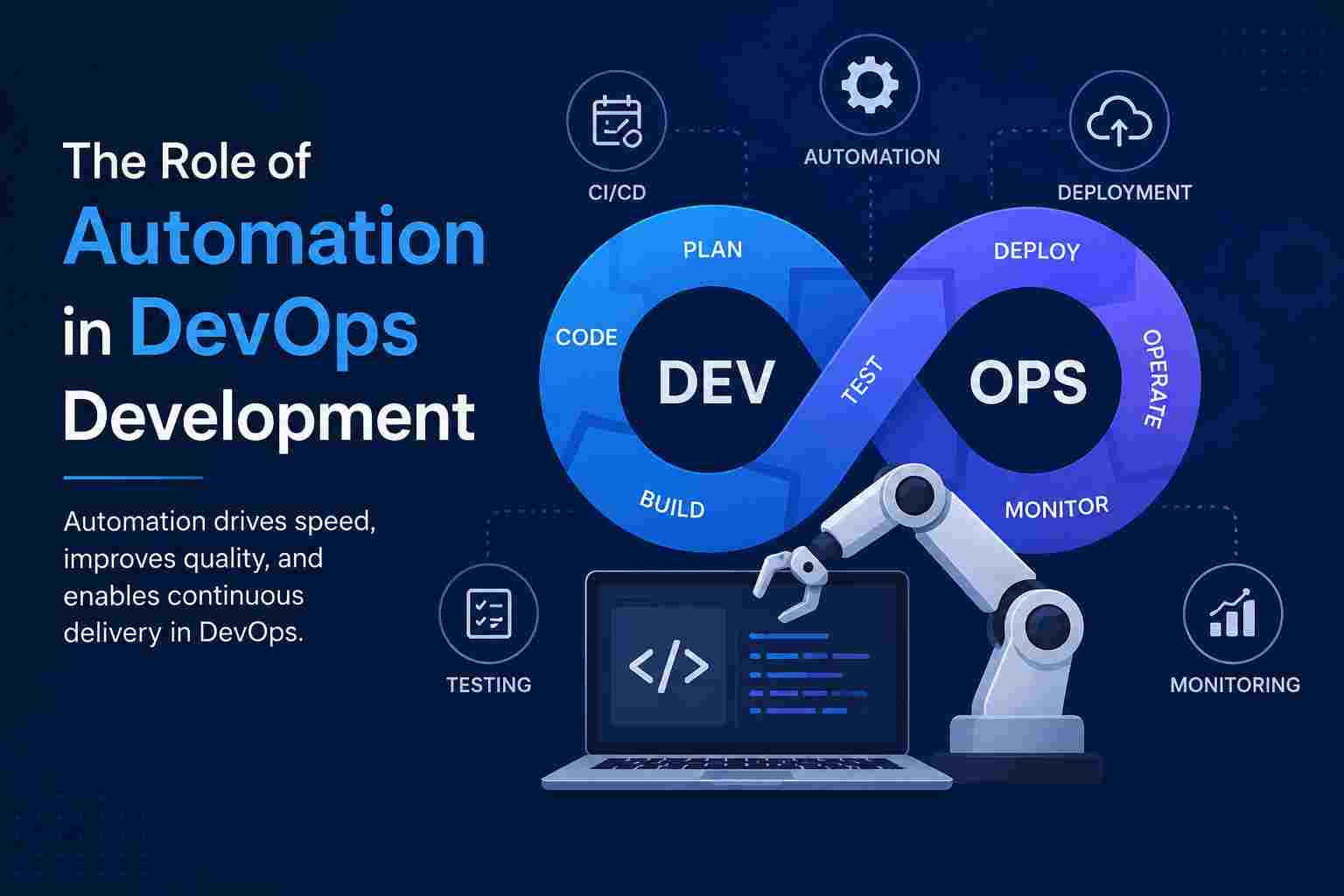
Automation in DevOps refers to using tools and scripts to handle repetitive, time-sensitive tasks across the software delivery lifecycle — from writing code and running tests to deploying updates and monitoring systems. The goal isn’t to replace humans; it’s to free them up to focus on work that actually requires human thinking.
Think of it like putting your daily commute on autopilot. The route doesn’t change, traffic patterns are predictable, and a machine can handle it consistently. Your brain, meanwhile, can work on the bigger problems.
Let’s be direct: if your DevOps process still relies heavily on manual effort, you’re already behind. The pace of software delivery today demands speed, consistency, and reliability — three things that humans simply cannot deliver at scale without automation.
Manual processes introduce human error. A missed step in a deployment checklist, an outdated environment variable, a test that was skipped because the deadline was tomorrow — these are the things that cause production incidents. Automation removes that risk by executing the same steps the same way, every single time.
Beyond error reduction, automation dramatically compresses time. Builds that once took hours can run in minutes. Testing cycles that required a full team can now run overnight without anyone watching. And when something goes wrong, automated alerts catch it before customers even notice.
Automation doesn’t just touch one part of the DevOps process — it runs through the entire pipeline. Here’s where it makes the biggest impact:
CI/CD pipelines are arguably the heartbeat of automated DevOps. Every time a developer pushes code, an automated pipeline springs into action — building the application, running tests, checking for vulnerabilities, and deploying to the appropriate environment.
This means code is tested and validated constantly, not just before a big release. Bugs are caught early, feedback loops are tighter, and teams can ship smaller, safer updates more frequently. That’s a massive shift from the old world of quarterly releases and weekend deployment marathons.
Manual testing is slow, subjective, and hard to scale. Automated testing suites — unit tests, integration tests, end-to-end tests — run in parallel, cover more ground, and deliver results in a fraction of the time.
More importantly, automated tests don’t get tired. They run the same checks every time a change is introduced, giving teams confidence that a new feature hasn’t quietly broken something else in the codebase. This consistency is invaluable when teams are moving fast.
Setting up servers and environments used to be a slow, error-prone task handled by operations teams working from documented runbooks. Today, infrastructure as code (IaC) tools allow teams to define, provision, and manage infrastructure through version-controlled scripts.
This is where infrastructure automation services come into play in a meaningful way — helping businesses move from manually managed environments to fully automated, reproducible infrastructure that can be spun up or torn down on demand.
Need a staging environment that mirrors production exactly? Done in minutes, not days. This level of consistency is especially important for connected device development, where applications often need to operate across multiple environments and hardware configurations. It also ensures that every environment — dev, staging, production — is configured consistently, eliminating the classic “works on my machine” problem.
Automation doesn’t stop at deployment. Modern DevOps teams rely on automated monitoring tools to track application performance, detect anomalies, and even trigger self-healing workflows when something goes wrong.
Instead of an engineer waking up to a flood of alerts, automated systems can restart failed services, roll back a bad deployment, or scale resources up during traffic spikes — all without human intervention. That kind of proactive operations capability used to be a luxury; now it’s a standard expectation.
Teams that invest in DevOps automation don’t just ship faster — they ship smarter. The business outcomes are tangible: reduced downtime, lower operational costs, fewer production incidents, and happier developers who aren’t stuck babysitting deployments.
There’s also a talent retention angle here. Developers want to work on interesting problems. When automation handles the repetitive grunt work, engineers are free to build, innovate, and improve. That’s a better use of human talent and a stronger pitch when hiring.
For organizations operating at scale, automation is also what makes compliance and security manageable. Automated security scans, policy checks, and audit trails mean teams can move fast without cutting corners on governance.
Let’s be honest — automation isn’t always plug-and-play. Teams often run into a few common hurdles when getting started.
Tooling overload is real. The DevOps ecosystem has hundreds of tools, and choosing the right stack takes research, testing, and often a few expensive lessons. Starting too big too fast is another trap — trying to automate everything at once often leads to half-finished pipelines and frustrated teams.
Legacy systems add another layer of complexity. Not every application was built with automation in mind, and retrofitting CI/CD pipelines around aging codebases is genuinely difficult work.
The good news is that these challenges are solvable. Starting small — automating a single pipeline stage first — builds momentum and confidence. From there, teams can expand incrementally until automation becomes second nature across the organization.
Automation is not the future of DevOps — it’s the present. The teams building reliable software, shipping features confidently, and maintaining system stability without burning out their engineers are the ones who have made automation a first-class citizen in their development culture. It’s less about the tools you choose and more about the mindset shift: repetitive, predictable work belongs to machines, and creative, strategic thinking belongs to people.
If your team is still doing things manually that could be automated, now is the right time to start the conversation. You don’t need a perfect plan from day one. Pick one pain point, automate it, and watch what happens. Chances are, you’ll never want to go back to doing it by hand.

© 2025 Crivva - Hosted by Airy Hosting Managed Website Hosting.