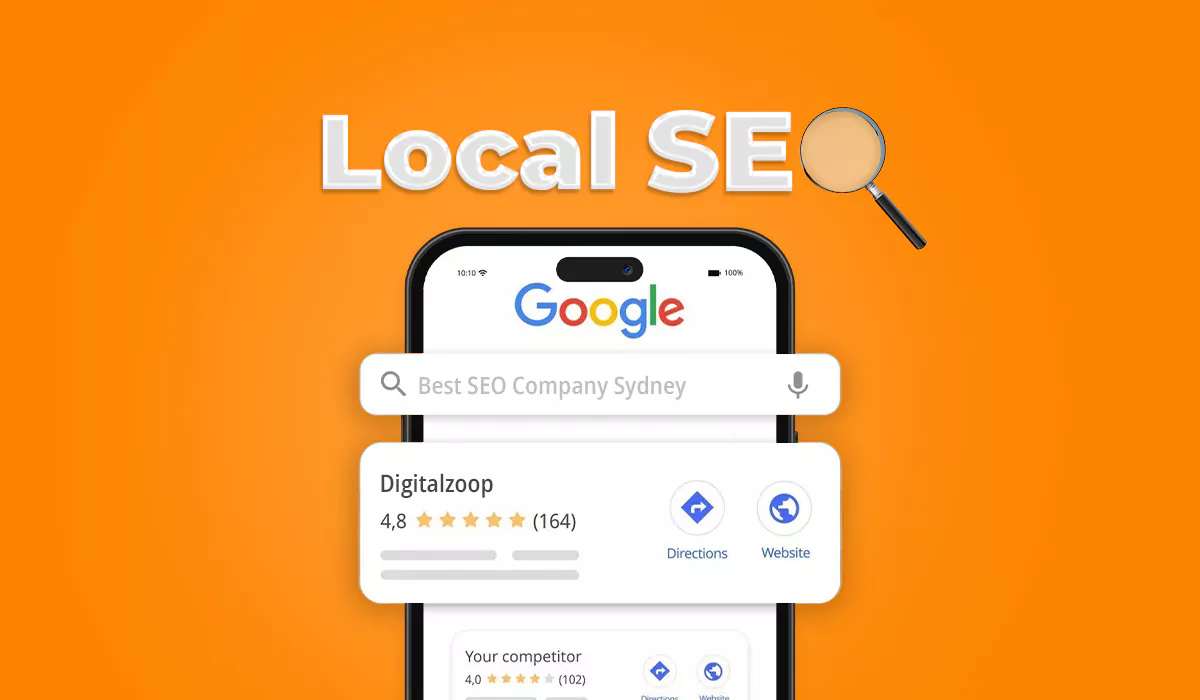
Local SEO is what helps your business show up when Australians search for services “near me”, in a suburb, or in a specific city. It is the difference between being found on Google Maps and being invisible, even if your service is excellent. In 2026, local competition is tighter, customers compare faster, and Google rewards businesses that are both credible and easy to choose.
This local SEO guide gives you a practical framework you can follow, with snippet-ready answers integrated naturally, plus a step-by-step local SEO strategy you can implement without guesswork.
Understanding Local SEO: Local SEO is the process of improving your visibility in Google’s local results, especially Google Maps and the map pack, so nearby customers can find and contact you. It relies on relevance, distance, and prominence, which your Google Business Profile, reviews, consistent business details across the web, and location-relevant website content shape. Done well, local SEO helps you win calls, direction requests, and enquiries from people actively looking for a provider in your area.
Local SEO is not the same as general organic SEO. Organic SEO focuses on ranking web pages in broader search results. Local SEO focuses on local intent, helping Google quickly show the best nearby options.
Google’s local ranking systems revolve around:
Key Strategies for Local SEO Success: The fastest way to improve local business SEO is to treat your Google Business Profile as your primary local asset, then support it with a trustworthy website and consistent listings across the web. Start by fixing business details, choosing the right categories, adding services, and collecting steady reviews. Next, build location-relevant pages and strengthen internal links. Finally, maintain accuracy and activity to show Google ongoing trust and customer engagement.
Below are the strategies that move the needle most in Australia, especially for service businesses, clinics, trades, and multi-location brands.
This is the core of local SEO for businesses. If your profile is incomplete or mismatched, you can struggle even with a strong website.
Do this first:
Google’s local guidance consistently highlights profile completeness, categories, services and NAP consistency as foundational ranking inputs.
Reviews influence prominence and click choice. They also reduce hesitation.
Review basics that work:
Your name, address, and phone number should match everywhere. Inconsistent formatting or old phone numbers can weaken trust.
What to check:
Consistency supports prominence and reduces confusion across platforms.
A common mistake is creating thin suburb pages that repeat the exact text and swap out location names. That can backfire because it looks like doorway content.
Instead, make location pages genuinely helpful:
Google’s quality and spam guidance strongly discourages thin, near-duplicate pages and rewards people-first usefulness.
Even though Maps is a listing product, your site still matters.
Prioritise:
Step-by-Step Local SEO Strategy: A strong local SEO strategy follows a simple order: fix your foundations, improve relevance signals, build trust signals, then expand coverage. Start with Google Business Profile optimisation and NAP consistency, then publish local service pages and strengthen internal links. Next, build prominence through reviews, local mentions, and quality links. Finally, refine based on performance data, expanding into new suburbs or services only after core areas convert well.
Here’s a clear, repeatable plan you can follow.
Create a baseline to measure improvements.
Check:
Make your business details identical across:
Consistency supports trust and helps Google connect the right signals.
This is where many local campaigns win or lose.
Focus on:
For most local businesses, a clean structure looks like this:
Example structure:
This supports internal linking and passage ranking because Google can understand topical relationships.
Each location page should include:
A practical target is consistency, not perfection.
Simple approach:
Authority can be built without dodgy link tactics.
Good local authority sources:
Quality and relevance matter more than quantity.
Measure what matters:
Then refine:
Advanced Local SEO Tips: Once the basics are locked in, advanced local SEO focuses on improving prominence and conversion rate. That means building stronger local authority signals, improving on-page engagement, tightening category and service relevance, and using structured data properly. It also includes managing duplicates, monitoring competitor categories and reviews, and publishing locally applicable content that earns mentions and links. These tactics help you win in tougher suburbs where most businesses have already “done the basics”.
Learn more: https://www.digitalzoop.com.au/local-seo-guide/

© 2025 Crivva - Hosted by Airy Hosting Managed Website Hosting.