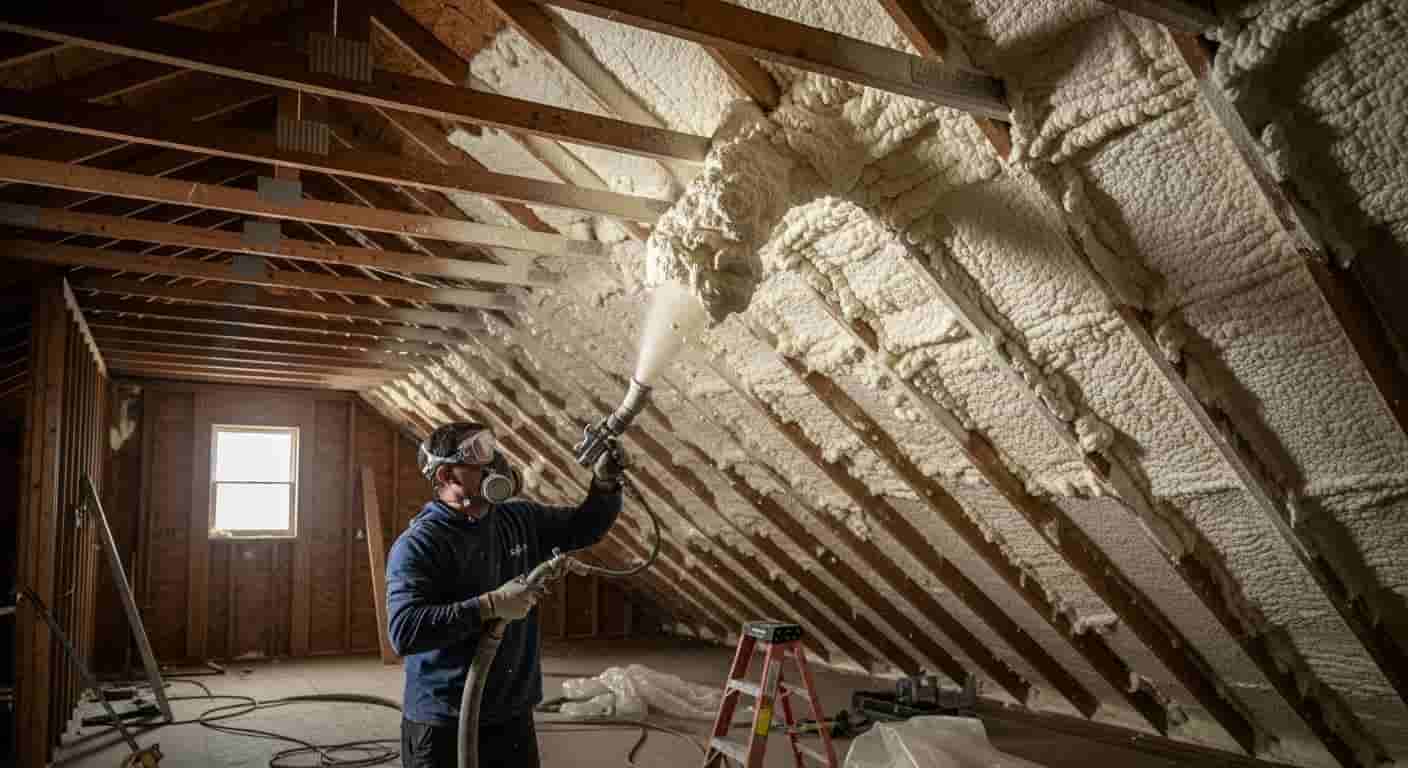
Spray foam insulation cures through a chemical reaction that releases vapors, a process known as off-gassing. You can achieve an effective reduction in off-gassing exposure by ensuring professional installation, maintaining high ventilation rates for at least 24 to 48 hours, and monitoring temperature levels during the application. Most modern high-quality foams finish the primary curing stage within a day, but improper mixing or extreme temperatures can extend this period.
This guide provides a detailed look at how these chemical releases work and what steps you can take to keep your indoor air safe. Industry data shows that over 90% of off-gassing complaints stem from poor installation practices rather than the product itself. This makes your choice of installer the most important factor in your home project.
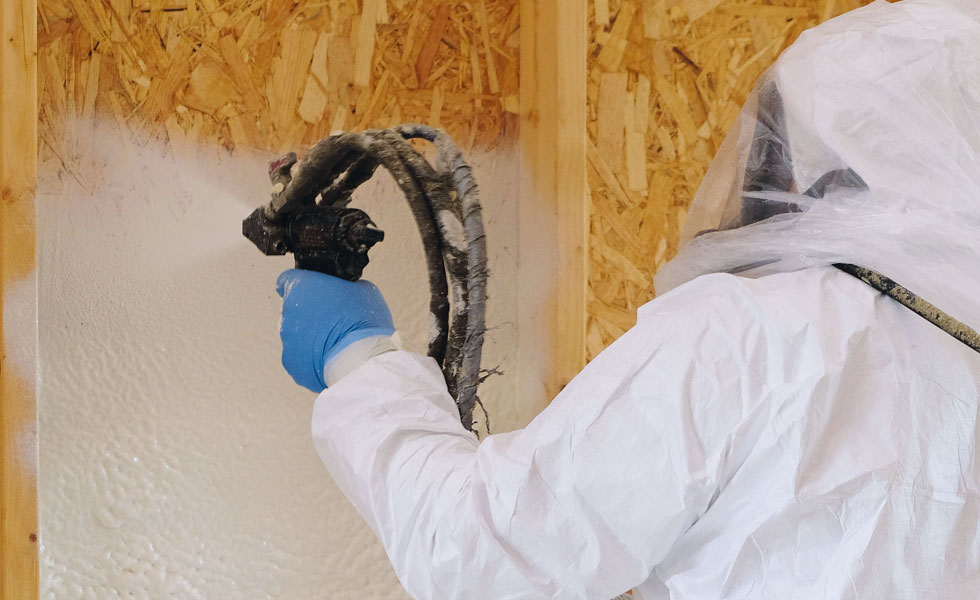
Spray foam consists of two liquid parts, often called Side A and Side B, that mix at the nozzle. When these liquids meet, they react to create the expanding foam that seals your attic or walls. If the mixture is slightly off, some chemicals remain unreacted and continue to release odors into your living space.
Understanding how long spray foam off-gassing lasts depends largely on the type of foam used. Open-cell foam generally cures faster because it is less dense. Closed-cell foam is thicker and may hold heat longer, which requires careful monitoring to prevent “scorching” the center of the material.
Active ventilation is the most reliable way to manage air quality during and after the job. Most manufacturers recommend a specific number of air changes per hour to remove vapors outside. If your contractor uses high-powered fans, the risk of lingering odors drops significantly.
Bonus Tip: You should ask your contractor to provide a written ventilation plan before the work begins. This ensures they have the right equipment to exchange the air in your specific square footage.
Short-term exposure to these vapors can cause immediate physical discomfort for some people. Common symptoms include eye irritation, a scratchy throat, or mild headaches. Those with existing asthma or chemical sensitivities might experience more intense reactions, such as coughing or shortness of breath.
Long-term health effects of spray foam exposure are rare when the foam cures properly. However, if the chemicals fail to bond, the resulting odor can cause persistent nausea or respiratory issues. It is standard practice for residents to stay out of the building for a full 24 hours to avoid these risks entirely.
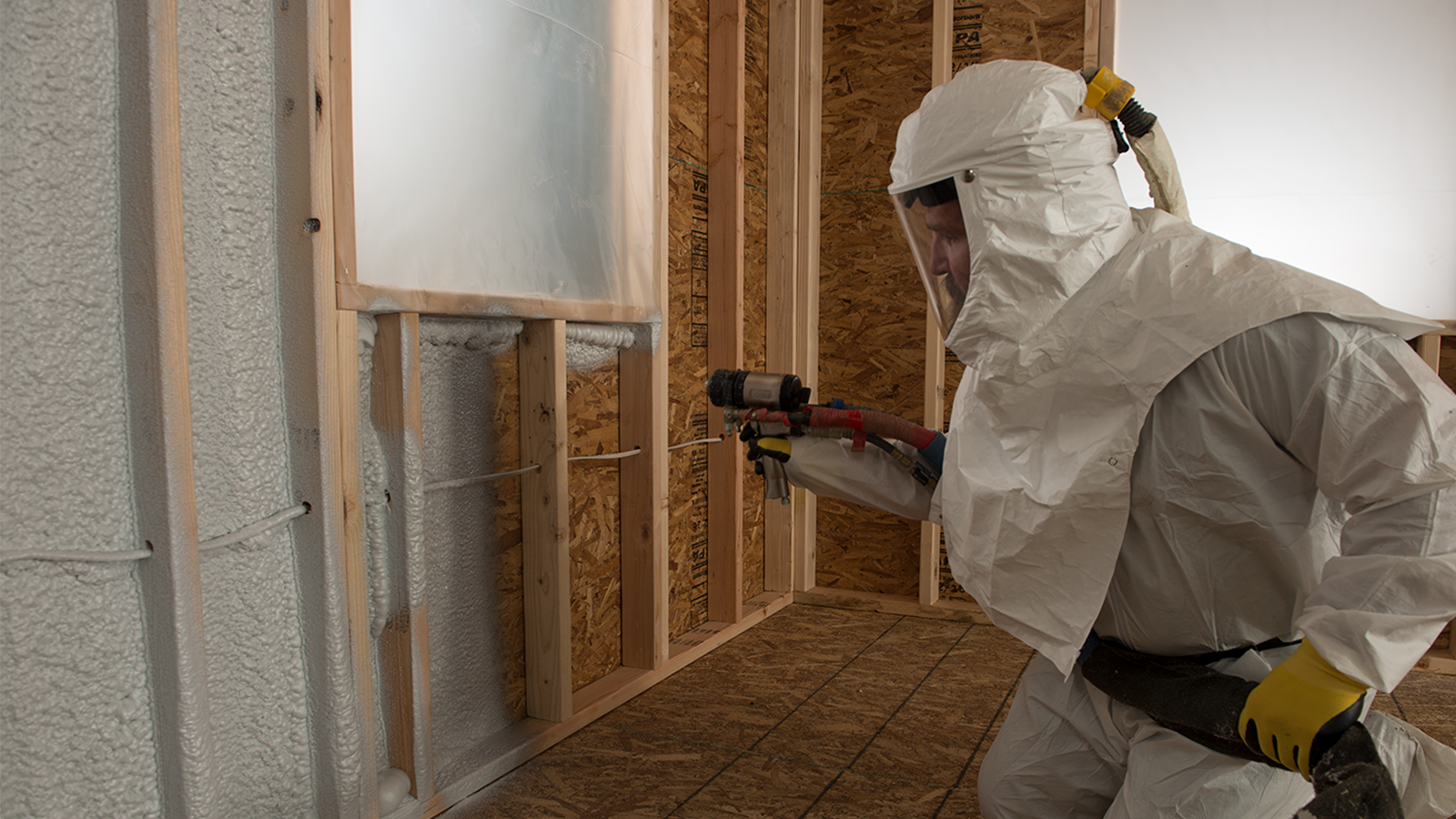
The environment in your home plays a massive role in how the foam behaves. High humidity can affect chemical bonds, while extreme cold can prevent the foam from sticking to the surfaces. Professional crews use heaters or dehumidifiers to create the perfect environment for a stable cure.
|
Factor |
Impact on Off-Gassing |
Ideal Range |
|---|---|---|
|
Ambient Temperature |
Low temperatures slow down the chemical reaction |
60°F to 90°F |
|
Humidity Levels |
High moisture can cause foam “blow-off.” |
Below 60% |
|
Layer Thickness |
Too thick layers trap heat and gases |
2-4 inches per pass |
|
Ventilation Rate |
Removes VOCs as they are released |
30+ air changes per hour |
If you are concerned about lingering smells, there are several ways to reduce VOC exposure after insulation installation. Taking these steps helps clear the air faster and provides peace of mind.
The success of your project rests on the skill of the crew. You want to look for low-VOC spray foam installation experts who understand the chemistry behind the products. They should be able to explain the specific “dwell time” required for the brand of foam they are using.
A high-quality provider of indoor air quality insulation solutions will use calibrated equipment. This machinery ensures the A and B sides are heated to the exact degree and pressurized perfectly. If the equipment is old or poorly maintained, the mix ratio might fail, leading to permanent odor issues.
Checking Equipment Calibration: You can ask to see the pressure gauges on the proportioner machine. If the pressures for both lines aren’t matching, the foam is likely being applied “off-ratio.”
A professional spray foam insulation safety contractor services provider always prioritizes site containment. They should use plastic sheeting to seal off the work area from the rest of the house. This prevents dust and fumes from traveling through your HVAC system into bedrooms or kitchens.
Additional Information: Many manufacturers now offer “low-VOC” or “bio-based” foams. While these are better for the environment, they still require the same safety and ventilation protocols as traditional foams.
Before you sign a contract, you must evaluate the specific needs of your building. Not every home is a candidate for every type of foam.
If a mistake happens and an odor persists, you may need a chemical exposure insulation mitigation service. These specialists use thermal imaging to find pockets of uncured foam. They can then remove the problematic material and clean the area with neutralizing agents to restore your air quality.
Bonus Tip: Check if your installer offers a “sniff test” or air quality monitoring after the job. Most reputable companies will gladly return to check the site if you notice a lingering smell after 48 hours.
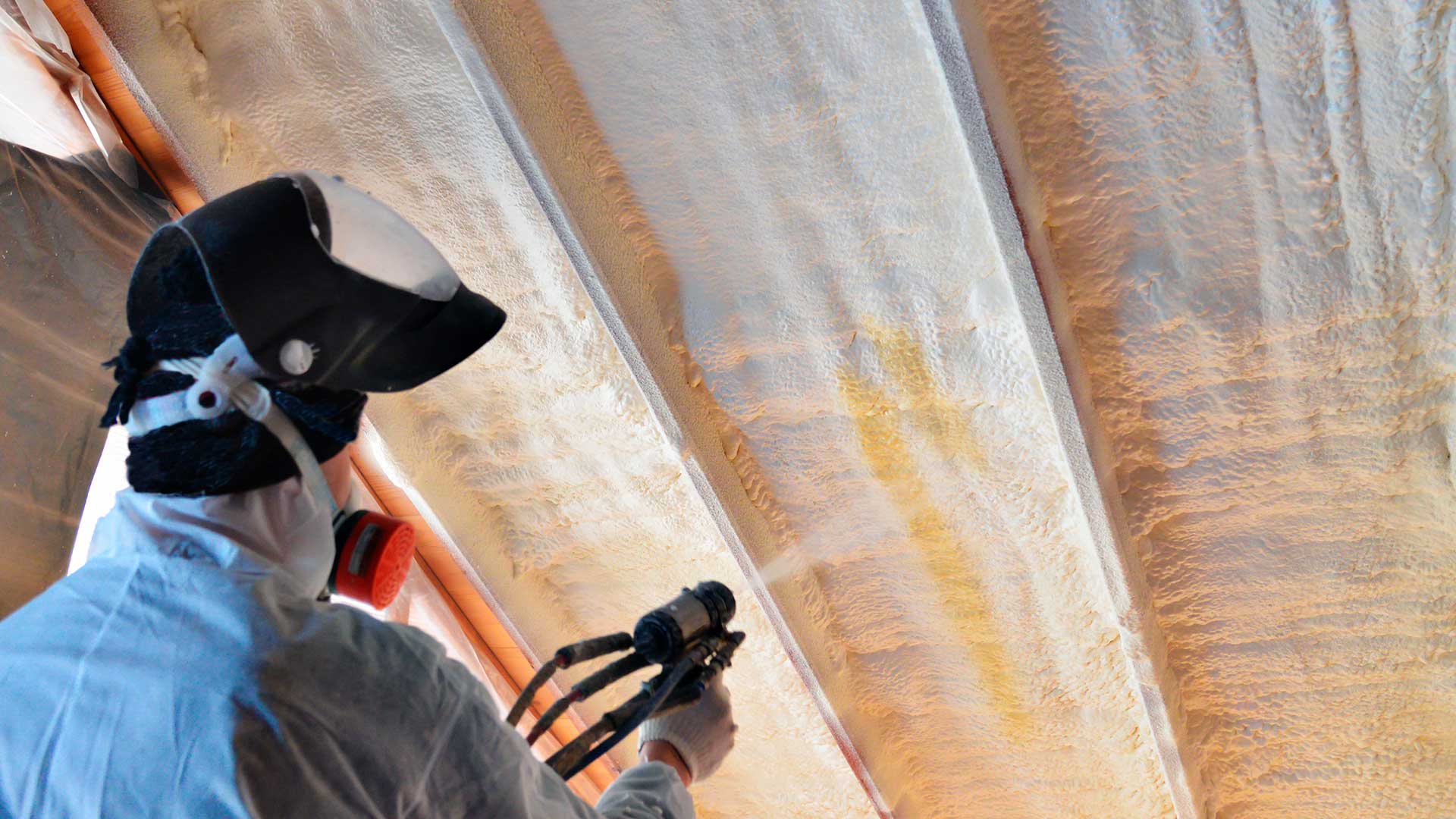
Once the foam is cured and the smells are gone, your home should be significantly more energy-efficient. You will likely notice that your AC runs less often and the house stays quieter. To keep the air fresh, ensure your HVAC system has a fresh air intake or use a heat recovery ventilator (HRV).
Because spray foam creates such a tight seal, it can sometimes trap indoor pollutants like cooking odors or pet dander. Maintaining a balanced ventilation system is the best way to enjoy the benefits of insulation without sacrificing air purity.
Achieving spray foam off-gassing exposure reduction is a matter of preparation and professional execution. By ensuring proper mixing, maintaining aggressive ventilation, and choosing an experienced team, you can avoid the common pitfalls of chemical odors. Always prioritize the curing timeline and give the material the environment it needs to stabilize.
When you are ready to find a team that prioritizes air quality, Stellrr is a great local resource. They specialize in high-performance installations and can answer detailed questions about their safety protocols and equipment calibration. You can contact them at (512) 710-2839 or send an email to [email protected] to discuss your specific needs. For those who want to see their local reputation and service area, you can find them at https://maps.app.goo.gl/Kn97GfC6mWUq8gkV8. Requesting a free quote is a helpful way to understand the costs and the safety measures they will take for your property.
The most obvious sign is a persistent “fishy” or “chemical” smell that lasts longer than three days. You might also notice the foam feels tacky or soft to the touch rather than firm and dry.
It is generally not recommended. Most safety guidelines recommend that residents and pets stay out of the building for 24 hours to avoid risks associated with spray foam off-gassing while the chemicals are most active.
No, painting or coating the foam will not stop the off-gassing of uncured chemicals. The only effective solution for improper curing is to remove the bad material and clean the substrate.
You should leave the building immediately and get into the fresh air. Contact your installer to report the issue and consult a medical professional if your symptoms do not clear up quickly.
A mild odor is normal during the first 24 hours as the reaction finishes. It only becomes a safety concern if the smell is overwhelming or persists long after the ventilation fans have been turned off.

© 2025 Crivva - Hosted by Airy Hosting Managed Website Hosting.