


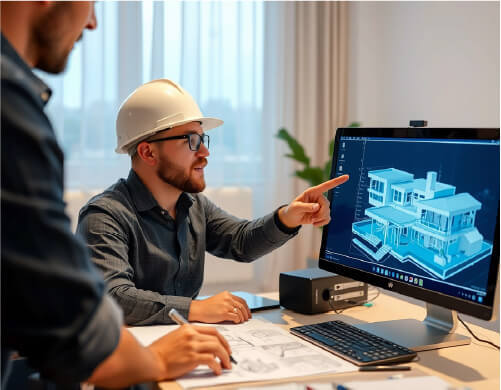
Building Information Modeling (BIM): Transforming the Future of Architecture
In today’s fast-evolving architectural landscape, the demand for buildings that are smarter, more sustainable, and cost-effective continues to rise. Urban populations are expanding, resources are becoming scarcer, and clients expect faster delivery without compromising on quality or innovation. Amidst these challenges, Building Information Modeling (BIM) has emerged as one of the most transformative technologies in modern architecture and construction.
What began as a digital design tool has now become a complete ecosystem for planning, designing, constructing, and managing buildings. BIM is not just about creating 3D models it’s about reimagining how we collaborate, make decisions, and deliver built environments that are efficient, durable, and future-ready.
What Exactly Is BIM and Why Does It Matter So Much Today?
At its simplest, Building Information Modeling (BIM) is a digital representation of a building’s physical and functional characteristics. Unlike traditional 2D drawings, BIM creates a comprehensive 3D model that includes not only geometry but also valuable data such as materials, energy performance, cost estimates, and maintenance schedules.
Think of it as a “living digital twin” of the actual building one that evolves in real time as the project progresses. Every change made by an architect, engineer, or contractor updates automatically across the model, keeping everyone on the same page.
This level of integration and data sharing is what makes BIM a cornerstone of “smart architecture.” It enables professionals to work collaboratively, predict outcomes more accurately, and design buildings that are not just beautiful but also sustainable, resilient, and efficient.
How BIM Is Revolutionizing Architectural Design
One of the biggest transformations BIM brings is in the design and visualization process. In the past, architects relied on static blueprints and 2D sketches that clients often struggled to interpret. Now, BIM allows the creation of immersive 3D visualizations that clients can explore virtually.
They can take a digital walkthrough, understand spatial relationships, lighting effects, or material finishes, and provide feedback early in the process. This interactive approach helps reduce misunderstandings and minimizes costly design changes during construction.
Beyond visualization, BIM supports advanced simulations. Architects can evaluate how natural light enters a room throughout the day, how air flows within the building, or how different materials impact energy efficiency. By experimenting virtually before construction begins, design teams can optimize performance and create buildings that truly align with human comfort and environmental goals.
Collaboration: The Heart of BIM
Traditionally, architects, engineers, and contractors worked in silos. Each team had its own set of drawings and tools, leading to errors, duplicated efforts, and expensive delays. BIM eliminates this fragmented workflow by creating a shared digital environment where every stakeholder contributes to and accesses the same model.
When one discipline makes a change say, moving a wall or adjusting duct placement BIM instantly updates that information for everyone else. This real-time coordination allows teams to identify and resolve design clashes before they reach the construction site.
For instance, if a plumbing pipe intersects with a structural beam in the digital model, BIM flags the issue automatically. Resolving it virtually prevents on-site conflicts, saving both time and money. Studies have shown that BIM can reduce design errors by up to 50%, improving project delivery timelines and overall efficiency.
Saving Time, Reducing Costs, and Improving Accuracy
In construction, time equals money, and delays can have a ripple effect on budgets and schedules. BIM dramatically improves project efficiency by automating many time-consuming tasks like generating schedules, quantity take-offs, and cost estimates.
Because the BIM model contains detailed data about every element from doors and windows to steel reinforcements teams can quickly generate accurate cost reports. This transparency helps clients make informed financial decisions and avoid unexpected expenses.
Clash detection is another powerful cost-saving advantage. Instead of discovering errors during construction (which can be very expensive to fix), BIM identifies them early. The result is fewer design revisions, reduced material waste, and faster project delivery.
Sustainability Starts at the Design Stage
Sustainability is no longer an optional goal it’s a necessity. BIM plays a vital role in integrating sustainability into the very foundation of architectural design.
Through its analytical tools, BIM can simulate a building’s energy performance, test various materials for environmental impact, and evaluate natural light and ventilation strategies. This enables architects to make data-driven decisions that reduce energy consumption and enhance occupant comfort.
Moreover, BIM supports green certifications like LEED and BREEAM by tracking sustainable materials, waste reduction, and carbon footprints throughout the project lifecycle. By planning with sustainability in mind from the beginning, architects can design buildings that are both environmentally responsible and economically efficient.
In addition, BIM encourages a circular construction approach where waste is minimized, materials are reused, and resources are managed efficiently. This long-term thinking contributes to a greener, more sustainable built environment.
BIM Beyond Construction: Managing the Building Lifecycle
The power of BIM doesn’t stop once construction is complete. The detailed digital model serves as a permanent record for the building’s operations, maintenance, and future upgrades.
Facility managers can access the BIM model to locate equipment, schedule maintenance, or plan renovations without guesswork. This reduces downtime and extends the building’s lifespan.
The integration of Internet of Things (IoT) sensors with BIM has taken this even further. Smart buildings now use real-time data from sensors tracking energy use, air quality, occupancy levels, and more to adjust operations automatically. This creates intelligent, self-optimizing environments that improve comfort, safety, and energy efficiency.
BIM and the Future of Architecture
The future of BIM is incredibly exciting. As technology evolves, BIM is expanding beyond 3D modeling into 5D, 6D, and even 7D BIM where time, cost, sustainability, and facility management data are all integrated into a single platform.
Artificial Intelligence (AI) and Machine Learning (ML) are also being integrated into BIM systems. These technologies help predict potential design issues, optimize energy performance, and automate repetitive design tasks. Imagine software that can automatically suggest the best building orientation for sunlight or calculate energy savings from specific materials—that’s where BIM is heading.
Cloud-based collaboration is another major development. Teams located in different cities or even continents can now work on the same BIM model simultaneously, sharing updates in real time. This global accessibility is breaking barriers and opening up unprecedented collaboration opportunities in the architecture and construction industries.
Cultural Shift: From Isolation to Collaboration
Beyond technology, BIM represents a cultural change in how professionals approach design and construction. It promotes openness, teamwork, and shared accountability. Instead of focusing solely on individual deliverables, teams work collectively toward a common goal creating the best possible building for the client and the community.
This cultural shift also encourages innovation. When everyone from designers to builders to owners can see how their decisions affect the overall project, creativity and problem-solving flourish. It’s no longer about isolated tasks but about creating value through collaboration.
Challenges and Opportunities Ahead
While BIM adoption is growing rapidly, there are still challenges to overcome. Some firms face steep learning curves or hesitate due to software costs and training requirements. Others struggle to integrate BIM into existing workflows.
However, the benefits far outweigh the challenges. Governments and large developers worldwide are now making BIM mandatory for public infrastructure projects because of its proven efficiency, transparency, and sustainability. As technology becomes more accessible and professionals become more skilled, BIM will become the standard practice across all levels of architecture and construction.
Conclusion: BIM as a Catalyst for Smarter, Greener, and Better Buildings
The architecture industry stands at a crucial turning point where traditional methods meet digital innovation. BIM sits right at the center of this transformation, reshaping how we plan, design, and manage our built environment.
By merging detailed data with collaborative workflows, BIM helps reduce waste, improve accuracy, enhance sustainability, and save costs. It empowers professionals to design buildings that are not just functional, but truly intelligent structures that respond to people and the planet alike.
For architects, engineers, and builders looking to stay ahead, adopting BIM isn’t just a technological upgrade it’s a strategic evolution. It represents a smarter, more connected, and environmentally conscious approach to architecture.
In the end, Building Information Modeling isn’t just changing how we design buildings it’s changing how we imagine the future of living.

© 2025 Crivva - Hosted by Airy Hosting Managed Website Hosting.