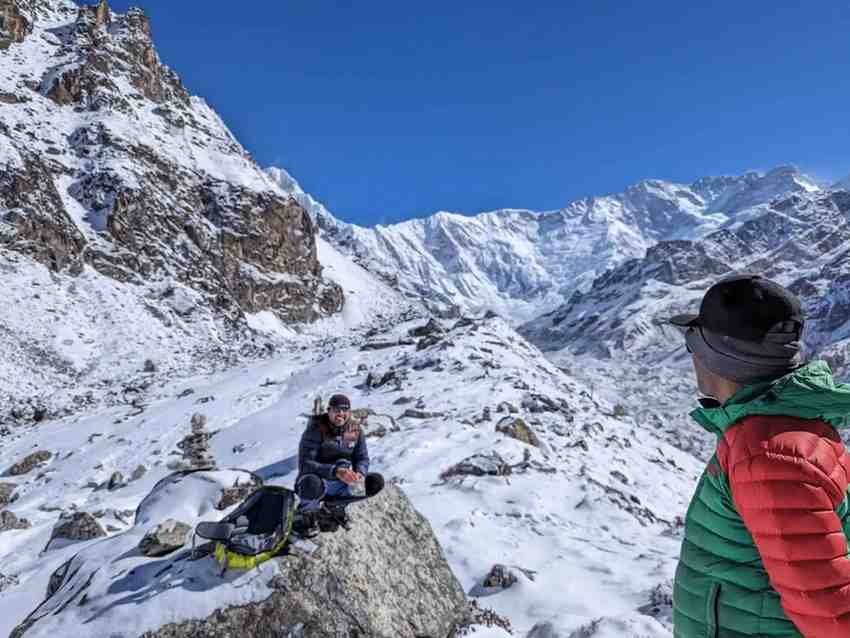
A narrow trail disappears into the far eastern Himalayas, where mountains stand tall and silence feels endless. This is the world of the kanchenjunga circuit short trek, a journey that brings raw wilderness, deep valleys, and powerful mountain views into a shorter but still intense adventure. Snow peaks rise far in the distance, rivers cut through rocky gorges, and small villages appear like hidden secrets. With support from Nepal Social Treks, this remote route becomes safer, more organized, and more meaningful for trekkers who want a real Himalayan experience without spending too many days on the full circuit.
The Kanchenjunga region lies in the far east of Nepal, close to the borders of India and Tibet. This area is one of the least visited trekking regions in the country. Unlike popular routes such as Everest or Annapurna, the trails here remain quiet and natural. There are no large crowds, no busy roads, and no commercial feel. Only forests, rivers, villages, and mountains shape the journey.
The “short trek” version of the Kanchenjunga Circuit focuses on selected highlights of the full route. It still gives views of Mount Kanchenjunga, the third-highest mountain in the world at 8,586 meters, along with surrounding peaks like Yalung Kang and Kabru. The trek feels compact in time, but the experience still feels vast in scale.
Even though it is called a short trek, the journey feels massive in experience. The trail moves through deep valleys, steep hills, and untouched forests. Each day feels different, as the landscape keeps changing.
One moment, the path winds through green rhododendron forests filled with birds and fresh air. The next moment, the trail climbs above tree line into rocky landscapes and icy winds. Suspension bridges swing over fast rivers. Waterfalls fall from cliffs without warning. Every step brings something new and exciting.
Villages along the route are small and traditional. Houses are made of stone and wood. Farming is the main way of life. Electricity and modern facilities are limited in many areas. This makes the journey feel like stepping back in time.
The Kanchenjunga Circuit Short Trek usually takes around 10 to 14 days depending on the exact route and walking pace. The total trekking distance is approximately 90 to 130 kilometers, including side trails and exploration days. The highest point of the trek is around 5,143 meters at Sele La Pass, where wide views of snow-covered peaks open in every direction.
These numbers show that even a shorter version of the trek still involves high altitude and long walking days. Proper preparation, steady pace, and good acclimatization remain very important for safety and comfort.
The journey begins in lower valleys where forests are thick and green. The air is warm and humid. Rivers flow quickly through narrow gorges. The sound of nature is strong and constant.
As the trail moves higher, forests slowly change. Pine, oak, and rhododendron trees dominate the middle sections. These forests are rich in wildlife and color, especially during spring when flowers bloom.
Higher up, vegetation becomes sparse. Trees disappear, replaced by grasslands, rocks, and snow patches. The views become wider and more dramatic. The Kanchenjunga massif slowly appears closer, filling the horizon with giant snowy walls.
The region is home to diverse ethnic communities such as Limbu, Rai, Sherpa, and Tibetan-influenced groups. Each village has its own traditions, language, and customs.
Life is simple and closely connected to nature. People farm maize, millet, and potatoes. Livestock such as yaks and goats are important for survival in higher areas. Homes are built to handle cold weather and mountain conditions.
Buddhist monasteries and small shrines appear along the trail. Prayer flags flutter in the wind. Mani walls carved with sacred symbols line the paths. These cultural elements create a strong spiritual feeling throughout the trek.
The Kanchenjunga Circuit Short Trek is moderately to highly challenging. The main difficulty comes from long walking hours, steep ascents, and high altitude. Some sections are rocky and uneven, requiring careful steps.
Facilities are basic compared to popular trekking regions. Lodges are simple, and food choices are limited in remote areas. This adds to the adventure but also requires mental readiness and flexibility.
Altitude is another challenge. As elevation increases above 3,500 meters, breathing becomes heavier and walking slows down. Proper acclimatization and slow movement are very important for a safe journey.
Nepal Social Treks plays a key role in making this remote journey safer and more accessible. Experienced guides lead the way through complex trails and help manage altitude-related challenges. Their local knowledge helps in understanding weather, culture, and route conditions.
Porter support reduces physical strain by carrying heavy luggage. This allows trekkers to focus more on walking and enjoying the scenery. Services also include trekking permits, transportation arrangements, accommodation planning, and customized itineraries based on fitness and time.
Safety is a major focus. Emergency support, proper acclimatization planning, and route guidance help reduce risks in this remote region. With professional assistance, the journey becomes more organized, even in difficult terrain.
The Kanchenjunga region is part of a protected conservation area, which helps preserve its rich biodiversity. Rare animals such as red pandas, Himalayan black bears, and even snow leopards live in these forests.
Birdlife is also abundant. Colorful species fly through the trees, especially in lower valleys. Butterflies, wildflowers, and medicinal plants add to the natural richness of the region.
Because of limited human presence, the environment feels pure and untouched. Every part of the trail feels connected to nature in its original form.
The best seasons for the Kanchenjunga Circuit Short Trek are spring and autumn. Spring offers blooming flowers, green forests, and mild temperatures. Autumn provides clear skies, stable weather, and excellent mountain views.
Winter is extremely cold at higher elevations, and many trails may be difficult to access. Monsoon brings heavy rain, slippery paths, and limited visibility, making trekking more challenging.
Choosing the right season helps ensure safety and improves the overall experience.
One of the most powerful aspects of this trek is the feeling of isolation. Mobile signals are weak or unavailable in many areas. Electricity is limited in higher villages. Shops and services are rare.
This creates a deep connection with nature and self. Nights are quiet and filled with stars. Days are simple, focused only on walking and observing the mountains.
The absence of modern distractions makes every moment more meaningful.
The Kanchenjunga Circuit Short Trek is a powerful Himalayan experience packed into a shorter timeframe. It offers wild landscapes, rich culture, and high mountain views that feel untouched and real. Even in its shorter form, the journey feels large, emotional, and deeply memorable.
With support from Nepal Social Treks, this remote adventure becomes more manageable and safer. Professional guidance, local expertise, and well-planned services help transform the trek into a smooth and rewarding Himalayan experience, where every step leads deeper into one of Nepal’s most beautiful and least explored regions.

© 2025 Crivva - Hosted by Airy Hosting Managed Website Hosting.