

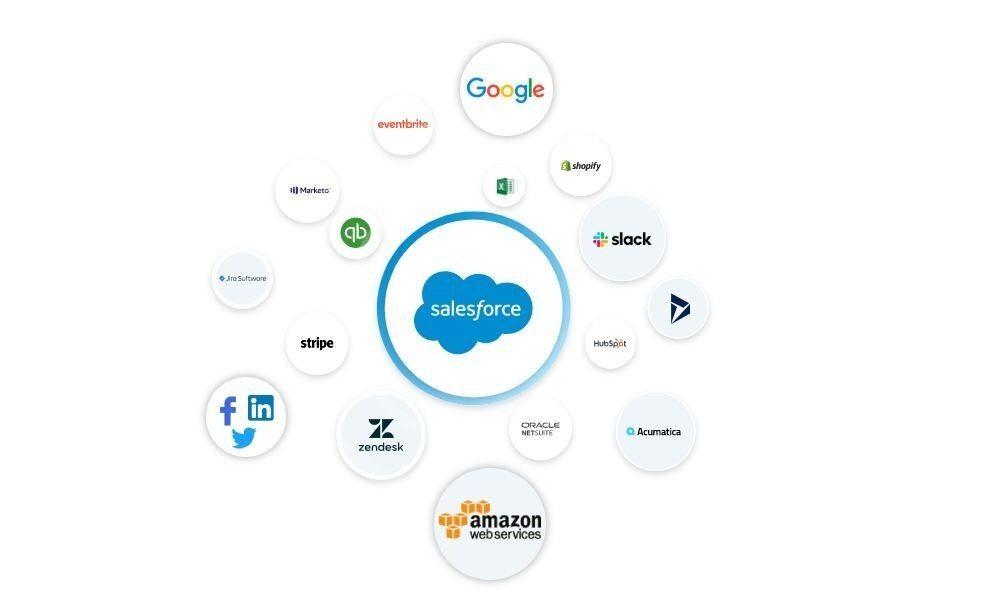
An AI agent that answers a customer with the wrong account balance does more damage than one that stays silent. That single failure has almost nothing to do with the language model behind it. It happens because the agent pulled from a billing system that never reconciled with the customer record in Salesforce. In the Agentforce era, the model is not the bottleneck for Salesforce AI. Integration is, and the Salesforce integration partners you choose now decide whether your agents earn trust or lose it.
The uncomfortable part is that the models already work. Agentforce, Einstein, and the copilots layered on top of them are competent out of the box. What they lack is a clean, unified, current view of your business. That view lives across dozens of systems that were never designed to talk to each other. Closing that gap is slow, unglamorous engineering work, and it is exactly where most AI programs stall.
Why the Model Was Never the Hard Part
Foundation models arrive pretrained and capable. A team can stand up an agent in an afternoon and watch it hold a fluent conversation. The trouble starts the moment that agent has to act on a real customer, a real order, or a real service history.
Consider the scale of the problem. The 2025 MuleSoft Connectivity Benchmark, which surveyed more than 1,050 IT leaders, found the average enterprise now runs 897 separate applications and integrates just 29 percent of them. The other 71 percent hold data an agent cannot reach. When only 29 percent of apps connect, an AI agent operates with most of the business hidden from view.
That fragmentation is why 80 percent of organizations in the same study named data integration as their single biggest obstacle to AI. The language capability was table stakes. Getting trustworthy data to the model was the wall everyone hit.
The pattern repeats across every industry. A retailer wants an agent that answers order-status questions, but the shipping status lives in a warehouse management system, the payment status in a separate gateway, and the loyalty balance in a marketing cloud. A bank wants an agent to flag a suspicious transaction, yet the transaction sits in a core banking platform the CRM has never touched. In each case the model performs flawlessly and the answer is still wrong, because the data behind it was never joined. The lesson is consistent: the intelligence was ready long before the data was.
An Agent Inherits Every Flaw in Your Data
A dashboard tolerates messy data. A person reading it applies judgment, spots the outlier, and mentally corrects for the duplicate record. An autonomous agent does none of that. It reads the field, believes it, and acts.
That distinction changes the stakes of Salesforce application integration entirely. Feed an agent a contact record with a stale address, and it ships to the wrong place. Give it two versions of the same account because a dedupe rule never ran, and it may credit a payment to the wrong customer. The agent does not hesitate, because it has no way to know the data is wrong.
IBM’s Institute for Business Value put a number on this readiness gap. Its 2025-2026 State of Salesforce study found that only 26 percent of organizations keep most of their customer data inside Salesforce. For everyone else, the records an agent needs sit in an ERP, a billing platform, a support tool, or a data warehouse. An Agentforce deployment is only as trustworthy as the pipelines feeding it, and most of those pipelines do not exist yet.
Gartner sharpened the warning from the data side. Its analysts predict that through 2026, organizations will abandon 60 percent of AI projects that lack AI-ready data. The failure point is rarely the algorithm. It is the foundation underneath it.
IBM’s study also found that 97 percent of Salesforce customers collect diverse data, yet only 24 percent put that data to work transforming customer experiences. Collection was never the shortfall. The missing step is unifying scattered records into something an agent can trust, and that step is pure integration work. An agent that acts on 24 percent of the truth acts wrongly the rest of the time.
What Real Integration Work Actually Involves
Wiring two applications together with a point-to-point connector is not integration. It moves a record from box A to box B and calls it done. Real integration builds a trusted, shared foundation that many systems and many agents can rely on at once. That work breaks into several distinct disciplines.
Data model alignment: An “account” in Salesforce, a “customer” in the ERP, and a “party” in the billing system often describe the same entity with incompatible fields. Reconciling those definitions comes before any pipe gets built.
API and MuleSoft strategy: Governed, reusable APIs replace brittle one-off scripts. A well-designed API layer lets a new agent consume existing data without a fresh integration project each time.
Event-driven architecture: Batch syncs that run overnight leave an agent acting on yesterday’s truth. Event streams push changes the moment they happen, so the agent sees the order that was cancelled two minutes ago.
Identity resolution and deduplication: One customer should map to one golden record. Matching, merging, and survivorship rules turn scattered fragments into a single reliable profile.
Governance and security: Field-level permissions, audit trails, and data lineage decide what an agent may read and act on, and prove it later.
None of this is visible in a demo. All of it determines whether the agent works in production. A Salesforce integration consultant who talks only about connectors and skips data architecture is describing plumbing, not a foundation.
The sequence matters as much as the list. Teams that rush to connect systems before aligning the data model end up encoding the same conflict in a dozen places, then spending months untangling it. Aligning definitions first, then building governed APIs, then layering event streams and identity rules on top, produces a foundation that holds as new systems and new agents arrive. Reverse that order and each new use case reopens work that should have been settled once. The discipline is boring, and it is the difference between a program that compounds and one that stalls.
Where Chatbots and Agents Diverge
A scripted chatbot follows a decision tree and reads from one or two sources. Salesforce chatbot integration of that kind is comparatively forgiving, because the bot never strays beyond its script.
Agentforce agents reason and act across systems. The bar for the underlying data rises sharply. An agent asked to resolve a billing dispute needs the invoice, the payment record, the service history, and the entitlement, each current and each correctly matched to one customer. The difference between a helpful agent and a liability is the quality of the integration beneath it.
This is why a chatbot pilot rarely predicts Agentforce success. A team ships a scripted bot, sees it handle FAQs well, and assumes the harder agent will follow the same path. It will not. The bot never needed a unified customer record; the agent cannot function without one. Salesforce chatbot integration that stopped at a knowledge base leaves almost none of the groundwork an agent requires. Treating the two as one project sets a deadline the data cannot meet.
What Separates Salesforce Integration Partners Worth Hiring
The market is crowded with firms that will happily install a connector and send an invoice. Fewer build the trusted data foundation an agent needs. When you evaluate Salesforce integration partners for AI-era work, the difference shows up in what they ask about first.
A partner worth hiring opens with your data, not your endpoints. They map where customer records live, how they conflict, and which system holds the authoritative version before proposing a single integration. Weigh these traits:
Data architecture depth: They design a canonical data model and a golden-record strategy, rather than replicating whatever fields happen to exist in each source system.
Governance discipline: They treat data lineage, access control, and quality monitoring as core deliverables, so an agent’s decisions can be audited and defended.
Security posture: They align encryption, consent, and role-based access with regulations such as the GDPR and HIPAA before data ever reaches an agent.
Domain fit: A partner who knows your industry recognizes that a “closed” claim in insurance means something different from a “closed” opportunity in sales, and models it correctly.
Agentforce data readiness: They assess whether your data is fit for autonomous action, not merely for a dashboard, and they say so plainly when it is not.
Gartner’s research reinforces why this matters. Sixty-three percent of organizations either lack the right data management practices for AI or are unsure whether they have them. Salesforce integration services that fill that gap are worth far more than services that simply add another pipe to an already tangled map.
Security and Compliance Move to the Front
When a human queried a CRM, an access mistake exposed one record to one person. When an agent queries the same data thousands of times an hour and acts on what it finds, a permissions gap becomes a systemic exposure.
Integration is where those controls live. Row-level and field-level security, encryption in transit and at rest, consent tracking, and immutable audit logs all belong in the integration layer, not bolted on afterward. A partner that treats compliance as a foundational requirement protects you from the moment an agent goes live. One that treats it as a later phase leaves the riskiest system in your stack running on trust alone.

© 2025 Crivva - Hosted by Airy Hosting Managed Website Hosting.