


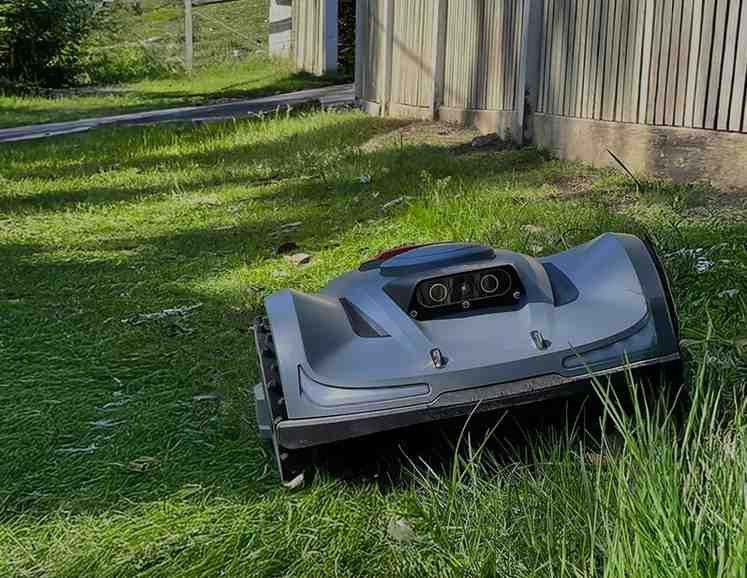
Robotic mowers are becoming common in Australian households, offering hands-free lawn care that saves time and keeps yards well-maintained. While these machines are designed with multiple safety systems, many families still wonder how safe they are around children and pets. Understanding the technology and following simple guidelines ensures that everyone can enjoy a tidy lawn without risk.
This article outlines practical safety tips specifically for Australian homes—where outdoor living, active backyards, and pet-friendly spaces are part of daily life.
Modern robotic mowers come equipped with several layers of protection. Before exploring best-practice safety steps, it’s helpful to understand how these machines are designed.
Most devices include:
Lift sensors that stop blades immediately if the mower is raised
Tilt sensors that halt movement if the machine tips to the side
Collision sensors that detect obstacles and redirect the unit
Low-power cutting blades designed for controlled, safe operation
Automatic shut-off when the machine is inverted
Boundary controls that prevent wandering outside set zones
These features form the foundation of safe autonomous mowing. Families can build on this foundation by following smart usage practices tailored for children and pets.
The simplest and most effective safety measure is scheduling mowing when the outdoor area is not in use. Most robotic mowers allow timed operation, so you can set mowing hours early in the morning, late at night, or whenever pets and children are not outside.
This prevents:
Accidental contact
Curious interactions
Pets chasing the mower
Kids treating the mower as a toy
In households with unpredictable routines, consider short, frequent sessions rather than long cycles.
Robot mowers rely on boundary wires or GPS-guided zones to stay within defined areas. For homes with active children or energetic dogs, placing clear boundaries helps limit the machine’s travel zones.
Good placement zones include:
Keeping the mower away from play areas
Excluding dog lounging spots
Avoiding paths where kids often run
Creating separate zones for fenced pet areas
Well-planned boundaries ensure the mower never enters zones where safety could be compromised.
Children often keep toys scattered outside, and dogs may leave bones, chews, or play items in the yard. These objects can interfere with mower sensors or become unexpected obstacles.
Before the mower starts:
Inspect the lawn quickly
Pick up toys, sticks, and balls
Remove pet bowls from the yard
Clear any loose objects
This not only protects children and pets but also helps the mower run smoothly without damage.
Children are naturally curious and may want to touch or follow the machine. While robotic mowers are designed to stop if handled, it’s important to set clear rules.
Teach children:
Never lift or flip the mower
Never sit on or ride the machine
Keep a safe distance while it operates
Notify an adult if the mower seems stuck
Creating awareness early prevents unsafe interactions.
When a robot mower is new, pets often react with curiosity. Dogs might bark at it, follow it, or try to chase it. Cats may observe from a distance but still need monitoring.
During the first week:
Supervise pets while the mower runs
Let them observe the machine from a distance
Only allow contact-free exposure
Gradually reduce involvement once pets stop reacting
Most pets eventually ignore the mower completely.
Setting the mower to a higher cutting height reduces blade exposure and allows for a wider margin of safety. This is helpful for:
Homes with toddlers
Yards where smaller pets roam frequently
Play areas close to mowing zones
Higher cutting height also reduces scalping, which is beneficial for Australian warm-season grasses.
Most robotic mowers include security features such as:
Child lock
PIN code access
Start buttons that require a press-and-hold
Activating these stops children from operating or tampering with the machine. Even if a curious child presses buttons, the mower will not start unless the safety sequence is followed.
When selecting a robotic mower for an Australian home, safety certifications matter. Look for:
Compliance with Australian electrical standards
Safety-tested blade systems
Durable housings suitable for high UV exposure
Reliable sensors designed for unpredictable outdoor environments
Models designed for family households provide extra peace of mind.
A well-maintained machine is safer than one running with damaged parts or dull blades. Regular checks help the mower respond correctly to obstacles and movement patterns.
Maintenance steps include:
Cleaning the underbody
Removing stuck grass
Checking blades weekly
Replacing dull or bent blades
Ensuring sensors remain dust-free
Updating software when required
Even small maintenance steps significantly improve safety and performance.
Robot mowers return to their charging stations automatically. While the charging process is safe, the area around the dock should remain undisturbed.
Create a rule that:
No child or pet should play near the charging station
No one should disconnect the charger except an adult
Water toys or sprinklers should not be placed near the dock
This prevents damage to the station and avoids electrical risks.
Placing the charging dock in a corner, near a fence, or beside a wall reduces the chances of accidents. It keeps pets and kids away from:
The machine during charging
Cables
The return path of the mower
Choose a stable, shaded spot to extend the lifespan of both mower and battery in Australia’s hot climate.
Robotic mowers are safe for families, pets, and children when used correctly. With smart boundaries, careful scheduling, and basic supervision in the early stages, these machines deliver convenient and efficient lawn care while maintaining a secure environment. The combination of built-in sensors, lightweight design, and modern safety technology makes them a strong fit for busy Australian households looking for reliable lawn maintenance without compromise.

© 2025 Crivva - Hosted by Airy Hosting Managed Website Hosting.