

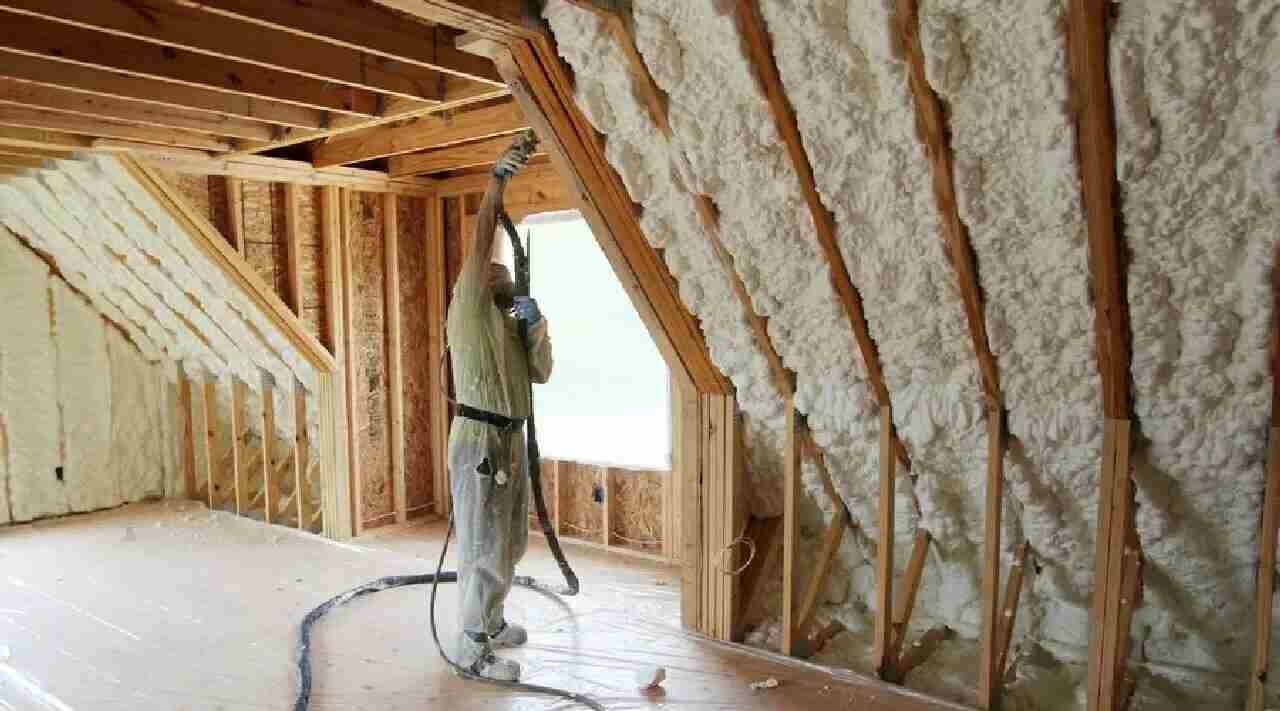
R-value per inch measures how well a material resists heat flow for every inch of its thickness. In modern applications, closed-cell spray foam typically offers an R-value between 6.5 and 7.0 per inch, while open-cell spray foam generally provides 3.5 to 3.8 per inch. Choosing the right density allows property owners to achieve the target thermal performance within the limited depth of wall cavities or attic rafters.
This guide explains the technical differences between foam densities and how R-value impacts long-term energy efficiency. Drawing from years of field experience in the thermal envelope industry, this analysis provides the data needed to evaluate different insulation types for residential and commercial projects.
R-value indicates the thermal resistance of a material. The higher the number, the better the material prevents heat from moving through it. While traditional materials like fiberglass or cellulose rely on trapped air pockets, spray foam insulation experts point out that foam utilizes a more dense structure or specific blowing agents to block heat transfer.
Closed-cell foam is the densest option. It contains tiny cells filled with a gas that conducts heat less than air does. This high density is why it reaches R-values near 7.0 per inch. Open-cell foam has a more porous structure. The cells are intentionally left open and filled with air, resulting in a lower R-value but a more flexible, cost-effective product.
To understand why a spray foam insulation company might recommend one product over another, it helps to look at the numbers. Most building codes require specific R-values depending on the local climate zone. In colder regions, achieving an R-49 or R-60 in an attic requires a material that packs a lot of resistance into a small space.
|
Insulation Material |
Typical R-Value Per Inch |
Best Use Case |
|---|---|---|
|
Closed-Cell Spray Foam |
6.5 – 7.0 |
Exterior walls, crawlspaces, flood zones |
|
Open-Cell Spray Foam |
3.5 – 3.8 |
Interior walls, attic floors, soundproofing |
|
Fiberglass Batts |
3.1 – 3.4 |
Standard 2×4 or 2×6 wall cavities |
|
Blown-In Cellulose |
3.2 – 3.8 |
Attic floors with easy access |
|
Mineral Wool |
3.0 – 3.3 |
Fire-rated assemblies and sound-dampening |
Even with high R-value foam, heat can still escape through wooden studs. This is known as thermal bridging. Spray foam insulation experts often suggest “over-spraying” or adding a continuous layer of insulation over the studs to break this bridge and maximize the effective R-value of the entire wall.
R-value is not always a static number. Some materials experience “off-gassing,” where the specialized gases in the cells eventually equilibrate with the surrounding air. This process can cause the R-value to settle slightly over the first few years. However, high-quality spray foam insulation services use modern blowing agents that stabilize quickly, ensuring the R-value remains consistent for decades.
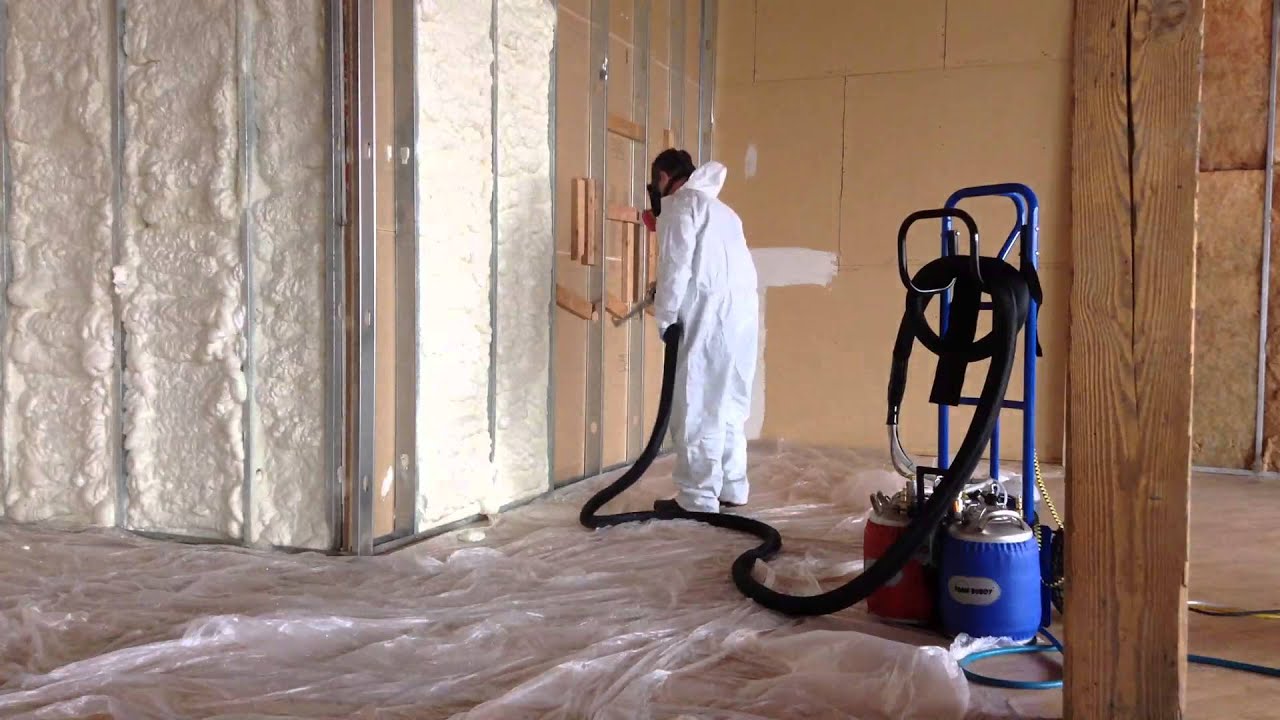
Beyond physical stability, the chemical application process is equally vital to long-term performance. Because spray foam adheres directly to the substrate, it does not sag or settle like fiberglass or cellulose. This means the R-value you start with is generally the R-value you keep. For a spray foam insulation contractor, ensuring a proper mix during application is the most important factor in reaching the manufacturer’s rated R-value.

Local weather patterns dictate how much R-value is necessary. In hot, dry climates like the Southwest, the goal is often to keep heat out of the attic to reduce air conditioning loads. In these areas, a high R-value on the underside of the roof deck can turn a scorching attic into a conditioned space.
In colder, humid climates, the vapor barrier properties of closed-cell foam are just as important as the R-value. Because closed-cell foam is vapor-impermeable at certain thicknesses, it prevents warm, moist indoor air from hitting cold exterior sheathing and turning into damaging condensation.
Before selecting an insulation thickness, property owners should evaluate several factors that influence the total cost and performance.
When reviewing technical data sheets, look for the “aged R-value.” This is the industry-standard measurement that reflects the material’s performance after it has settled, providing a more accurate picture of long-term energy savings.
Yes, R-values are additive. If a specific brand of closed-cell foam provides R-7 per inch, applying two inches will provide R-14. This linear progression allows for precise control over the building’s thermal envelope.
Not necessarily. There is a point of diminishing returns where adding more insulation provides smaller incremental energy savings. A professional spray foam insulation company can calculate the “sweet spot” where the cost of the material balances best with the expected utility savings.
Unlike fiberglass, which loses significant R-value when it becomes damp, spray foam is largely unaffected by moisture. Closed-cell foam, in particular, does not absorb water, meaning its R-value stays consistent even in high-humidity environments or after a leak.
As previously noted, building codes frequently increase required R-values based on regional climate zones. Because spray foam has the highest R-value per inch of any common building material, it is often the only way to meet new codes without making the walls thicker and losing interior square footage.
Understanding R-value per inch is the first step toward a more efficient building. While the numbers provide a baseline for comparison, the quality of the installation determines the actual performance. Each structure has unique needs based on its age, location, and design. Individuals should evaluate their long-term energy goals and budget to determine if high-density closed-cell foam or more flexible open-cell foam is the right fit. Consulting with a specialist can help clarify how these materials perform in specific local climates.
For those looking to improve their property’s thermal performance, Supreme Spray Foam LV provides specialized knowledge in various insulation applications. Their team handles everything from residential attics to large-scale commercial roofing projects. They focus on delivering precise R-value targets to ensure maximum energy efficiency. To discuss specific project requirements or to learn more about their spray foam insulation services, interested parties can reach them at (702) 904-9895 or via email at [email protected]. Whether it is a new build or a renovation, they help property owners select the right foam density for their specific needs.

© 2025 Crivva - Hosted by Airy Hosting Managed Website Hosting.