


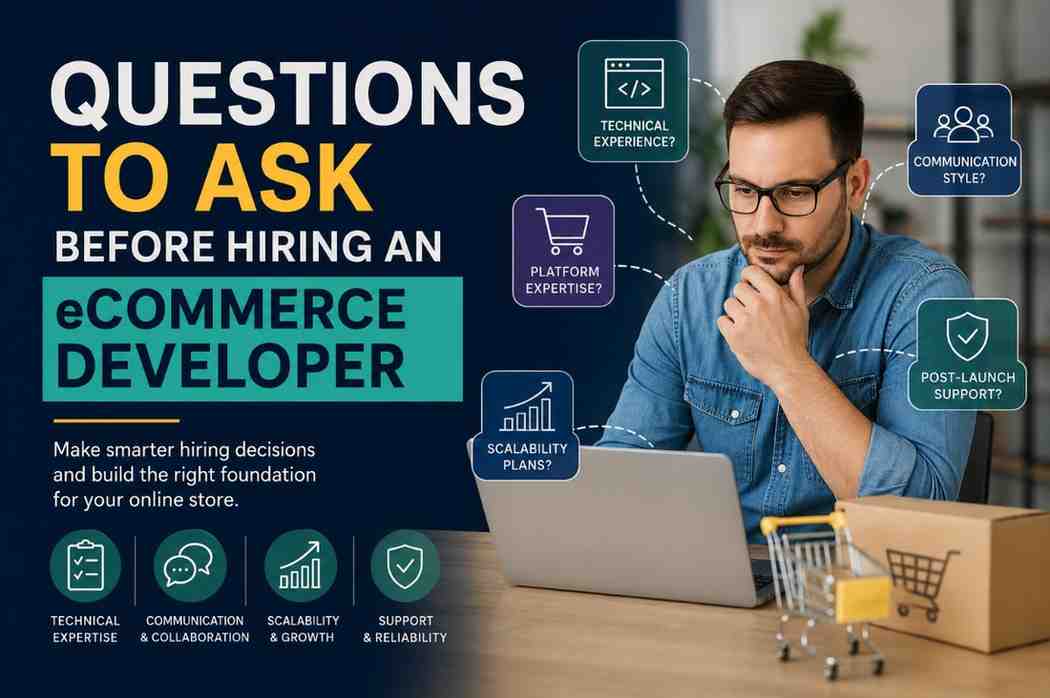
Hiring the wrong eCommerce developer can lead to missed deadlines, unexpected costs, poor user experiences, and expensive redevelopment projects. Asking the right questions before signing a contract helps businesses identify partners who can support both immediate project needs and long-term growth objectives.
However, many businesses rush into the hiring process without fully understanding which questions to ask. Technical skills certainly matter, but selecting an eCommerce developer involves much more than reviewing portfolios or comparing price quotes.
Asking thoughtful questions early can help businesses avoid costly mistakes, establish clear expectations, and build partnerships that support long-term growth.
Not every developer has experience working with every type of ecommerce business. A developer who specializes in subscription-based brands may approach projects differently from someone who primarily works with B2B marketplaces or fashion retailers.
Understanding a developer’s previous experience can provide valuable insight into their ability to handle your specific requirements.
Consider asking:
Past experience doesn’t guarantee future success, but it often provides confidence that a developer understands common industry challenges and customer expectations.
Different ecommerce platforms offer different capabilities. Some developers focus primarily on Shopify, while others specialize in WooCommerce, Magento, BigCommerce, or custom-built solutions.
Understanding where a developer’s expertise lies can help determine whether their skill set aligns with your business objectives.
Questions worth asking include:
A developer should be able to explain technical concepts in ways that support informed business decisions.
Strong communication is often one of the most overlooked factors when hiring development support.
Even highly skilled developers can create frustration if expectations, timelines, and responsibilities are unclear. Businesses should understand how projects will be managed and how updates will be shared throughout the development process.
Businesses that are still evaluating potential partners often benefit from reviewing broader frameworks on how to hire ecommerce developers, particularly when assessing communication styles and strategic alignment.
Consider asking:
Clear communication builds trust and helps prevent misunderstandings later in the project.
Client testimonials offer useful insights, but businesses may also benefit from reviewing feedback from independent platforms. Exploring ecommerce development company reviews can help businesses assess areas of specialization, evaluate past project outcomes, and gain confidence when selecting potential development partners.
Questions to ask include:
Reviewing external feedback can help businesses validate their decision-making process and gain a more balanced perspective.
An ecommerce website should support future business goals rather than simply address immediate needs.
As businesses grow, they may introduce new product lines, expand internationally, implement additional integrations, or experience increased traffic volumes. Developers should consider these possibilities during the planning process.
Businesses may benefit from asking:
Planning for growth early can reduce costly redevelopment efforts down the road.
Every development team follows its own workflow.
Understanding how projects move from discovery to launch can help businesses establish realistic expectations.
Important questions may include:
A structured development process often reflects organizational maturity and helps improve project outcomes.
Modern consumers expect ecommerce websites to load quickly, function seamlessly across devices, and provide intuitive shopping experiences.
Development decisions can significantly impact customer satisfaction and conversion rates.
Businesses should explore questions such as:
Developers who prioritize user experience often contribute to stronger business performance over time.
Launching an ecommerce website is only the beginning.
Businesses frequently require ongoing support, including security updates, feature enhancements, troubleshooting, and optimization.
Questions worth discussing include:
Clarifying these expectations early can help businesses establish long-term partnerships rather than short-term transactions.
Successful ecommerce businesses recognize that development represents only one component of a broader growth strategy.
After launching an online store, businesses often shift their attention toward customer acquisition, content creation, and retention initiatives. Exploring various ecommerce content marketing tools can help organizations identify opportunities to strengthen audience engagement, support educational initiatives, and improve overall marketing effectiveness.
Thinking beyond development encourages businesses to approach ecommerce as an evolving ecosystem rather than a one-time project.
Hiring an eCommerce developer is not simply about finding someone who can write code. It’s about identifying a partner who understands your business objectives, communicates effectively, and helps create experiences that customers value.
The questions businesses ask during the evaluation process often shape the quality of the partnership that follows.
By taking the time to assess expertise, clarify expectations, and consider long-term growth requirements, businesses can make more confident hiring decisions and build ecommerce foundations that support future success.
Asking the right questions helps businesses evaluate technical expertise, communication styles, project management capabilities, and long-term compatibility before making hiring decisions.
Cost is an important consideration, but it should not be the only factor. Experience, reliability, communication, and strategic alignment often contribute significantly to project success.
Businesses should consider technical expertise, industry experience, transparency, problem-solving abilities, communication skills, and a willingness to understand business objectives.
Yes. Many developers offer ongoing support services, including maintenance, optimization, security updates, and feature enhancements.
Developers who demonstrate relevant experience, communicate clearly, provide credible references, and understand broader business goals are often better positioned to support successful outcomes.

© 2025 Crivva - Hosted by Airy Hosting Managed Website Hosting.