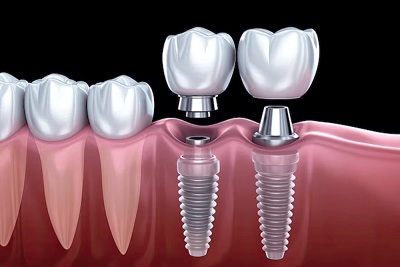
What Tooth Loss Changes
A missing tooth is not just a visible gap. It changes how the mouth works from the first day onward. Chewing pressure shifts to other teeth. Food may be broken down less efficiently. Speech can feel slightly off, especially when front teeth or multiple teeth are missing. Over time, nearby teeth may drift toward the space and the opposing tooth can erupt further because it no longer has contact where it used to. What looks minor on the surface can slowly affect bite balance, cleaning access, comfort and confidence. This is the first part of the problem that often gets ignored. Implants are used because they replace missing tooth roots and support restorations in a more stable way than simply covering the gap. Mayo Clinic notes that dental implants are surgically placed in the jawbone and serve as roots for missing teeth, helping prevent slipping and preserving function.
When The Space Stays Untreated
This is where the issue becomes more serious. When a tooth is lost and not replaced, the jawbone in that area receives less stimulation during chewing. Bone responds to use. When use drops, the area may gradually lose volume. That can affect the support available for future treatment and may also contribute to changes in facial structure over time. At the same time, the rest of the mouth starts compensating. One side may do more chewing. Certain teeth may take more pressure than they were built to handle. Cleaning becomes harder when teeth shift and trap food more easily. The problem is no longer just one missing tooth. It becomes an oral health issue that can spread into bite stability, gum maintenance and long-term function. Recent reviews in implantology also emphasize that modern care is focused not only on replacing teeth, but on protecting the bone and tissues around the implant for the long term. Relieve tooth pain with root canal in Whyalla—Schedule your appointment now!
Daily Function Breaking Down
This is the part patients feel in everyday life. A missing tooth can make chewing slower, less comfortable and less balanced. Some people start avoiding harder foods. Others chew only on one side without even noticing. If several teeth are missing, speech may change and the jaw may feel less stable during function. In removable options that do not feel secure, irritation and movement can make eating frustrating. That ongoing adjustment is what wears people down. The mouth keeps adapting, but not always in a healthy direction. The more compensation happens, the harder it becomes to preserve natural balance. This is why the conversation about implants is not just about appearance. It is about getting the mouth back to a state where it can work properly every day. The oral health value lies in restoring stable function before the chain reaction becomes harder to reverse. Mayo Clinic states that because implants fuse with the jawbone, they do not slip, make noise or cause the same kind of instability that can occur with some other tooth replacement methods.
Stable Support In The Jaw
This is where prosthodontic implant treatment changes the picture. Prosthodontic implants: how do they improve oral health? The answer starts with stability. An implant is placed into the jawbone and acts as an anchor for the replacement tooth. That matters because oral health improves when chewing force is distributed more evenly and the restoration stays firm during daily use. Better stability can support clearer speech, more comfortable eating and less irritation in the surrounding soft tissue. It also helps protect the remaining teeth from taking on too much load. Instead of forcing nearby teeth to compensate for a missing area, the implant-supported restoration gives the bite a working unit again. This makes the benefit structural, not just visual. According to the American Academy of Periodontology, implants require regular home care and follow-up, but they are designed to preserve function and support long-term use in a way that closely aligns with natural chewing demands.
Bone Preservation Is One Of The Strongest Health Benefits
The second major answer is bone support. When an implant integrates with the jaw, the surrounding bone receives functional stimulation again. That is a major difference between implants and simply leaving a space open. In practical terms, the bone has a reason to remain active. This is one of the biggest reasons implant treatment is viewed as an oral health solution rather than only a restorative one. Current research continues to push this further. Reviews in 2025 describe advances in implant surfaces, digital planning and biologic design that aim to improve osseointegration, tissue response and long-term predictability. At the same time, newer consensus work highlights that implant health is influenced not just by the implant itself, but also by restoration design, implant position and soft tissue characteristics. That means modern implant dentistry is becoming more precise and more preventive. It is not only about placing a fixture in bone. It is about designing a restoration that supports healthy tissue behavior for years.
Long Term Success Depends On Maintenance, Not Placement Alone
This is the final step in the PAS formula, because every strong solution needs a realistic condition. Implants can improve oral health, but they are not maintenance-free. Plaque can still accumulate around them. Inflammation can still affect the surrounding tissues. Peri-implant disease has become a major topic in recent literature because long-term success depends on keeping the tissues healthy, not only on the implant remaining in place. That is why current evidence stresses home care, professional follow-up and early management of inflammation. A 2025 systematic review on peri-implant self-care practices and other recent reviews make it clear that brushing, cleaning access and supportive care are central to protecting implant health over time. This is also why treatment planning has shifted toward patient-specific maintenance strategies instead of one standard instruction sheet for everyone.
The Best Result Is A More Balanced Oral Environment
So, prosthodontic implants: how do they improve oral health? They improve it by doing several jobs at once. They restore chewing efficiency. They help preserve jawbone support. They reduce the risk of unwanted tooth movement. They improve bite balance and give the mouth a more stable foundation for everyday function. They can also improve comfort and oral health-related quality of life when treatment is carefully planned and maintained over time. Recent 2026 evidence on patient- and clinician-reported outcomes reinforces that implant therapy is judged not only by survival of the implant, but by function, comfort and quality-of-life outcomes as well. That is where the real value sits. The goal is not to fill a space quickly. The goal is to rebuild a healthier oral environment that works better today and remains easier to protect tomorrow.
Author Bio:-
Ansley has 12 years of experience in the dental world. You can find his thoughts at dental benefits blog.

© 2025 Crivva - Hosted by Airy Hosting Managed Website Hosting.