


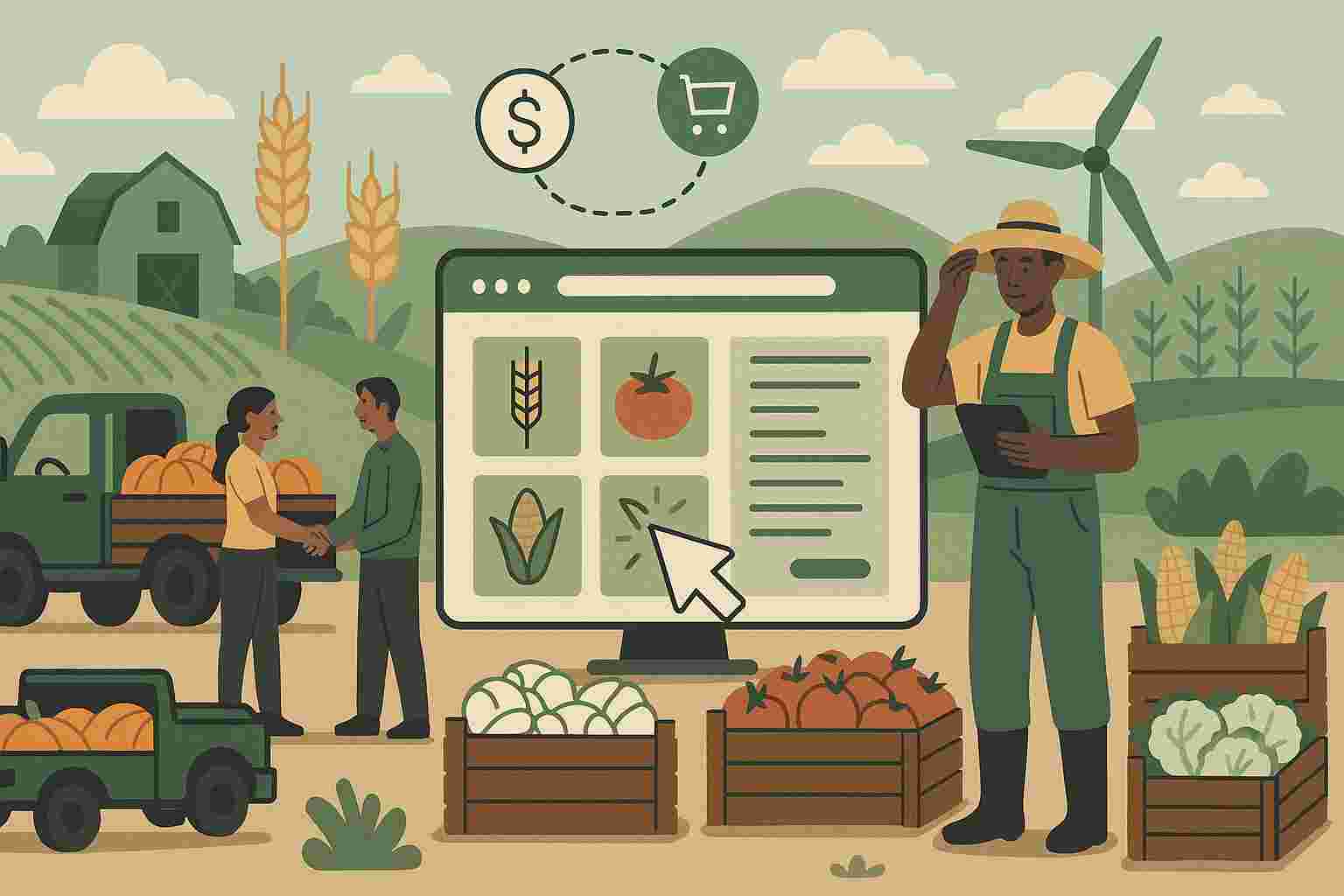
Agriculture marketplaces are digital platforms where agricultural products, inputs, or equipment are bought and sold. They remove intermediaries and connect sellers directly to buyers across regions.
These platforms typically fall into three main categories:
They provide transparency, payment integration, quality control, and sometimes, logistics support.
Two major shifts drive this change: increased rural internet usage and inefficiencies in the traditional supply chain.
For instance, rural smartphone penetration in India exceeded 58% by 2022, giving more farmers access to online platforms. Meanwhile, government-backed programs like eNAM now connect over 1,000 mandis digitally, encouraging more farmers to sell online.
Selling through a marketplace offers multiple benefits, especially in improving access, efficiency, and pricing for sellers of all sizes.
Farmers can now connect with institutional buyers, retailers, and exporters across regions. A tomato farmer in Karnataka can sell to a hotel chain in Mumbai, bypassing local traders entirely.
Digital reach can increase selling prices by up to 12%, especially for perishable or high-demand crops.
Marketplaces often display real-time prices from different regions. This pricing transparency empowers sellers and reduces information gaps.
According to a NASSCOM survey, 67% of marketplace users reported better pricing outcomes than in local mandis.
Sellers can avoid wholesalers on a number of input marketplaces. agirbegri, for instance, enables input producers to sell equipment, biofertilizers, and seeds directly to Indian farmers. This methodology guarantees genuine product delivery while reducing expenses.
Online platforms provide escrow methods or integrated payment systems. In contrast to the weeks-long delays associated with traditional channels, payments are completed more quickly—often within 72 hours.
Listings and sales history are stored digitally. This lets sellers manage inventory, predict demand, and keep tax records, helping in smarter planning and compliance.
Despite their benefits, agriculture marketplaces also introduce new complexities, especially for smaller farmers or those in remote areas.
Popular products often face intense competition. Sellers with generic offerings can get caught in price wars, reducing their profit margins.
Without strong branding or product differentiation, it’s hard to maintain stable prices.
Certain platforms impose listing fees or commissions, which can range from 5% to 10%. These must be taken into account when calculating costs. Profitability may be impacted by unaccounted-for logistical or service fees.
In remote or poorly connected villages, arranging timely pick-up and delivery can be difficult. Perishables like spinach or strawberries can spoil without proper cold chain access.
Sellers must adhere to weight, packaging, and quality requirements on numerous platforms. If these are not met, there may be penalties or returns.
For example, variations in pesticide residue or moisture content frequently result in product rejections, particularly for exports.
As farmers grow dependent on a single platform, algorithm changes or policy shifts can reduce visibility or orders. Sellers must optimise listings and response time to stay competitive.
“Technology doesn’t replace relationships; it reshapes them.”
Digital platforms still require trust, consistent service, and quality assurance to build buyer relationships.
Selling through a marketplace is effective under specific conditions. Here’s when it works best:
In these cases, farmers benefit from higher prices and wider buyer networks.
Farmers can use a hybrid model, where part of the produce is sold locally, and the rest via marketplaces. This helps diversify risk.
The seller’s flexibility is key to success on online marketplaces. Every step counts, from customer service to clear listings.
For instance, a Keralan spice vendor used certified logistics and optimised product listings to increase online sales by 19% in just one year. After joining two input platforms with extensive farmer networks, a seed vendor experienced a 40% increase in sales.
Even experienced farmers can make costly mistakes on digital platforms.
Avoiding these missteps ensures better ratings and fewer rejections.
Familiarity with marketplace terminology is essential.
These terms affect your platform ranking and buyer trust.
The future is digital, data-driven, and farmer-centric.
Newer platforms offer full-stack services like:
With a CAGR of 15.2%, the farm marketplace sector is expected to reach $30 billion globally by 2026. Early adopters will get the most rewards from this expansion.
Platforms typically request certifications, lab tests, or inspections before seller onboarding. Some platforms offer third-party quality checks.
It depends on the platform. Some allow direct negotiation, while others use fixed pricing models or reverse auctions.
Yes, if logistics and quality control are managed well. Many small farmers report 10–20% higher income through digital platforms.
Rejected products are usually returned. The seller may be responsible for reverse logistics, depending on the reason for return.
Use professional images, complete all product fields, respond quickly to queries, and maintain a high fulfillment rate.
Agriculture marketplaces are an effective tool, but they are not a universally applicable solution. The most astute vendors understand when to stay local, when to go digital, and how to combine the two to make the most money.
It will be crucial to monitor trends, enhance listings, and quickly adjust. Farming is becoming more and more digital, and the success of your upcoming season may depend on your marketing approach.

© 2025 Crivva - Hosted by Airy Hosting Managed Website Hosting.








