


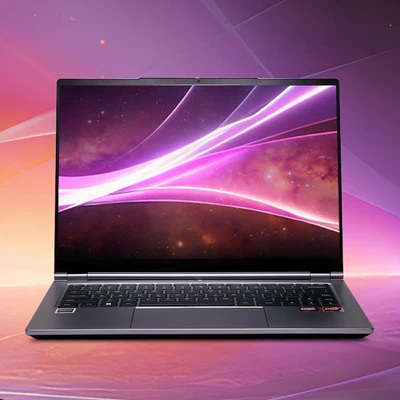
Professionals face a clear fork: a mobile workstation built for sustained accuracy or a gaming laptop tuned for throughput per dollar. Both run modern creative and analytical software, yet they diverge on stability, validation and serviceability. The question is which class supports deadlines well.
Core Purpose and Design Tradeoffs
Mobile workstations prioritize reliability under heavy, continuous loads. They use pro-grade drivers, broader memory support and firmware features that favor correctness. Gaming laptops pursue high frame rates and short-burst performance. They shine in acceleration for many creator tools but may lack validation for niche workflows, leading to edge-case bugs and wasted reruns. If you would like to get more information about the best workstation laptop, please visit this website.
CPU Considerations for Real Work
For compiles, code builds, media exports and data transforms, cores and sustained clocks matter. Workstations often keep higher power envelopes over long sessions, holding performance steady when rooms are warm or tasks stack. Gaming systems can match peak speed but are more likely to throttle during day-long queues, which stretches delivery times and complicates planning.
Graphics Paths and Driver Stability
Graphics acceleration powers 3D modeling, simulation previews, viewport fidelity and GPU compute. Workstations rely on drivers validated against professional toolchains and file formats. This reduces rendering anomalies and random crashes in complex scenes. Gaming GPUs are fast and cost-effective, but their driver priorities favor the latest engines rather than deterministic output across enterprise pipelines.
Memory Capacity and Error Handling
Serious work bumps into memory ceilings. Workstations usually offer higher RAM ceilings and, in some models, error-correcting options that reduce silent faults. Extra capacity supports larger scenes, datasets and multitasking without paging. Gaming laptops can be limited by slot count or maximum supported capacity, which narrows headroom as projects grow.
Storage Layouts and Data Safety
Project work benefits from multiple solid-state drives: one for operating system and applications, another for scratch and active assets and a third for archives or versioned caches. Workstations frequently expose two or more internal drive bays and firmware controls for encryption. Gaming laptops may ship with a single bay, pushing users to rely on external drives that add cable clutter and failure points.
Thermals, Noise and Sustained Loads
Cooling design influences both clock stability and human comfort. Workstations tend to favor thicker heat assemblies, controlled fan curves and predictable acoustic profiles during hours of rendering or simulation. Gaming machines may run louder when pushed and can swing clocks as thermal thresholds are reached, which introduces variability into export times and batch runs.
Displays and Color Management
Correct color reduces revision cycles. Workstations often ship with wide-gamut panels, tighter factory calibration and support for 10-bit workflows overall. Gaming laptops emphasize high refresh rates, which are excellent for motion but do not guarantee accuracy. External calibrated monitors can normalize either platform when exact color is critical.
Build, Serviceability and Uptime
Field work and travel punish hardware. Workstations usually provide easier access to memory and storage, clearer service manuals and longer availability of spare parts. This supports quick repairs and upgrades without shipping systems away. Gaming laptops can be more integrated and slimmer, but hidden screws and limited parts extend downtime when something breaks.
Security and Manageability Requirements
Many organizations require hardware encryption, measured boot and remote fleet controls. Workstations commonly include firmware hooks and accessories that align with those controls. They also support removable storage configurations that simplify drive rotation and evidence handling. Gaming laptops usually meet consumer security baselines but rarely expose enterprise manageability features in a consistent way.
Software Validation and ISV Certification
Independent validation reduces risk. Workstations undergo application-specific tests that check geometry precision, shader behavior and long-run stability. When your income relies on a few tools, that certificate is a form of insurance. Gaming systems can run the same tools but place the burden of troubleshooting on the user when unusual driver and application interactions appear.
Total Cost of Ownership
Sticker price is not the whole story. Consider the cost of re-renders, missed slots at print or fabrication, overtime and client goodwill. Workstations reduce the chance of recurring crashes and save support hours with better documentation. Gaming laptops are cheaper upfront and powerful, but the hidden tax appears as downtime and maintenance workarounds over a multi-year cycle.
Where a Gaming Laptop Fits Well
Not all professional work needs certified drivers. If your tasks are light to moderate-photo edits, short videos, office work and general web tools-a gaming laptop offers strong acceleration at a lower budget. Add a colorimeter, an external monitor for accuracy and a disciplined backup routine to offset gaps in validation and storage flexibility.
Where a Mobile Workstation Is the Right Tool
Precision-sensitive fields benefit from workstation traits: higher memory ceilings, error detection, driver stability and repeatable thermals. Teams that exchange complex files or rely on deterministic behavior see fewer surprises. If your deadlines are tight and the cost of a failed export is high, the workstation class aligns with that risk profile.
Practical Buying Checklist
Define your five primary applications and confirm platform support for features those tools need. Estimate the largest dataset or scene you expect this year and size memory and storage accordingly. Plan a two-drive layout at minimum. Test export or render times with a representative project before purchase. Budget for backups, calibration and a spare power supply.
Portability and Battery Life Reality
Thin designs help travel days and shared desks. Workstations are heavier on average due to cooling and rigidity, while gaming laptops can be lighter until the power brick and cooling pad are counted. Under GPU load, battery life on either class drops quickly. Treat wall power as the norm for production tasks and evaluate real-world run time.
Decision Framework for Buyers
If downtime has a real cost, choose the workstation. If budget is tight and work is flexible, the gaming route can succeed with process discipline. Match the machine to your risk tolerance, not only to synthetic scores. Evaluate sample projects, track wall-clock times and pick the path that delivers predictable throughput.
Clear Recommendation for Most Teams
For professional pipelines that depend on repeatable results, mobile workstations provide the stronger foundation. For solo creators and small teams early in their journey, a capable gaming laptop can be a rational bridge. Decide with data from your workload and invest where it lowers the odds of missed delivery.
Author Resource:
Jack Williams writes about latest PC, gaming laptops, workstations and desktop service stores. You can find more thoughts at favorite pc games blog.

© 2025 Crivva - Hosted by Airy Hosting Managed Website Hosting.