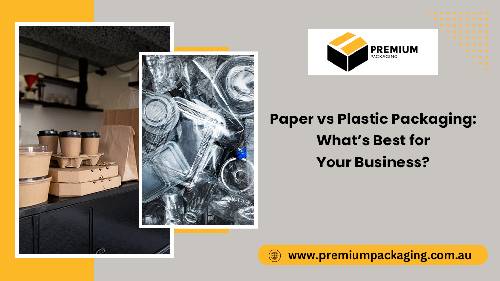
Packaging plays a vital role in product protection, branding, and environmental impact. For many Australian businesses, the decision between paper vs plastic packaging is no longer just about cost—it’s about performance, perception, and sustainability.
Whether you’re in retail, food service, manufacturing, or e-commerce, selecting the best packaging for your business requires a balanced understanding of materials, environmental factors, and customer expectations. In this article, we break down the advantages and limitations of both paper and plastic packaging, offer sustainable packaging ideas, and help you determine which option best suits your operations.
Beyond protection and convenience, packaging has become a strategic tool for brand differentiation and environmental responsibility. Australian consumers are increasingly aware of the eco-friendly packaging materials businesses use, and legislation is evolving to support a circular economy.
At Premium Packaging, we work with clients across industries to create customised, cost-effective packaging solutions that reflect both function and environmental values.
Paper packaging is made from wood-based fibres and is commonly used for bags, boxes, wraps, and cartons. It’s a renewable resource, and when responsibly sourced and managed, it can be a significant contributor to sustainable packaging.
Plastic packaging comes in a wide variety of forms, including polyethylene, polypropylene, and PET, to name a few. It’s used for containers, wrapping films, pouches, bottles, and liners.
Paper bags and cardboard boxes work well and align with customer expectations of sustainable packaging. Custom print finishes and brand colours can be easily applied.
Paper is excellent for dry goods and takeaway items when lined appropriately. For liquids and hot items, plastic (or PLA-lined paper) may still be more effective.
A mix of kraft mailers, corrugated boxes, and compostable satchels offers protection without excessive plastic use. Void fill can be paper-based or air pillows, depending on fragility.
Plastic remains dominant due to hygiene and sealing requirements. Some paper-based blister packs are emerging as eco-friendly alternatives, but they are not yet mainstream.
Paper mesh bags and compostable liners are gaining popularity, although plastic remains heavily used for shelf-life reasons.
At Premium Packaging, we provide customised packaging solutions tailored to your industry, product, and sustainability objectives.
While plastic packaging is usually more affordable upfront, consider the long-term costs, including environmental levies, negative brand perception, and disposal complications.
Paper, although sometimes more expensive, may increase sales by aligning with customer values and avoiding future regulatory issues. It’s about investing wisely in packaging that supports your business goals and aligns with your ethical commitments.
There is no one-size-fits-all answer in the paper vs plastic packaging debate. The best choice depends on your industry, product type, customer base, and sustainability targets.
If durability, barrier protection, and volume are priorities, plastic may still be the better fit. If brand alignment, recyclability, and customer perception are key, paper might be the smarter investment.
Whatever your decision, ensure it’s informed, intentional, and transparent to your customers.
Premium Packaging is a trusted Australian package supplier, offering both paper and plastic solutions, including:
Our team works closely with businesses to match packaging to purpose, ensuring compliance with Australian sustainability standards while maintaining quality and presentation.
In the evolving world of packaging, businesses must strike a balance between practicality and responsibility. Whether you lean towards paper or plastic, ensure your choice aligns with customer expectations, current environmental trends, and operational needs.
Premium Packaging is here to help your business make packaging choices that protect your products, your reputation, and the planet.
Not necessarily. While paper is biodegradable and widely recyclable, its production can be resource-intensive. The full lifecycle and usage context determine true sustainability.
Yes. Recyclable, reusable, and biodegradable plastics exist. Bio-based plastics, such as PLA, offer a greener alternative to fossil-fuel-based plastics.
For hot or greasy foods, lined paper or compostable containers offer a good balance between function and eco-responsibility. Premium Packaging offers both types.
Generally, yes—especially for higher-quality or custom-printed paper packaging. However, long-term branding and compliance benefits may outweigh the added cost.
Choose right-sized packaging, use recyclable or compostable materials, minimise fillers, and educate your customers on proper disposal methods.
Know more https://premiumpackaging.com.au/blog/paper-vs-plastic-packaging/

© 2025 Crivva - Hosted by Airy Hosting Managed Website Hosting.