

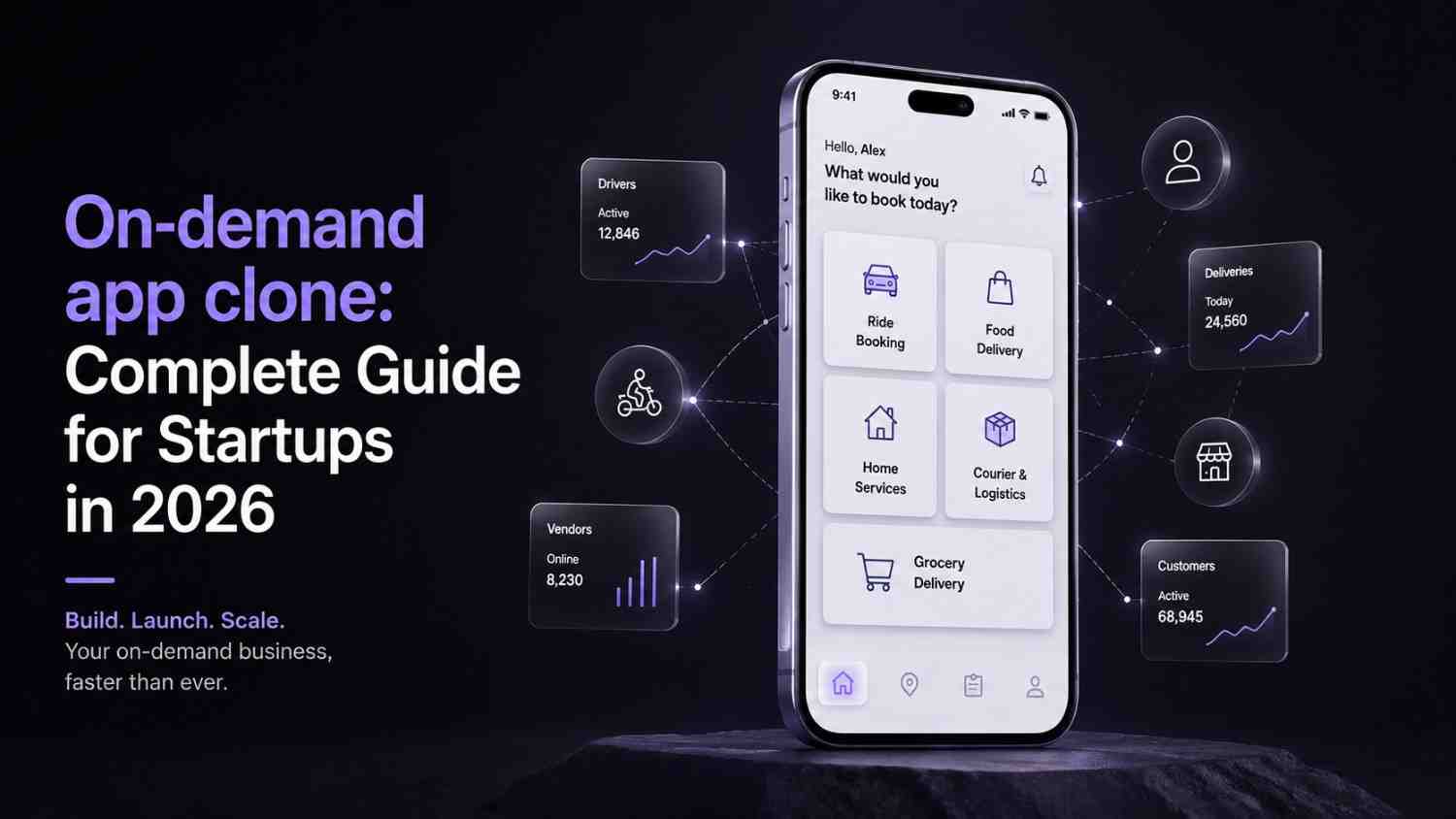
Many startups enter the on-demand market with a strong idea but face challenges when turning that idea into a working product. Building an app from scratch requires time, technical resources, and a large investment before knowing whether customers will accept the business model. This is why many entrepreneurs are exploring an on-demand app clone as a faster way to launch and test their ideas.
An on-demand app clone gives startups a ready technology foundation based on proven platforms while allowing them to customize features, branding, and workflows. In this guide, we will explore how clone app development works, why businesses choose this approach in 2026, what features matter, how it compares with custom mobile app development, and how startups can choose the right solution for long-term growth.
An on-demand app clone is a ready-made application framework inspired by successful on-demand business models. It allows startups to build platforms similar to popular taxi apps, food delivery services, marketplace platforms, or booking applications without creating every component from the beginning.
However, an on-demand app clone is not a direct copy of another application. It works as a technology foundation that businesses can modify according to their target audience, business goals, and market requirements.
For example, a startup launching a local service marketplace can use a clone app structure and customize the categories, payment methods, user experience, and operational process based on its own business model.
An on-demand platform usually works through multiple connected systems that manage customers, service providers, and business operations.
A typical structure includes:
Customer application
This is where users search for services, place bookings, make payments, track orders, and share feedback. For example, a customer using a taxi platform can select a pickup location, choose a ride option, and receive updates during the trip.
Service provider application
The service provider app helps drivers, delivery partners, or professionals manage requests. They can accept orders, update availability, track earnings, and manage their service history.
Admin dashboard
The admin panel controls the entire platform. Businesses can manage users, monitor activities, analyze performance, handle payments, and improve operations.
This same model can support different industries, including taxi services, food delivery apps, healthcare platforms, home services, and online marketplaces.
The startup environment has become more competitive. Businesses are not only competing with ideas but also with speed. Many founders need to launch quickly, collect customer feedback, and improve their product without spending years on development.
An on-demand app clone helps businesses start with a tested structure while focusing more on market strategy and customer experience.
For many startups, the biggest challenge is reaching the market before resources run out. Developing every feature from zero can delay the launch and increase costs.
A clone app solution supports the MVP approach. Startups can launch an initial version, understand customer behavior, and improve the platform based on real feedback.
For example, a food delivery startup can first launch with essential ordering and payment features instead of building a complex system with every possible feature.
Building an on-demand platform involves many technical systems working together. Startups need user accounts, payment integration, tracking features, notifications, and management tools.
With clone app development, businesses do not need to create these basic systems from the beginning. Instead, they can focus their resources on improving their unique business idea.
This approach reduces initial technical challenges and helps teams spend more time on growth strategies.
A common misunderstanding is that clone apps are fixed products. In reality, a quality on-demand app clone works as a flexible foundation.
Businesses can customize:
A startup can use the same basic technology approach but create a different experience for its customers.
Launching an on-demand business involves more than creating an app. Startups need to manage users, service providers, operations, and future growth.
Creating a complete platform requires technical planning, testing, and continuous improvement. A ready framework helps reduce the initial workload by providing essential systems that have already been developed.
This allows startups to focus on improving their service quality and building customer trust.
Most on-demand businesses have different user groups with different requirements.
For example, in a taxi platform:
Each user needs a different experience, and the platform must connect all activities smoothly.
A startup may begin with a small audience but grow quickly after gaining traction. The technology behind the app should support future expansion.
Important areas include:
A good startup app solution should support business growth instead of creating limitations later.
The right features depend on the business model, but some functions are important for most on-demand platforms.
The customer side usually includes:
These features help users interact with the platform easily and create confidence in the service.
Service providers need tools that help them manage daily operations.
Important features include:
These functions improve communication between customers and providers.
The admin system acts as the control center of the platform.
It usually includes:
These tools help businesses understand performance and make better decisions.
Choosing between an on-demand app clone and custom development depends on business goals.
A clone app is often suitable for startups that want faster market entry and a practical starting point. It provides a proven structure that can be improved over time.
Custom app development gives businesses complete control over building a unique system from the beginning. It may be a better option for companies with highly specific requirements or complex technology needs.
Neither approach is perfect for every business. The right choice depends on budget, timeline, market strategy, and future plans.
The cost of building an on-demand app clone depends on several factors. There is no fixed price because every business has different requirements.
The industry affects development needs.
Examples include:
Each category requires different workflows and features.
A basic platform with essential functions will require less development effort than an advanced application with AI features, automation, and complex integrations.
The more changes a business needs, the more development time may be required.
Customization can include design changes, new features, third-party integrations, and business-specific workflows.
Choosing the right technology partner is important because the app will support the business after launch.
Startups should review:
A solution should not only work today but also support future growth.
A flexible platform allows businesses to adjust their product as customer needs change.
A startup should avoid solutions that limit branding, features, or future improvements.
The right on-demand app clone should support expansion into new locations, services, or customer segments.
Technology decisions made early can affect business growth later.
The future of on-demand platforms will focus on improving user experiences and making operations smarter.
Businesses are increasingly using:
However, success will still depend on understanding customers and building a reliable service model.
An on-demand app clone can provide the foundation, but business strategy and execution will decide long-term success.
An on-demand app clone is a ready-made app framework based on successful business models that startups can customize for their own services.
No. A professional clone app is not a direct copy. It uses a similar technology structure while allowing businesses to create their own features and branding.
The timeline depends on app complexity, features, customization needs, and development requirements.
Many industries can use this model, including transportation, food delivery, healthcare, home services, and marketplace businesses.
Yes. It can be a practical option for startups that want to launch faster, test their idea, and build a digital business solution with lower initial complexity.

© 2025 Crivva - Hosted by Airy Hosting Managed Website Hosting.