


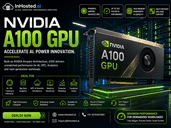
Modern businesses generate large amounts of data and rely on advanced applications that require fast processing power. From artificial intelligence and machine learning to simulations and analytics, many workloads now demand more than traditional server environments can provide. The NVIDIA A100 GPU is one of the most recognized enterprise accelerators built to meet these growing needs. It is widely used by organizations that require speed, efficiency, and scalability for compute-intensive tasks.
As digital transformation continues across industries, access to reliable GPU infrastructure has become an important advantage. Companies that can process data faster and train models more efficiently often move ahead of competitors. This is where enterprise GPU technology plays a valuable role.
The NVIDIA A100 GPU is designed for environments where heavy workloads run continuously. It supports advanced parallel processing, allowing many calculations to happen at the same time. This capability helps reduce runtime for tasks that may take significantly longer on CPU-only systems.
It is commonly used for:
Businesses that need dependable acceleration often choose GPU-powered environments to improve overall performance.
Traditional CPUs are excellent for general-purpose computing, but many modern workloads involve repetitive calculations across huge datasets. GPUs are optimized for handling these tasks more efficiently because they can process multiple operations simultaneously.
For example, training a machine learning model may involve millions of calculations repeated many times. A GPU can speed up this process, allowing data scientists and developers to complete experiments sooner. Faster training means quicker testing cycles, faster product launches, and more room for innovation.
Organizations that depend on analytics also benefit. Instead of waiting hours for results, teams can access insights faster and make decisions with better timing.
Artificial intelligence is one of the fastest-growing uses of enterprise GPU infrastructure. Companies across sectors are building systems for automation, personalization, forecasting, and decision support. These systems need significant computing power during both development and production.
The NVIDIA A100 GPU is often selected for AI workloads because it helps support:
When developers can train models faster, they can refine accuracy more efficiently and bring products to market sooner.
Many AI and analytics projects rely on large datasets that must move quickly between memory and compute resources. Slow data transfer can become a bottleneck even when compute power is strong. High-bandwidth memory architecture helps reduce delays and maintain smoother workload execution.
This is valuable for:
Efficient memory handling allows applications to perform consistently under demanding conditions.
Enterprises often need more than raw speed. They also require reliability, scalability, and compatibility with existing tools. Modern GPU platforms are typically integrated with common development frameworks and enterprise software stacks, making adoption easier.
Organizations may deploy GPU resources for:
This flexibility helps businesses use one platform across multiple teams and workloads.
Healthcare organizations use accelerated computing for imaging analysis, medical research, and genomics processing. Faster infrastructure can support quicker diagnostics and more advanced research outcomes.
Banks and financial institutions rely on compute-intensive models for fraud detection, risk management, and forecasting. Speed is especially important when decisions must happen in real time.
Retailers use AI for personalized recommendations, demand forecasting, inventory planning, and customer behavior analysis. Better performance can improve customer experiences and revenue opportunities.
Manufacturers use machine vision, predictive maintenance, and simulation models to improve production efficiency and reduce downtime.
Studios and creative teams use accelerated systems for rendering, visual effects, and video processing where turnaround time matters.
Many businesses want enterprise GPU access without investing heavily in physical infrastructure. Purchasing dedicated hardware can involve high upfront costs, space requirements, cooling systems, maintenance, and upgrade planning.
Cloud GPU hosting offers an alternative. Instead of owning hardware, companies rent resources as needed. This model is useful for both startups and established enterprises.
Advantages of cloud deployment include:
For many organizations, cloud hosting makes advanced computing more accessible and cost effective.
Business workloads are rarely static. A startup may need modest resources today but require much larger capacity after product growth. Seasonal businesses may need temporary expansion during peak traffic periods. Research teams may need bursts of compute power during experiments.
Scalable GPU environments help organizations adjust resources based on actual demand. This prevents overspending while ensuring enough performance when needed.
Scalability is especially valuable for:
Hardware quality is important, but the hosting provider also plays a major role in results. Businesses should compare providers carefully before choosing GPU infrastructure.
Key factors to review:
A strong provider helps ensure that workloads run efficiently while minimizing downtime and operational friction.
Not every organization needs the largest or newest hardware configuration. The best solution often depends on workload type, usage frequency, and budget. Some companies need continuous production-grade infrastructure, while others need temporary compute resources for experiments.
Careful planning helps businesses balance performance with cost. By selecting the right environment, companies can maximize ROI while still meeting technical goals.
As machine learning adoption expands, demand for enterprise-grade compute resources will continue to grow. Businesses are integrating AI into customer service, operations, analytics, and product development. These changes require dependable platforms that can scale with innovation.
Accelerated computing is becoming less of a luxury and more of a business necessity. Organizations that invest early in efficient infrastructure often gain speed, productivity, and long-term competitive advantages.
The NVIDIA A100 GPU remains a strong option for businesses that need reliable acceleration for AI, analytics, and compute-heavy applications. It supports faster processing, efficient scaling, and dependable performance across a wide range of industries.
Whether used in the cloud or integrated into enterprise environments, the NVIDIA A100 GPU can help teams complete projects faster, reduce bottlenecks, and support innovation with confidence. For organizations planning growth in data-driven operations, the NVIDIA A100 GPU continues to be a practical and valuable infrastructure choice.

© 2025 Crivva - Hosted by Airy Hosting Managed Website Hosting.








