

You moved to the country, or maybe you just work from the road. Every internet option you’ve tried seems like choosing between bad and worse. Cable doesn’t reach you, satellite has lag that disrupts video calls, and your phone’s hotspot gives out right when a deadline hits. If you’ve been looking into Nomad Internet and questioning whether it’s truly worth it or just another overhyped rural broadband option, you’re in the right place.
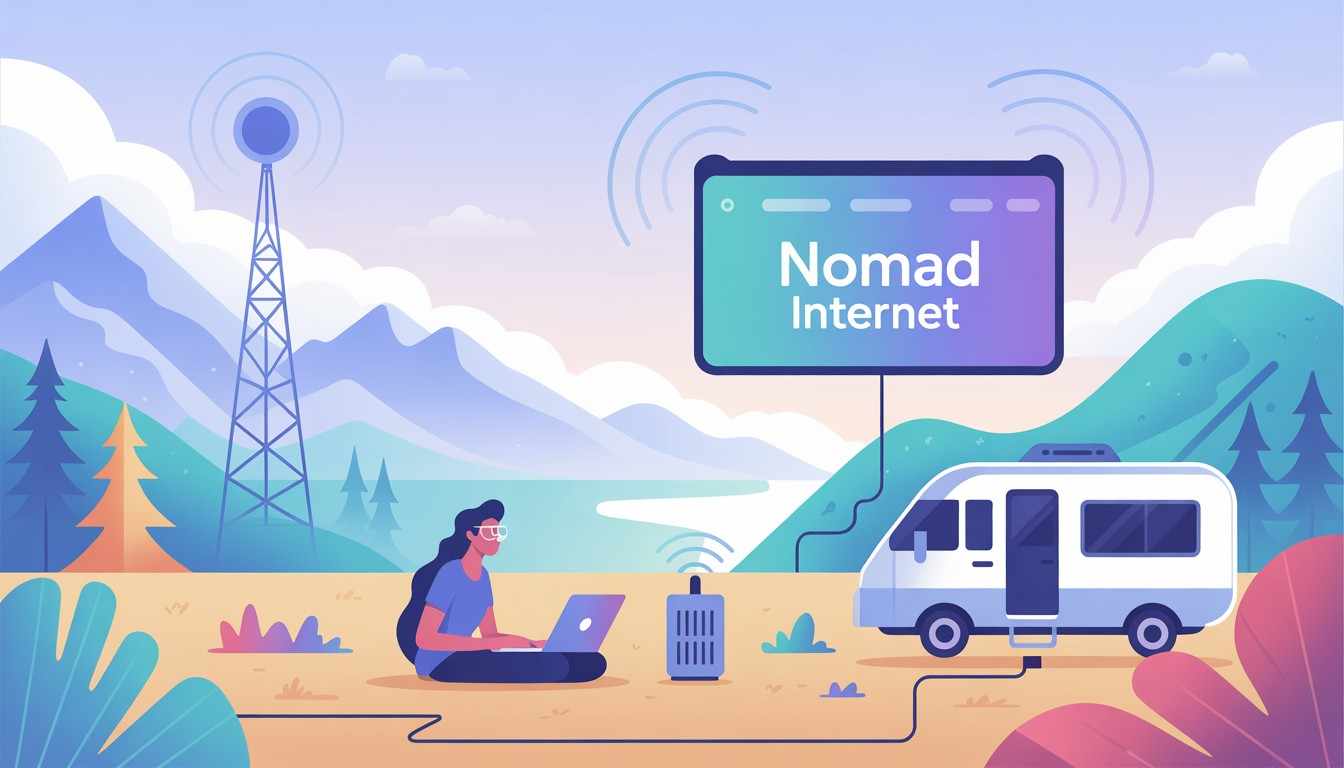
Nomad Internet is a fixed wireless and mobile internet service that operates on LTE and 5G networks throughout the United States. Instead of building its own towers or installing cables, it gathers coverage from existing cellular networks and provides it to customers through routers or hotspot devices. It’s a more effective way to access the cellular data that is already available.
The idea is straightforward: provide broadband-speed internet to those who have been overlooked by traditional ISPs, including rural homeowners, RV travelers, and remote workers in areas where fiber is still unavailable. The key question is whether it truly fulfills that promise.
The biggest real advantage here is the geographic reach. Since the service relies on LTE and 5G networks instead of physical infrastructure it owns, Nomad Internet can connect homes that most cable and fiber providers simply can’t. If your home is in a cellular coverage area, even if it’s in a rural location, there’s a good chance this service can provide internet access.
For homesteaders, farmers, and those living several miles from a town center, this is significant. It can be the deciding factor between having the internet and being without it.
Unlike traditional ISPs that require you to sign one- or two-year contracts, Nomad usually provides month-to-month flexibility. This is important if you’re uncertain about how long you’ll stay at a location or if you want to try the service before making a commitment. There are no early termination fees, which gives people the freedom to leave if it doesn’t suit them.
On a good LTE or 5G connection, customers report speeds that support video calls, streaming, and remote work without major issues. That speed isn’t as fast as fiber, but for someone who was previously struggling on a DSL line from 2009, the improvement is significant. The network technology behind LTE and 5G services is established and can support real-world productivity.
The Good
The Bad
Here’s the honest truth that most reviews overlook: your experience with Nomad Internet will rely a lot on which cell towers are close to you, how busy those towers are, and what time of day you go online. LTE and 5G speeds exist, but they are shared. If you live in a rural area with low tower traffic, you might enjoy fast speeds. However, if you are in an area where many users connect to the same tower at 7 PM, you may experience slowdowns.
This isn’t unique to Nomad; it’s a fundamental characteristic of cellular-based internet. But it’s worth going in with clear eyes.
On high-data plans, cellular networks prioritize traffic. During busy times, customers on some plans can be deprioritized, which means their connection speeds slow down while higher-priority users get bandwidth first. If you use a lot of data or work from home full-time, this is more important than it may seem in a sales pitch.
This is likely the most common complaint we hear from customers. When everything runs smoothly, people often ignore the quality of support. However, when problems arise like a router issue, a billing mistake, or a sudden drop in speed, some customers find it hard to get quick or useful responses. It’s important to be aware of this before signing up, particularly if you rely on the connection for work.
Before You Sign Up
Always check your specific address against the actual LTE and 5G coverage maps for your area. Signal strength at your location is the most important factor in how well this service will perform for you. A strong signal can make this a great option. A weak one will disappoint you, no matter which plan you choose.
The answer isn’t “everyone,” and anyone who tells you otherwise isn’t being straight with you. Nomad Internet tends to work best for:
It’s more challenging to convince people in suburban areas, as they already have access to fiber or cable. These options usually provide better speed and reliability than cellular-based services.
Nomad Internet serves a specific need: it provides internet access to people who really lack good alternatives. In this situation, it’s not a substitute for fiber; it’s a lifeline. For rural users, remote workers, and those living on the road, that’s exactly what they need.
The frustrations are real as well. Speed changes, inconsistent customer service, and limits set by shared LTE and 5G networks are all valid drawbacks. Having realistic expectations greatly affects your satisfaction.
If you’re in an area with good cellular coverage and have limited options, it’s worth a try, especially since it offers month-to-month flexibility. If you’re in a low-coverage zone, test the service before making a deeper commitment.
Nomad Internet addresses a genuine issue for a specific group of people. It has its flaws and may not suit everyone. However, for someone living in a rural area who needs dependable internet for work, video calls, or streaming shows without constant buffering, it’s one of the more practical choices designed for the current LTE and 5G coverage. Evaluate it based on its merits, not by comparing it to fiber.
Nomad Internet availability depends on LTE and 5G cellular coverage at your specific address. The best way to check is by looking at coverage maps to see which carriers have signal in your area. Then, confirm with Nomad directly. Strong cellular coverage at your location is the best indicator of good service.
Speeds vary based on your location, the nearest tower, and network congestion at any given time. Customers in areas with good coverage using LTE or 5G connections usually report speeds that work well for video calls and remote work. Slowdowns during peak hours are possible, just like with any cellular internet service.
Like most services on LTE and 5G networks, Nomad Internet plans may experience data deprioritization during busy times. This is different from a strict data cap: your data doesn’t stop, but speeds may slow down temporarily when towers are busy. Check the specific plan details for more information.
Yes, portability is one of the service’s real advantages. Since it runs on cellular infrastructure, you can use it in different places without needing a fixed-address installation. Performance will still depend on cellular coverage wherever you are parked or staying.
For most users, LTE and 5G-based services like Nomad provide lower latency than traditional satellite services. This is particularly important for video calls and real-time applications. Newer satellite options have narrowed this gap, but the best choice depends on your location and cellular coverage. Cellular internet is generally faster and more responsive. In very remote areas with little cellular signal, satellite may be the only reasonable option.

© 2025 Crivva - Hosted by Airy Hosting Managed Website Hosting.